
Scottish Terrier
SKOT-ish TER-ee-uhr
Scotland· Aberdeenshire, Scottish Highlands
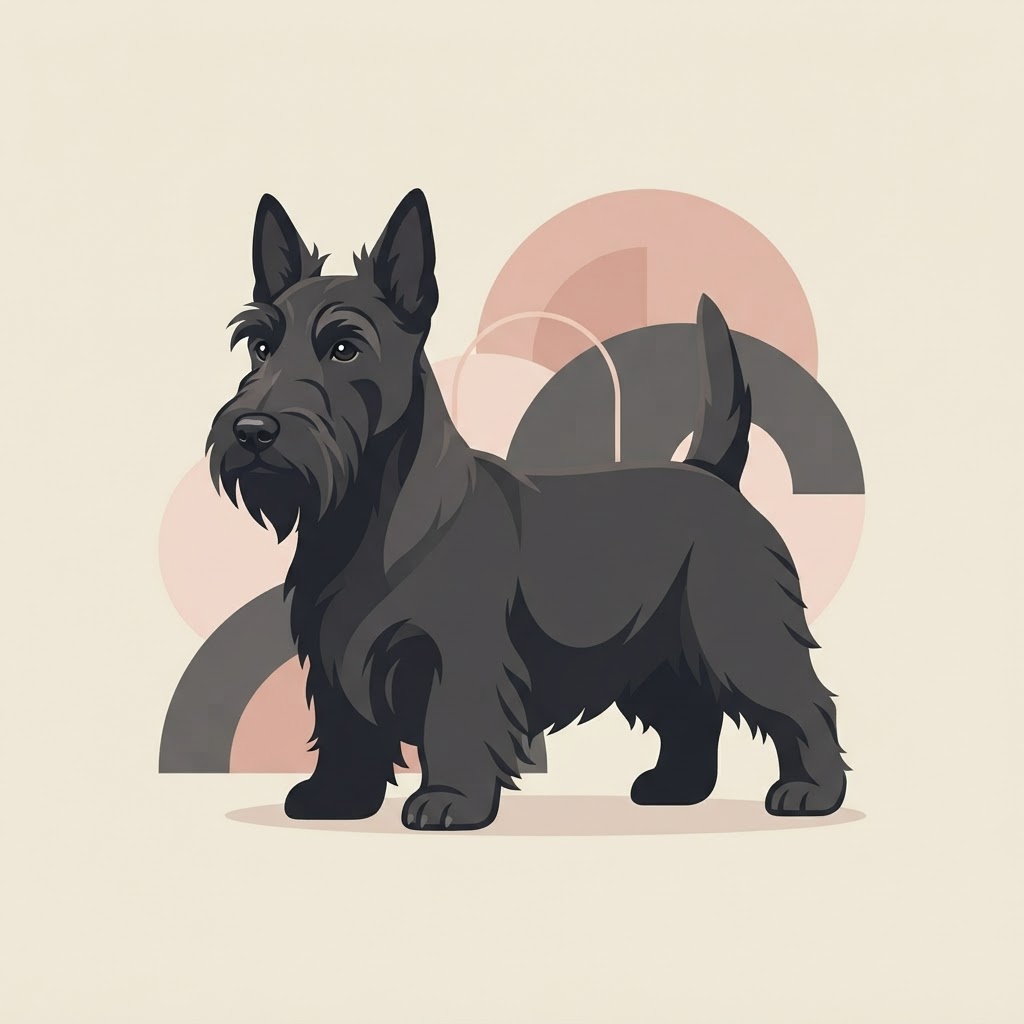
The Scottish Terrier, known affectionately as the Scottie, is a small, sturdy, short-legged terrier from the Scottish Highlands with a distinctive wiry beard, bushy eyebrows and an upright, dignified bearing that belies its terrier temper.
At a glance
Quick facts
Size
Small
Exercise needs
45 minutes daily
Home size suited to
Flat or small home
Grooming frequency
Weekly brush, hand-strip a few times a year
Coat length
Wiry
Sheds
Yes, heavily when moulting
Lifespan
11–13 years
Town or country
Either, with enough exercise
Garden size needed
Small garden or none
Where it comes from
Origins of the Scottish Terrier
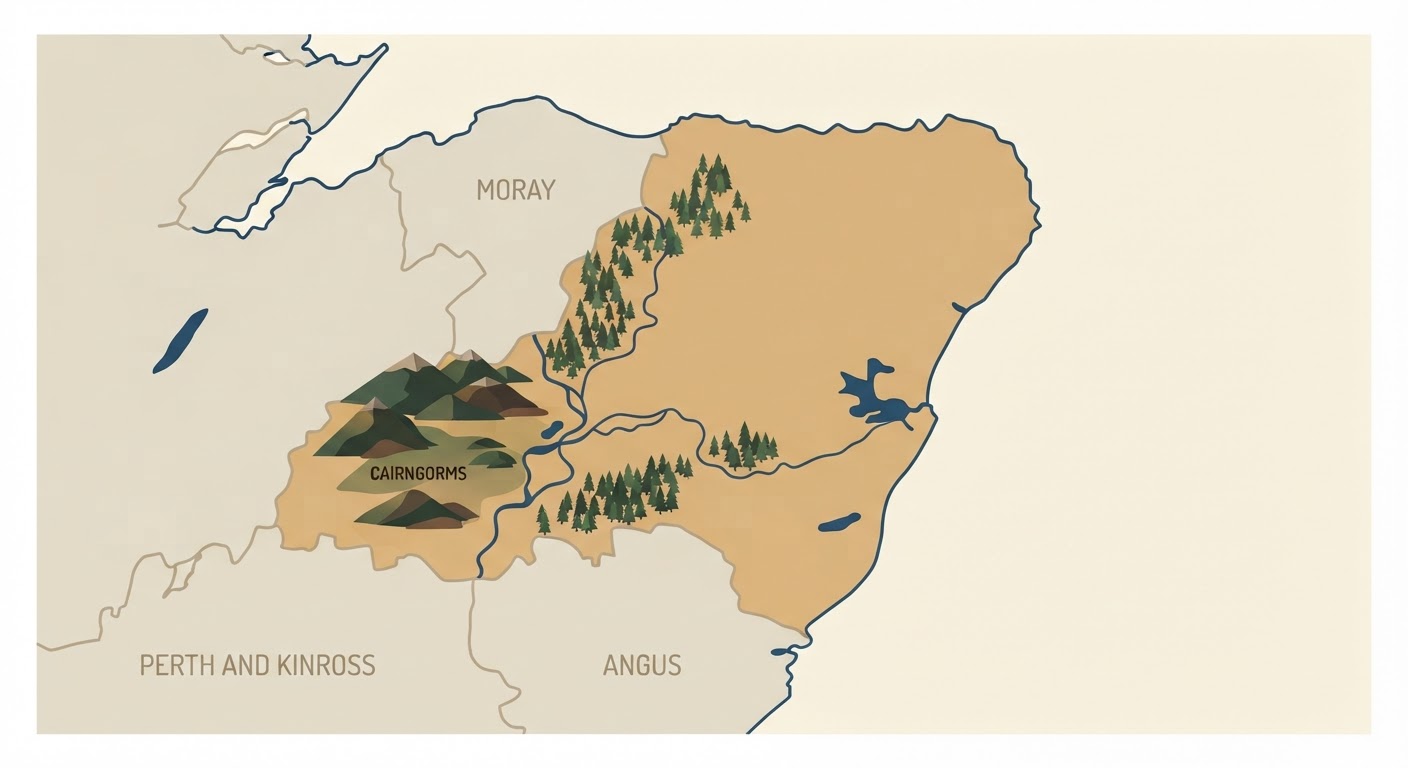
Bred in the rocky Highlands to bolt foxes and badgers from their dens, the Scottish Terrier's short legs and compact build let it work underground where larger dogs could not follow.
- Region
- Aberdeenshire, Scottish Highlands
- Climate it was bred for
- Cold, wet, rugged highland terrain
- Original job
- Going to ground after foxes, badgers and vermin
Living with one
Temperament & needs
Our own ratings, based on the breed standard and how these dogs behave in ordinary homes.
Friendliness
2/5
How openly the Scottish Terrier greets people it does not know.
Trainability
2/5
Independent-minded and stubborn, bred to make decisions alone underground.
Energy
3/5
Enjoys brisk walks and digging but is not a marathon runner.
Barking
3/5
Alert and willing to raise the alarm, though not constantly noisy.
Grooming
4/5
Wiry double coat needs regular hand-stripping to keep its harsh texture.
Suits a first-time owner
2/5
How forgiving the Scottish Terrier is for someone taking on their first dog.
Sociability
2/5
Devoted to its family but often reserved or standoffish with strangers and other dogs.
Independence
4/5
A classic self-reliant terrier temperament.
Illustrated breed standard
The points of the breed
Hover or tap a numbered point to read what the standard asks for.
Point 1
Skull
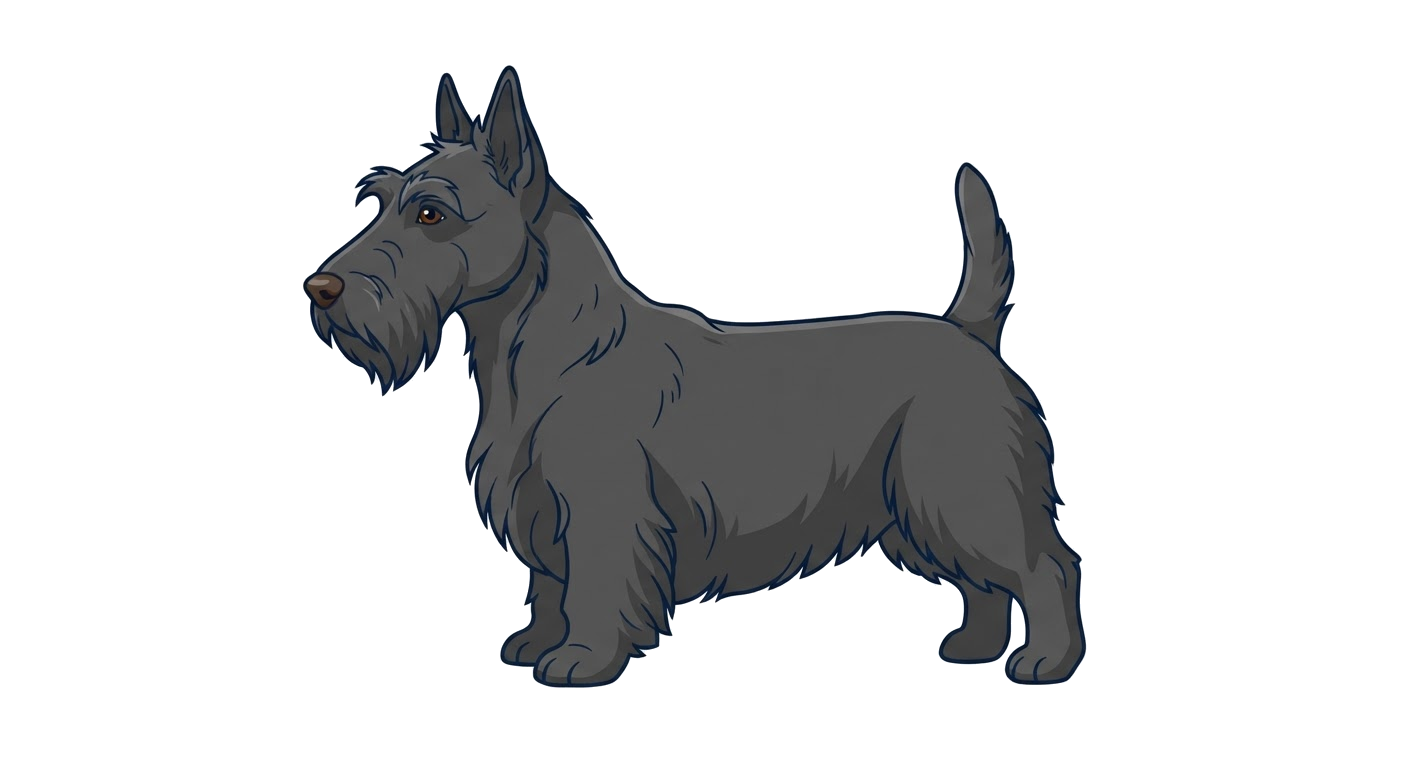
The Scottish Terrier's skull is judged on balance rather than size — proportionate to the body, with a clean cheek and a stop typical of the breed. Coarseness or an over-refined head are both faulted.
Colours & patterns
Recognised coats
Which coats the standard accepts — and which are simply popular.
Black
Standard colour
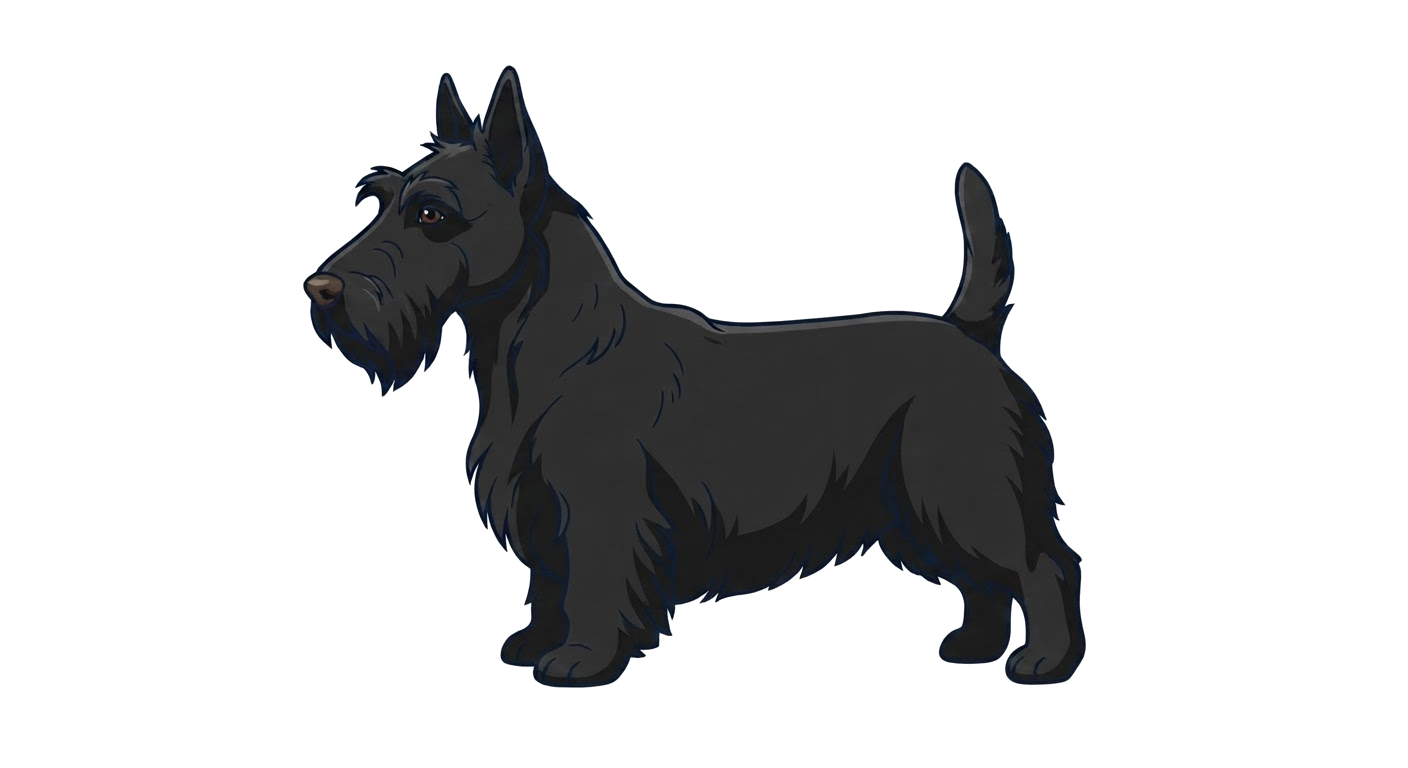
The most iconic and commonly seen Scottie colour.
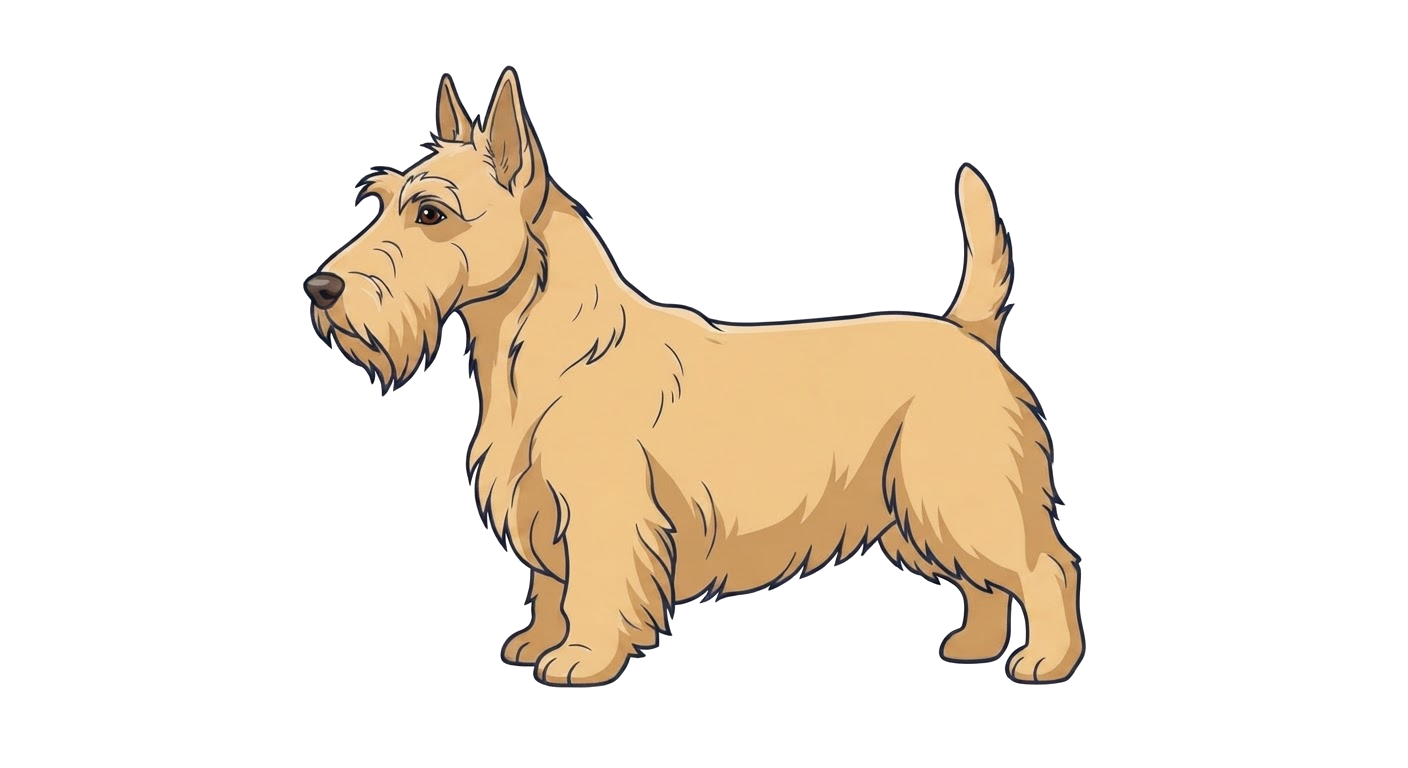
Wheaten
Standard colour
A pale straw colour, less common but fully standard.
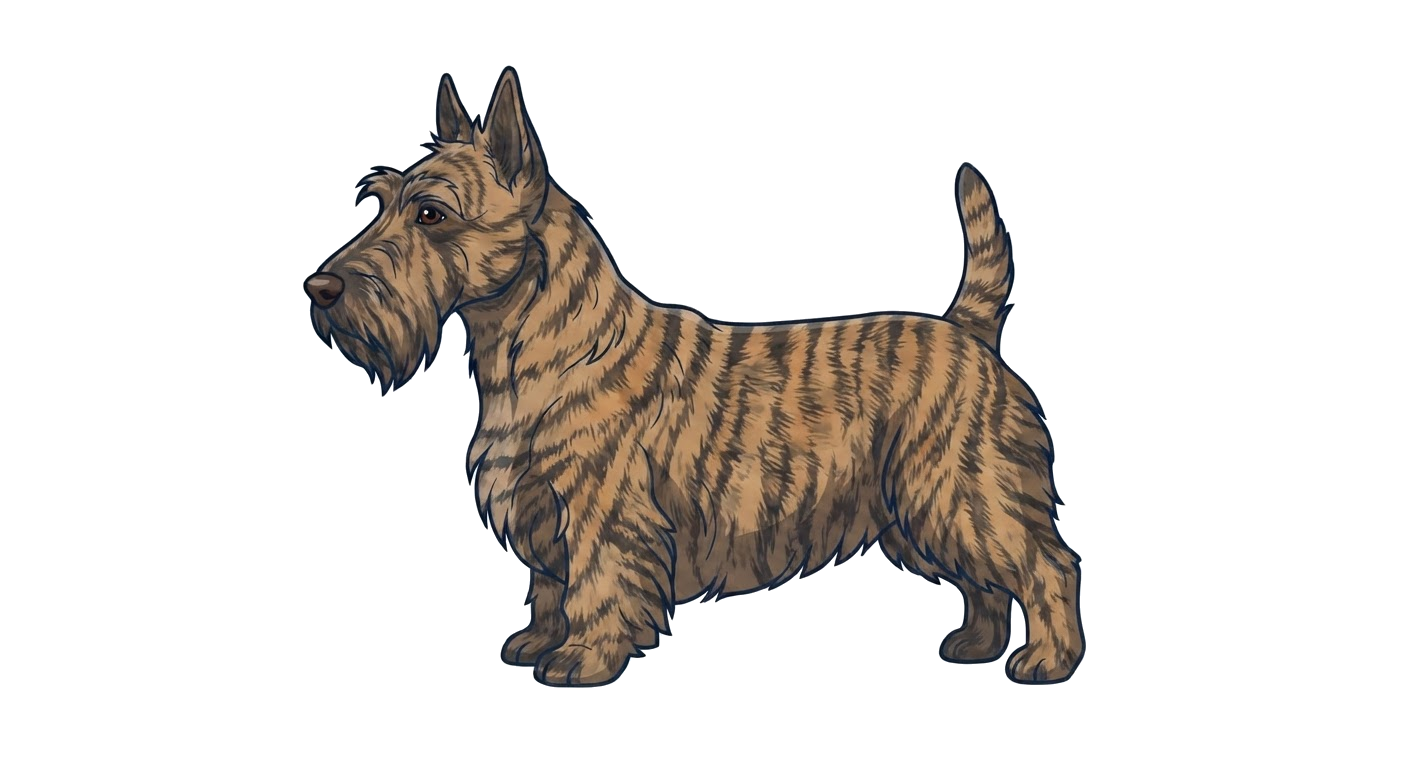
Brindle
Standard colour
A streaked mix of black and brown or wheaten.
Timeline
History & development
1800s
Highland working dogs
Various short-legged terriers worked the Scottish Highlands, with the Scottie emerging as a distinct type by the mid-19th century.
1879
First breed standard
Early fanciers began separating the Scottish Terrier from other Highland terrier types at shows.
1883
Kennel Club recognition
The breed was formally recognised in Britain.
1930s-40s
White House fame
Scotties owned by US Presidents Roosevelt and later Eisenhower and Bush boosted the breed's popularity in America.
1950s onward
The breed today
Kennel club registrations settled into a steady pattern and the Scottish Terrier moved from a working specialist to a family companion, with breed clubs in the UK and abroad now focused on health testing and keeping true type alive.
Reference
Breed standard summary
- body
- Moderately short-backed, deep chest.
- coat
- Broken, hard, wiry outer with soft dense undercoat.
- ears
- Small, erect, pointed.
- eyes
- Dark brown, small, almond-shaped.
- gait
- Free, easy, with a straight forward action.
- head
- Long, in proportion to the size of the dog, with a slight stop.
- size
- 25–28cm at the shoulder.
- tail
- Medium length, carried erect.
- colour
- Black, Wheaten, Brindle. Colours outside this list are seen but are not accepted by the kennel clubs.
- temperament
- Typical of the breed: strongest in independence, grooming, energy. Nervousness or aggression are serious faults in the show ring and in the home.
- general appearance
- Thickset, short-legged, sturdily built terrier with a hard, wiry coat.
Health
What to screen for
Green means little to worry about, amber means ask the breeder for test results, red means manage it actively.
Scottie cramp
Low concern
A benign but startling movement disorder; ask breeders if it appears in their lines.
Von Willebrand's disease
Watch closely
Request DNA test results for this inherited clotting disorder.
Bladder cancer (transitional cell carcinoma)
Watch closely
The breed has a notably higher risk; discuss with a vet promptly if urinary symptoms appear.
Craniomandibular osteopathy
Watch closely
A jaw condition seen in puppies; ask if it has occurred in the breeding line.
General information only — always speak to your vet about your own dog.
From real owners
Dogs like this
Scottish Terriers added by PawPoint members through their pet passports. Share yours to appear here.
Loading the wall…
Made for the Scottish Terrier
The book, plus prints, hoodies and mugs using our own Scottish Terrier illustration — and one everyday accessory that suits any dog.

The book
Pawpoint: The Complete Dog Breed Book
Every officially recognised breed plus the unofficial ones nobody else documents. 400+ pages, hardback, printed and shipped from the UK.
Own stock — shipped by us
Framed poster
Scottish Terrier Framed Poster
Museum-weight print of our Scottish Terrier illustration, framed or unframed.
Printed to order
Hoodie
Scottish Terrier Hoodie
Heavyweight hoodie carrying the Scottish Terrier illustration on the chest.
Printed to order
Mug
Scottish Terrier Mug
Ceramic mug with the Scottish Terrier illustration wrapped around it.
Printed to order
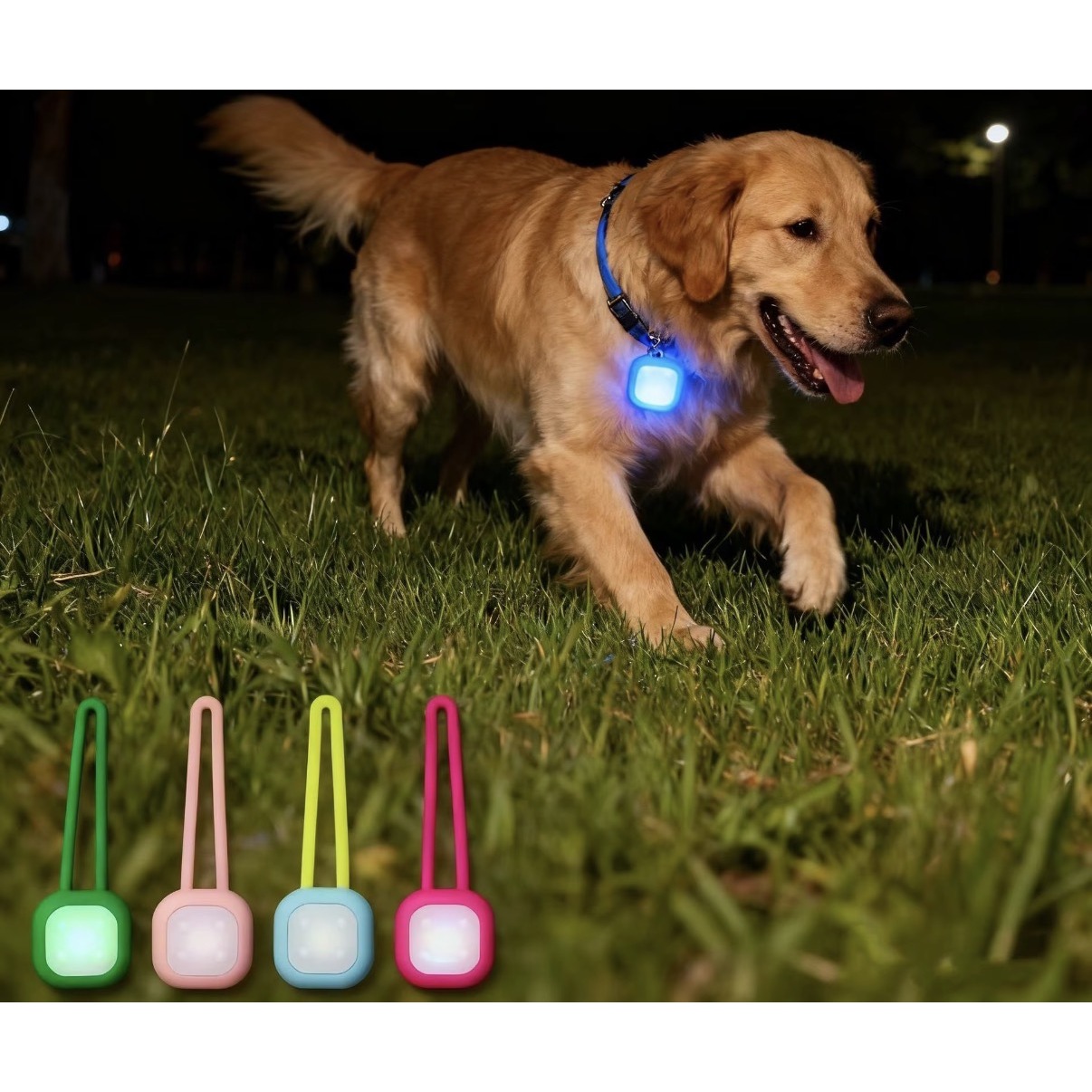
Accessory
LED Reflective Lead Light
Rechargeable clip-on light for dark walks.
Fits any dog
Pawpoint on YouTube
Watch the full Scottish Terrier video
Breed deep-dives, history and honest ownership talk. New film every week.
Watch now