Shar Pei
SHAR PAY
China· Guangdong province
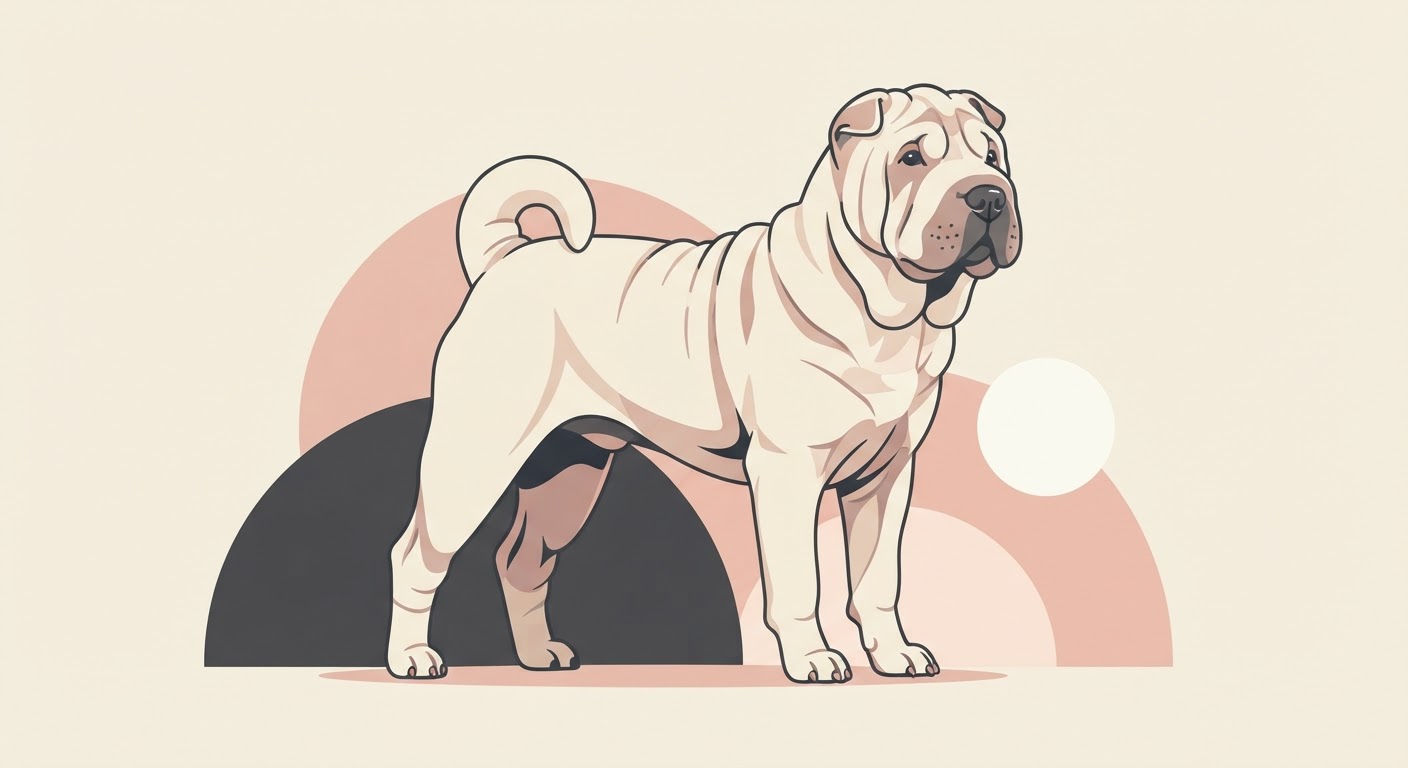
The Shar Pei is a distinctive Chinese breed known for its deeply wrinkled skin, bristly sandpaper coat and small, high-set ears, originally bred as an all-purpose farm dog before nearly vanishing in the 20th century.
At a glance
Quick facts
Size
Medium
Exercise needs
30–45 minutes daily
Home size suited to
Small to medium home
Grooming frequency
Weekly brush, hand-strip a few times a year
Coat length
Wiry
Sheds
Little, needs stripping instead
Lifespan
9–11 years
Town or country
Either, happy in town
Garden size needed
Small to medium
Where it comes from
Origins of the Shar Pei
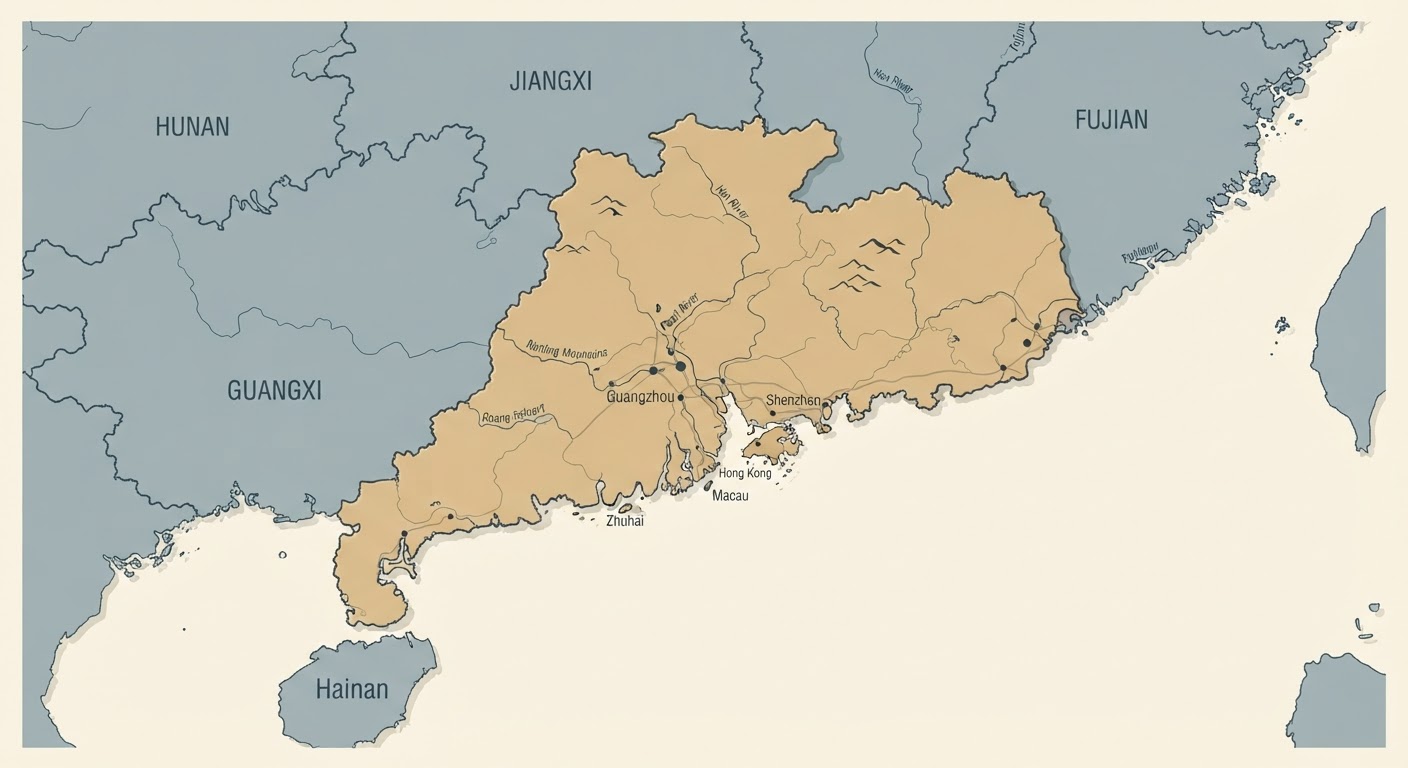
Village dogs in southern China's Guangdong province, Shar Pei were kept for guarding farms and homes, their loose wrinkled skin originally thought to help them twist free if grabbed during a fight.
- Region
- Guangdong province
- Climate it was bred for
- Warm, humid southern China
- Original job
- Guarding, herding, hunting and fighting
Living with one
Temperament & needs
Our own ratings, based on the breed standard and how these dogs behave in ordinary homes.
Friendliness
2/5
How openly the Shar Pei greets people it does not know.
Trainability
3/5
Intelligent but independent and can be stubborn without confident handling.
Energy
3/5
Moderate exercise needs; enjoys a walk but is not hyperactive.
Barking
2/5
Generally quiet, more watchful than vocal.
Grooming
2/5
Short coat is low-maintenance but skin folds need regular checking and cleaning.
Suits a first-time owner
3/5
How forgiving the Shar Pei is for someone taking on their first dog.
Sociability
2/5
Loyal to its family but often aloof or wary with strangers and other dogs.
Independence
4/5
A self-possessed, dignified breed that does not crave constant attention.
Illustrated breed standard
The points of the breed
Hover or tap a numbered point to read what the standard asks for.
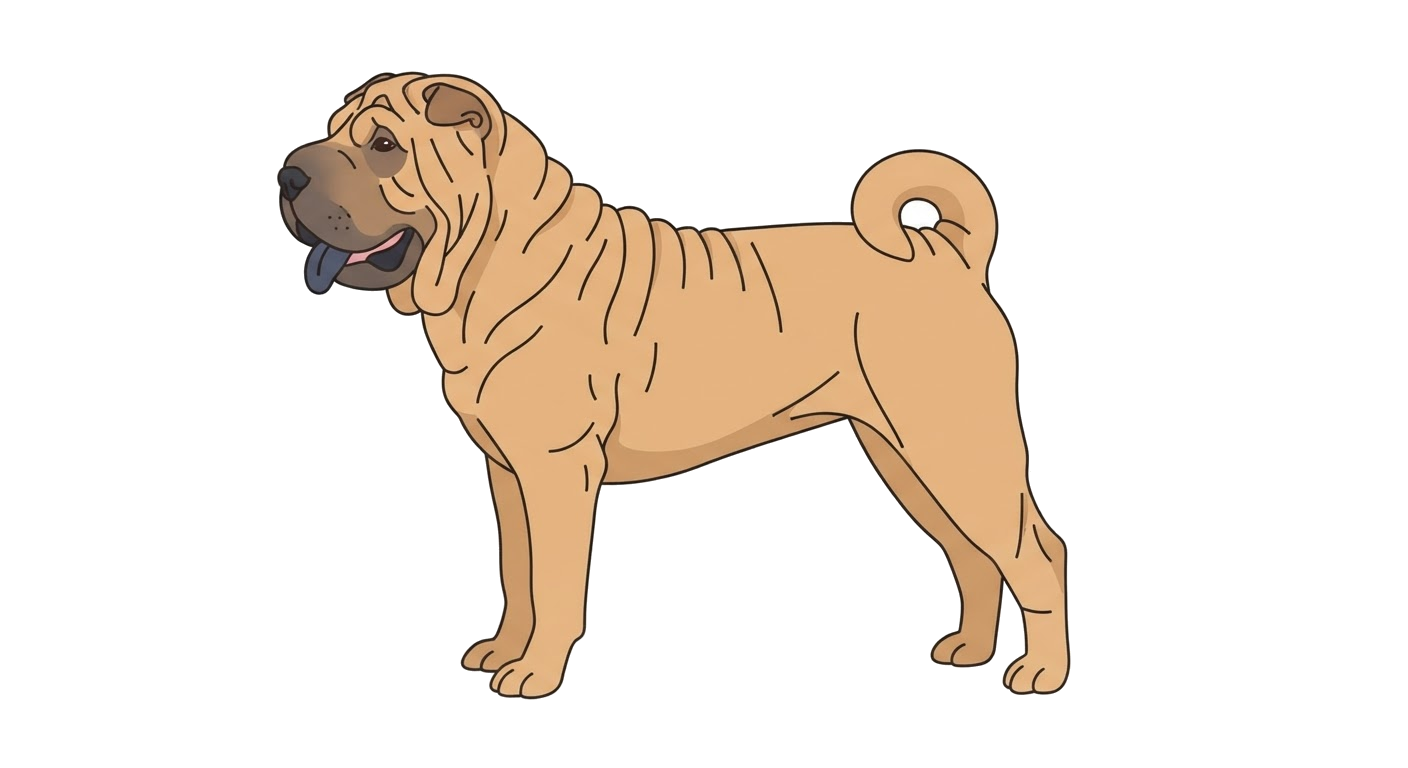
Point 1
Skull
The Shar Pei's skull is judged on balance rather than size — proportionate to the body, with a clean cheek and a stop typical of the breed. Coarseness or an over-refined head are both faulted.
Colours & patterns
Recognised coats
Which coats the standard accepts — and which are simply popular.
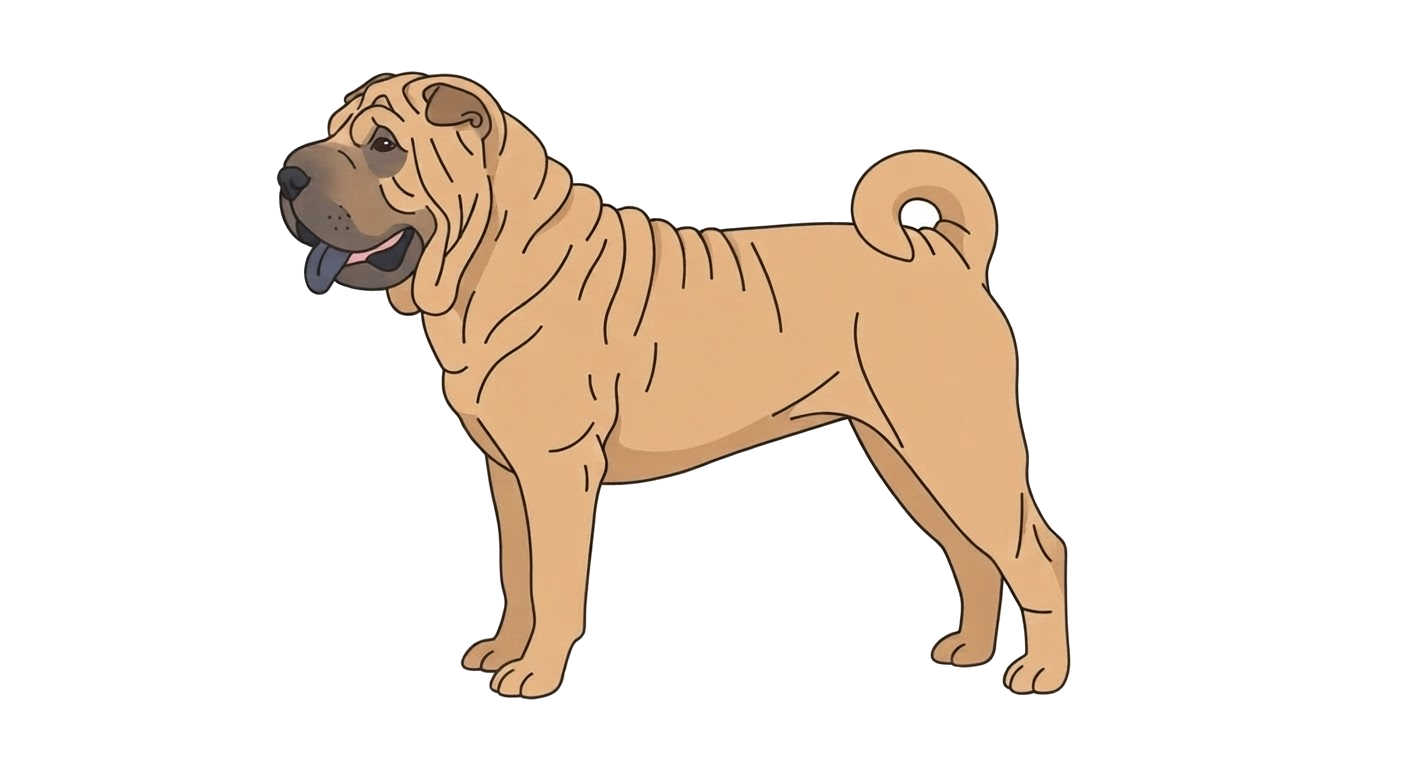
Fawn
Standard colour
A common solid colour ranging from pale to deep tan.
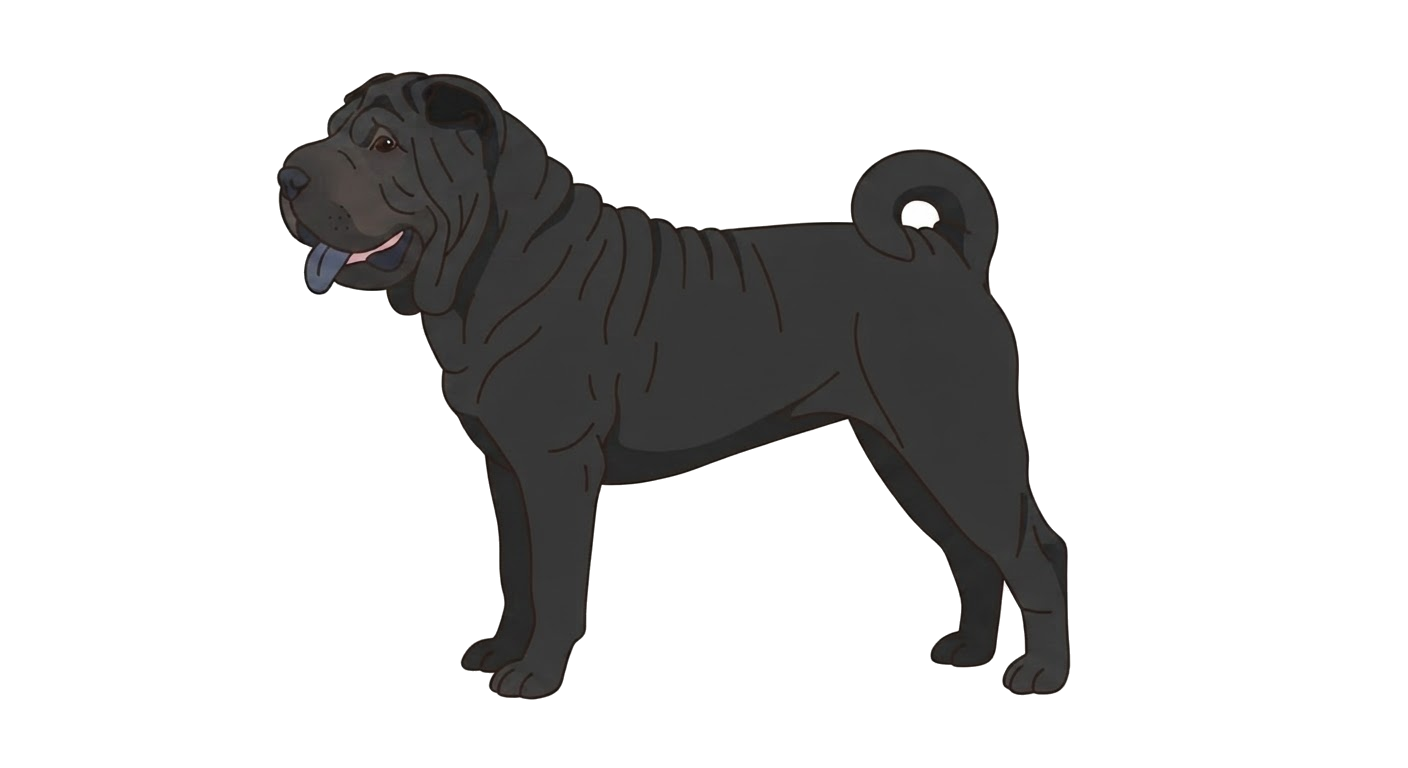
Black
Standard colour
A solid, dense black coat.
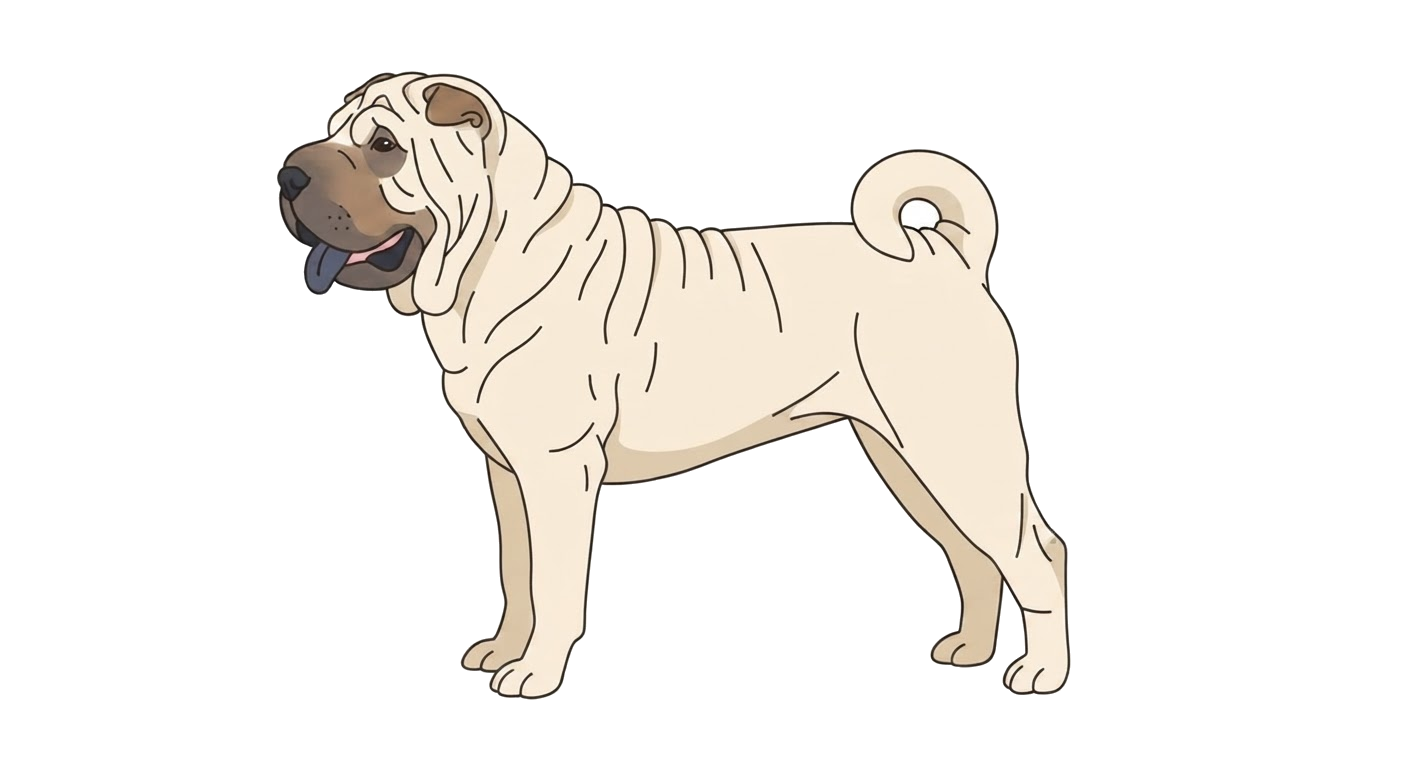
Cream
Standard colour
A pale, almost white solid shade.
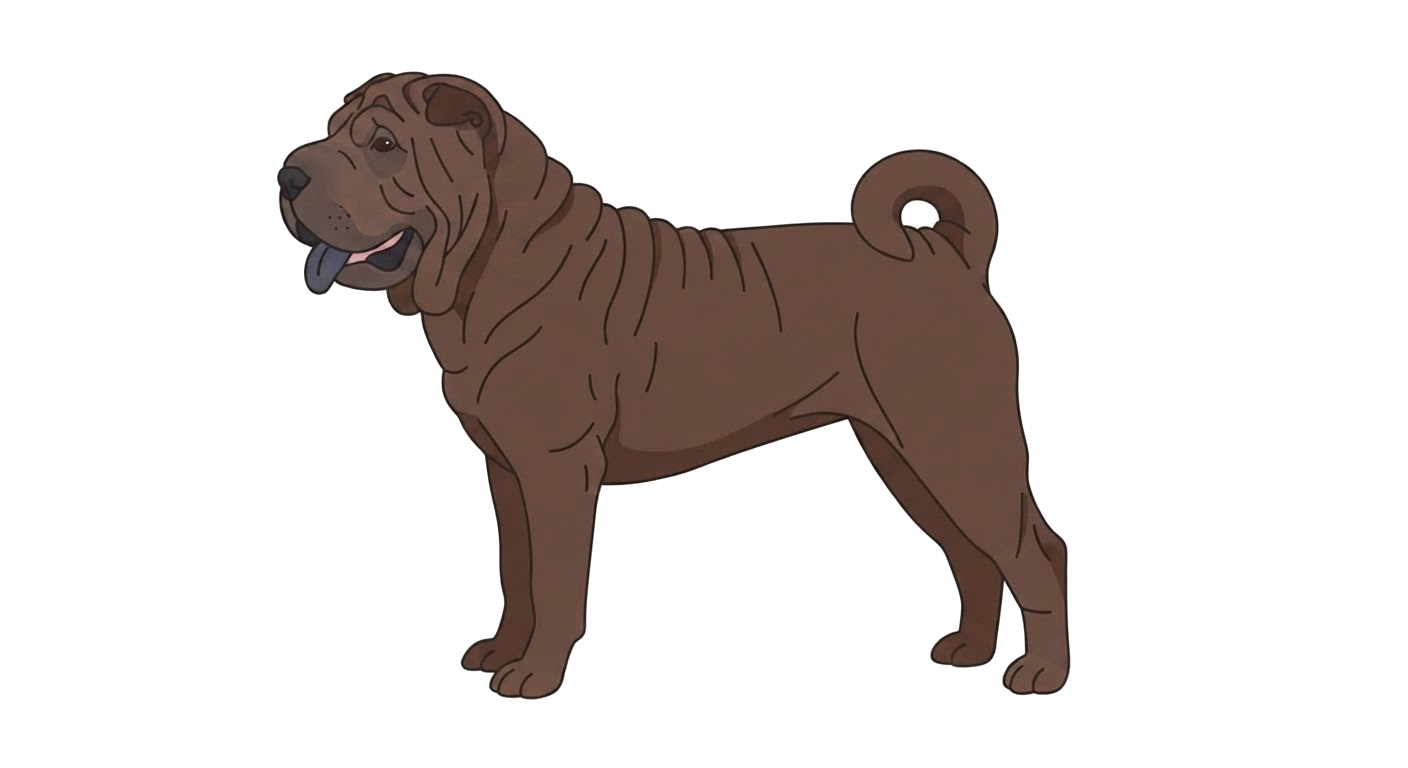
Chocolate
Standard colour
A rich brown, less common than fawn or black.
Outside the standard
Other colours
Dilute coats you will see advertised. They are the same breed, but no kennel club accepts them.
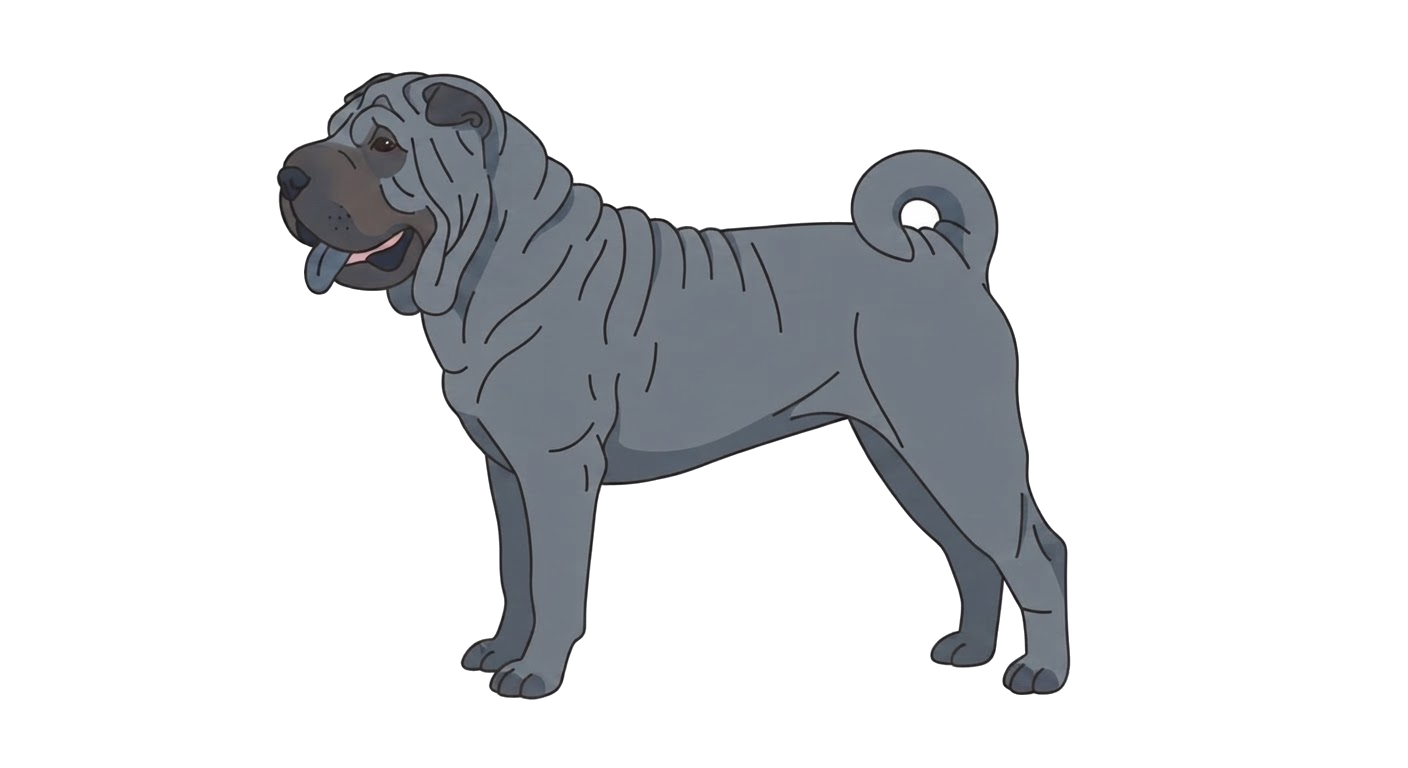
Blue
Not in the standard
A diluted grey shade seen occasionally outside the main standard colours.
Timeline
History & development
200 BC
Ancient origins
Dogs resembling the Shar Pei appear in artefacts from the Han Dynasty in southern China.
1940s-70s
Near extinction
Political upheaval and dog ownership taxes in China drastically reduced the breed's numbers.
1973
Hong Kong revival
A small number of Shar Pei were exported via Hong Kong, sparking renewed interest abroad.
1978
Rarest breed appeal
An American magazine article calling the Shar Pei the world's rarest breed spurred a wave of new interest and breeding programmes.
Reference
Breed standard summary
- body
- Compact, close-coupled, deep chest.
- coat
- Extremely harsh and bristly, short in length.
- ears
- Small, thick, high-set, lying flat.
- eyes
- Small, dark, almond-shaped, deep-set.
- gait
- Free, powerful, with a slight roll from the wrinkling.
- head
- Large, flat, with a heavily wrinkled forehead.
- size
- 44–51cm at the withers.
- tail
- Round, thick at the base, tapering, carried curled.
- colour
- Fawn, Black, Cream, Chocolate. Colours outside this list are seen but are not accepted by the kennel clubs.
- temperament
- Typical of the breed: strongest in independence, energy, trainability. Nervousness or aggression are serious faults in the show ring and in the home.
- general appearance
- Compact, square-proportioned dog with characteristic loose, wrinkled skin.
Health
What to screen for
Green means little to worry about, amber means ask the breeder for test results, red means manage it actively.
Familial Shar-Pei fever
Watch closely
A hereditary inflammatory condition causing recurring fever and swelling; ask breeders directly about its incidence in their lines.
Entropion
Low concern
Eyelids rolling inward is common due to skin folds; many puppies need corrective surgery.
Skin fold infections
Watch closely
Regular cleaning of folds is needed to prevent bacterial and yeast infections.
Ear canal narrowing
Screen for it
Small, tight ear canals need regular checking to avoid infection.
General information only — always speak to your vet about your own dog.
From real owners
Dogs like this
Shar Peis added by PawPoint members through their pet passports. Share yours to appear here.
Loading the wall…
Made for the Shar Pei
The book, plus prints, hoodies and mugs using our own Shar Pei illustration — and one everyday accessory that suits any dog.
The book
Pawpoint: The Complete Dog Breed Book
Every officially recognised breed plus the unofficial ones nobody else documents. 400+ pages, hardback, printed and shipped from the UK.
Own stock — shipped by us
Framed poster
Shar Pei Framed Poster
Museum-weight print of our Shar Pei illustration, framed or unframed.
Printed to order
Hoodie
Shar Pei Hoodie
Heavyweight hoodie carrying the Shar Pei illustration on the chest.
Printed to order
Mug
Shar Pei Mug
Ceramic mug with the Shar Pei illustration wrapped around it.
Printed to order

Accessory
Stainless Dog Bowl
Weighted, non-slip base. Dishwasher safe.
Fits any dog

Pawpoint on YouTube
Watch the full Shar Pei video
Breed deep-dives, history and honest ownership talk. New film every week.
Watch now