
Shih Tzu
SHEED-zoo
China· Imperial palaces of Beijing
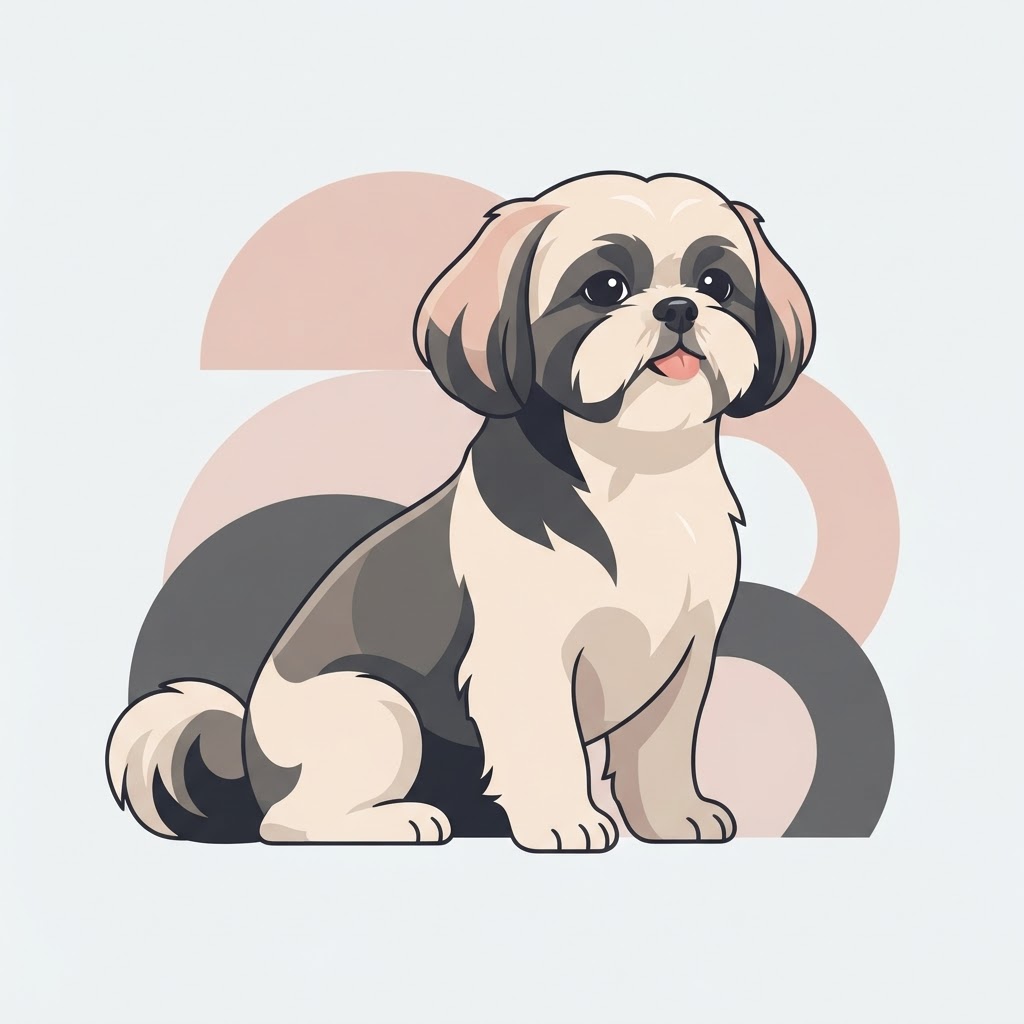
The Shih Tzu is a small, sturdy companion breed from the Chinese imperial court, distinguished by a long flowing double coat, a short muzzle and a confident, friendly temperament far removed from its lapdog reputation.
At a glance
Quick facts
Size
Toy
Exercise needs
30 minutes daily
Home size suited to
Flat or any size home
Grooming frequency
Daily brushing
Coat length
Long
Sheds
Yes, heavily when moulting
Lifespan
10–16 years
Town or country
Either, happy in town
Garden size needed
None needed
Where it comes from
Origins of the Shih Tzu

Bred inside the walls of the Chinese imperial court, possibly from Tibetan temple dogs, the Shih Tzu was never expected to work outdoors and was prized purely as a decorative, affectionate companion.
- Region
- Imperial palaces of Beijing
- Climate it was bred for
- Temperate, sheltered indoor palace life
- Original job
- Companion and lapdog to Chinese emperors
Living with one
Temperament & needs
Our own ratings, based on the breed standard and how these dogs behave in ordinary homes.
Friendliness
5/5
How openly the Shih Tzu greets people it does not know.
Trainability
3/5
Willing to learn but can be slow to housetrain without consistency.
Energy
2/5
Content with modest daily walks and indoor play.
Barking
3/5
Will alert bark at the door but is not habitually noisy.
Grooming
5/5
Long flowing coat needs daily brushing or regular clipping to a shorter length.
Suits a first-time owner
4/5
How forgiving the Shih Tzu is for someone taking on their first dog.
Sociability
5/5
Outgoing and affectionate, generally good with people of all ages.
Independence
2/5
Enjoys company and does not do well left alone for long stretches.
Illustrated breed standard
The points of the breed
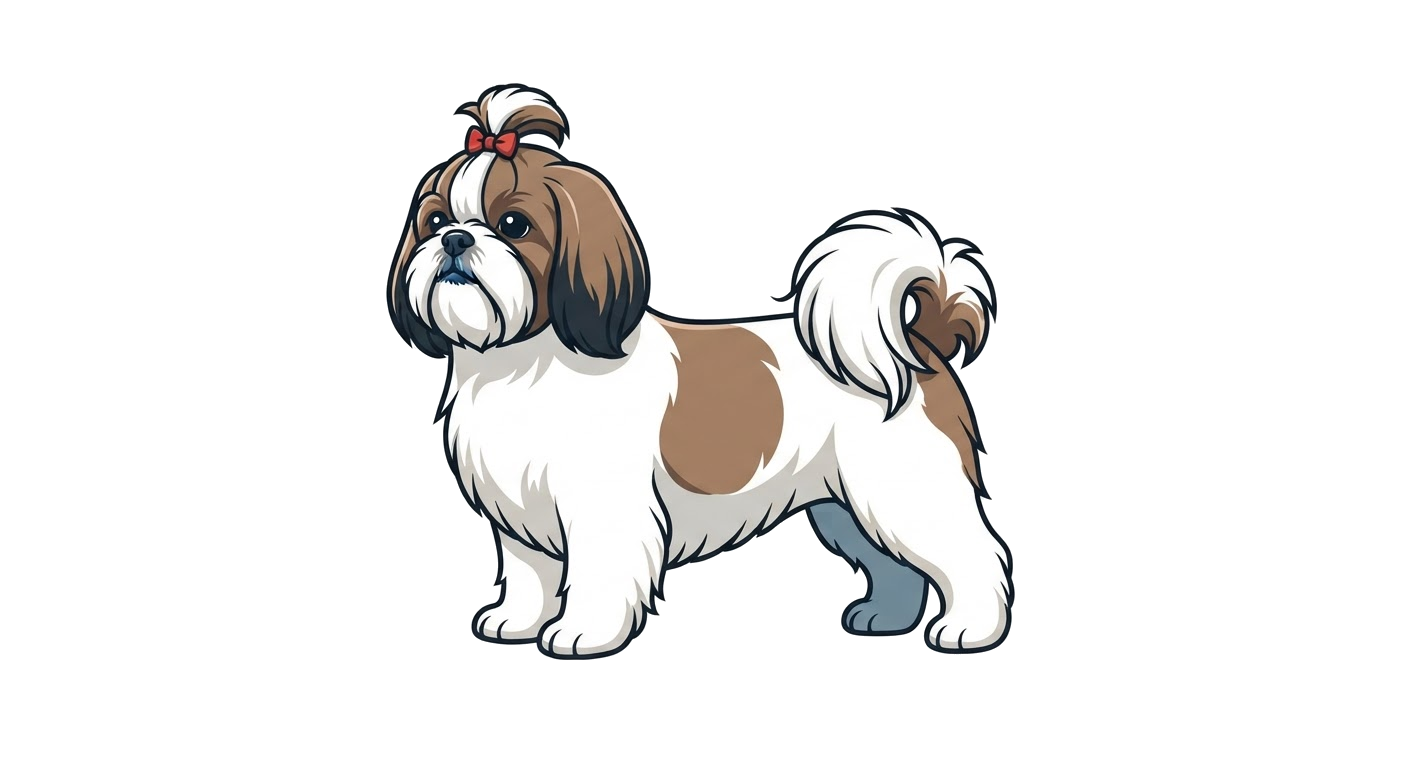
Hover or tap a numbered point to read what the standard asks for.
Point 1
Skull
The Shih Tzu's skull is judged on balance rather than size — proportionate to the body, with a clean cheek and a stop typical of the breed. Coarseness or an over-refined head are both faulted.
Colours & patterns
Recognised coats
Which coats the standard accepts — and which are simply popular.
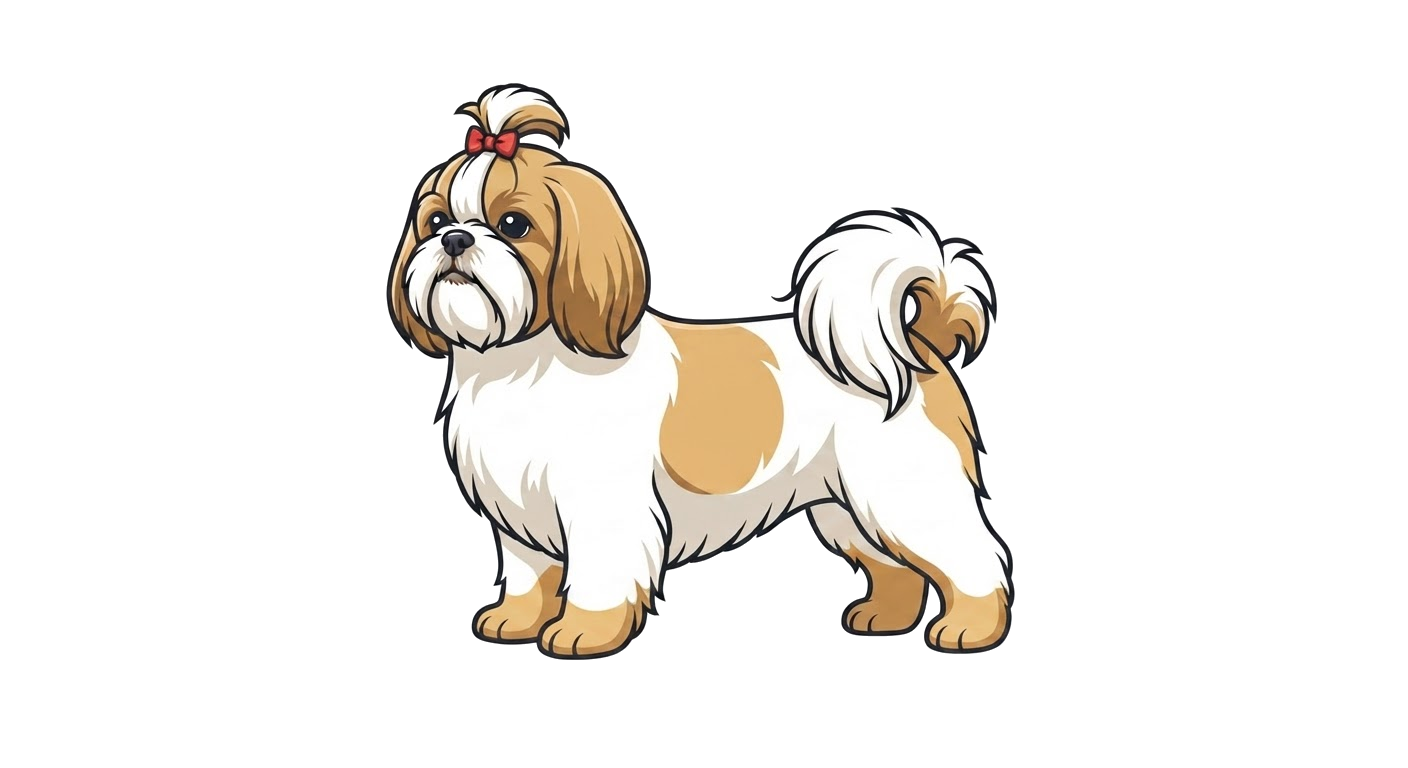
Gold and White
Standard colour
A classic, popular Shih Tzu colouring.
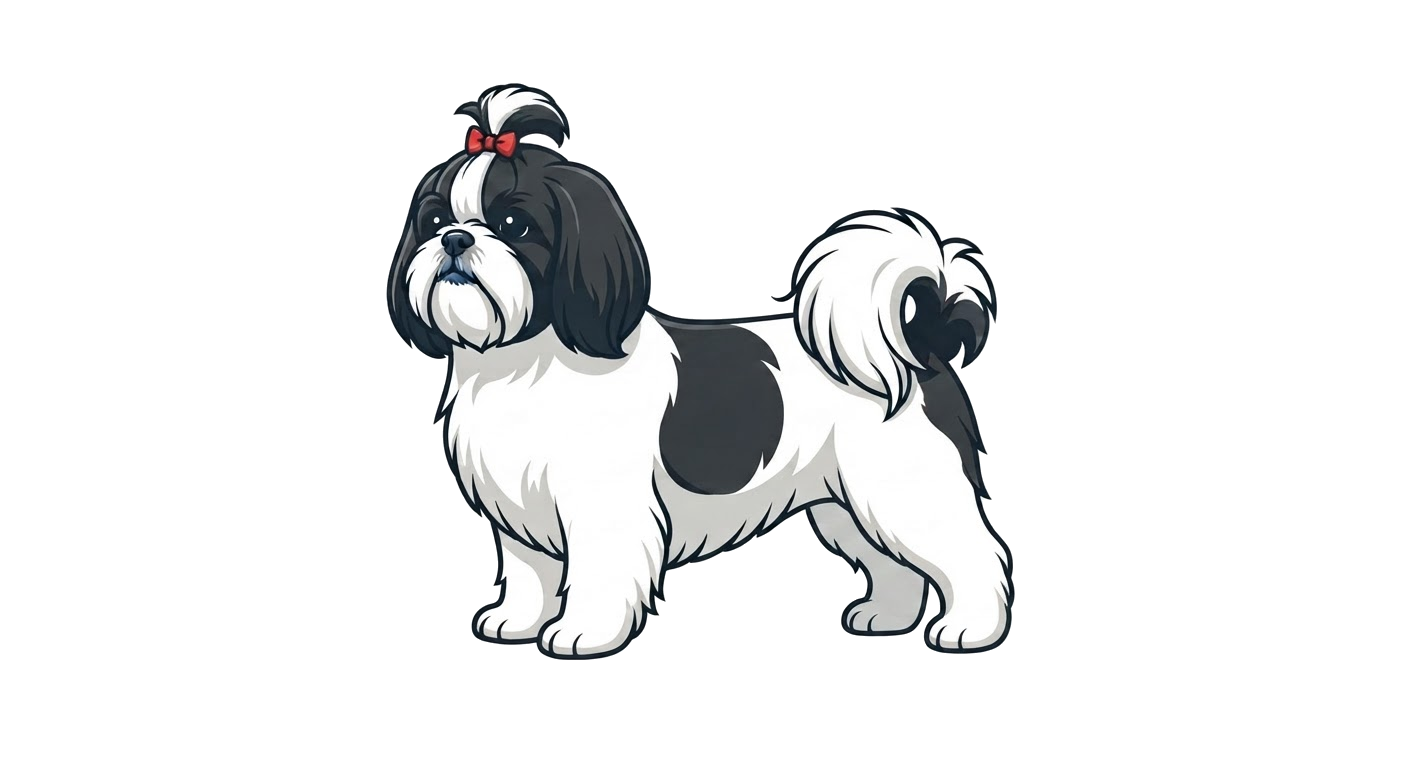
Black
Standard colour
A solid, glossy black coat.
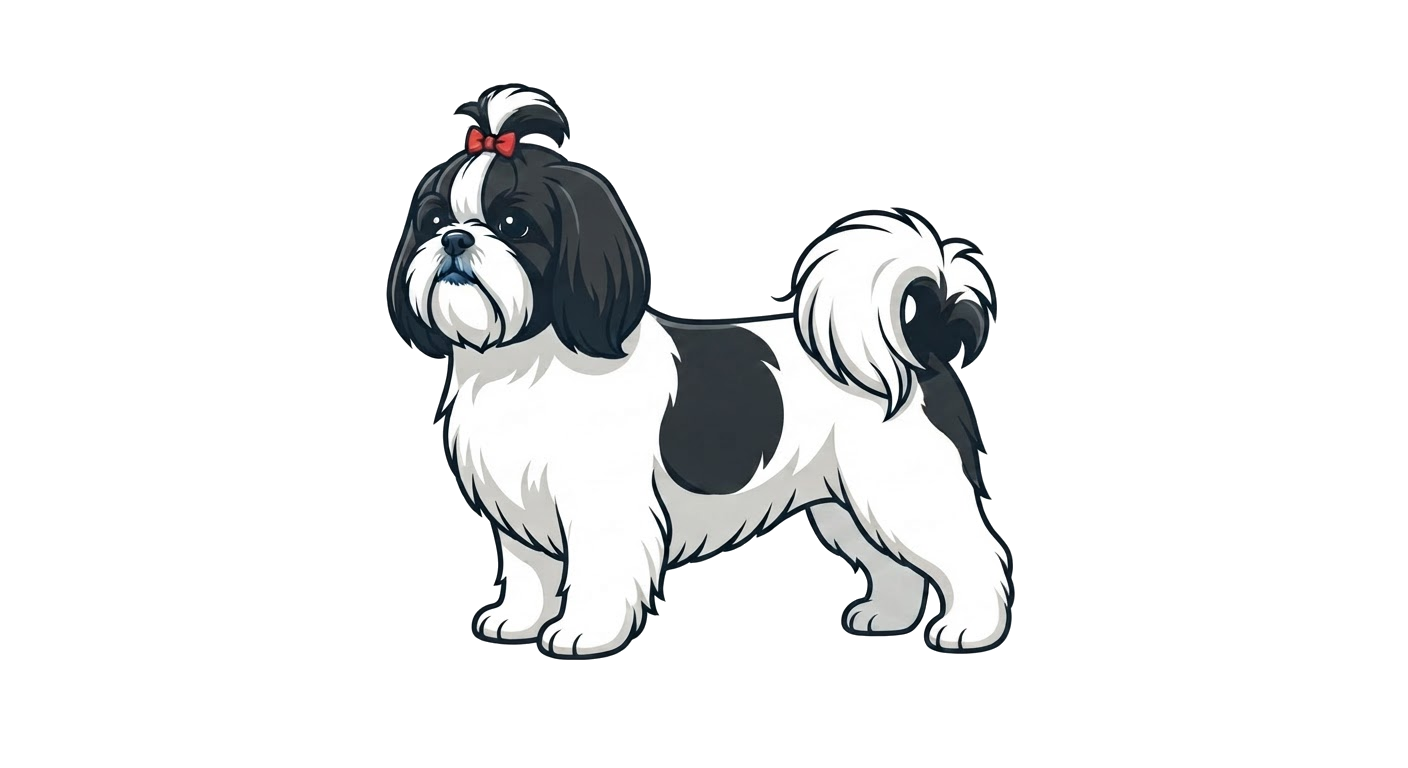
Black and White
Standard colour
A common parti-colour pattern.
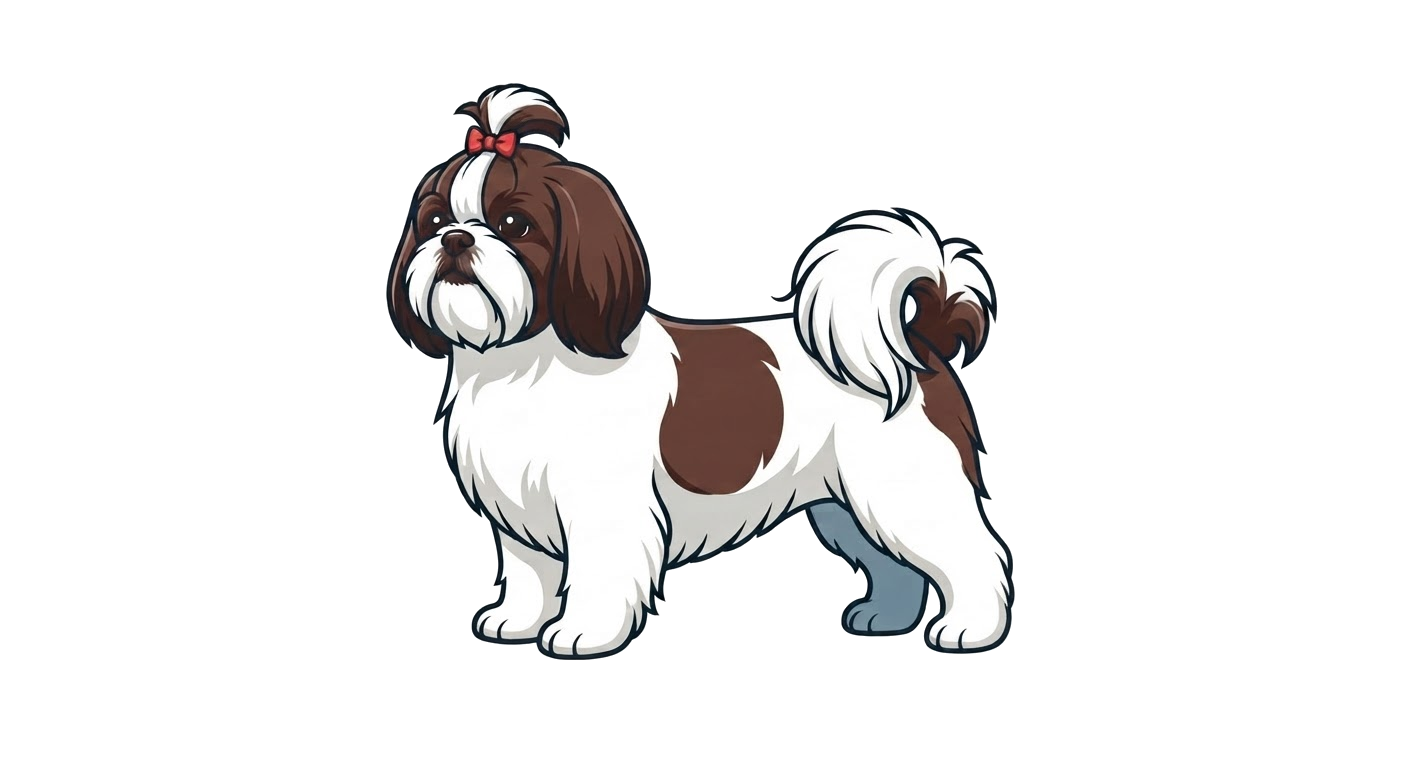
Liver and White
Standard colour
A warm brown-and-white combination.
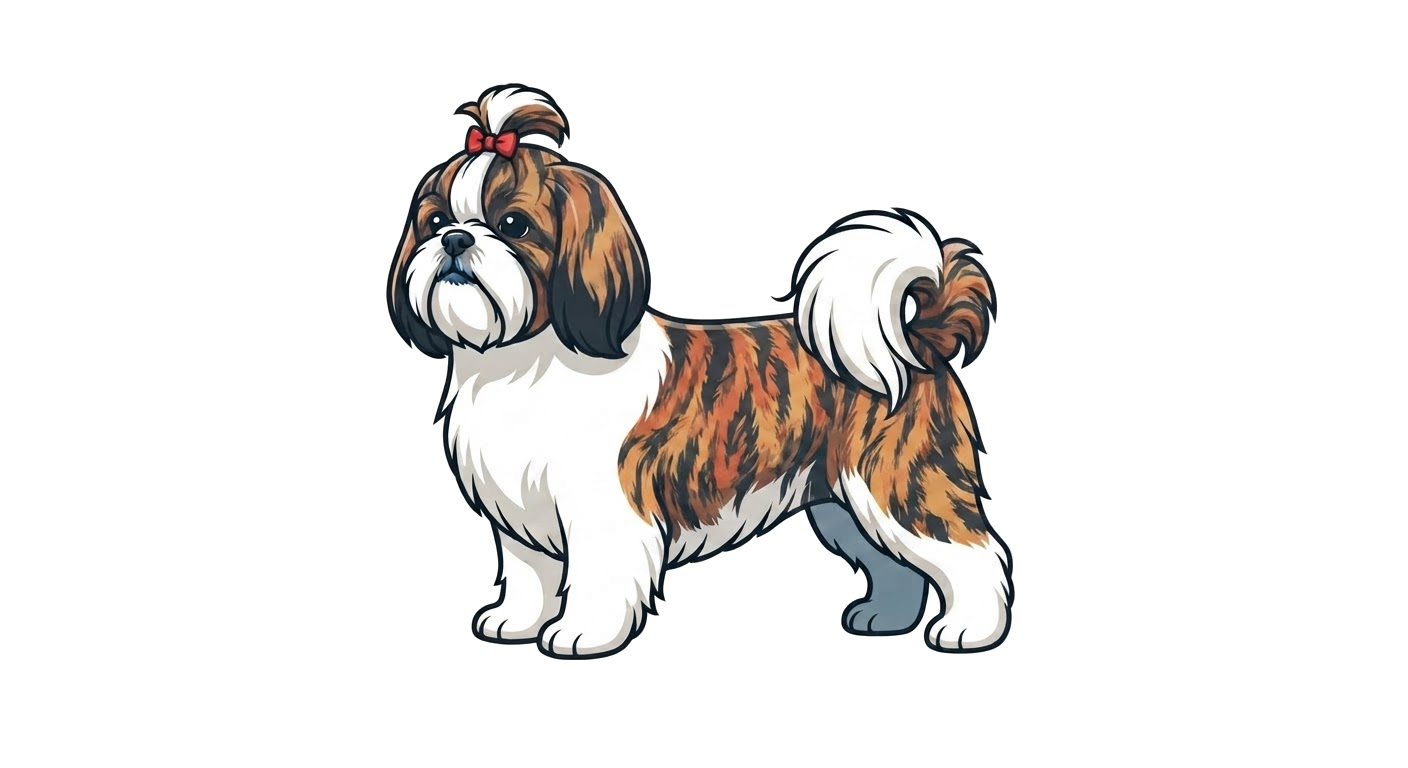
Brindle
Standard colour
A streaked mix of colours, fully accepted in the standard.
Timeline
History & development
1600s
Tibetan and Chinese roots
The breed likely developed from small dogs gifted to Chinese emperors by Tibetan lamas, crossed with existing palace breeds.
1861-1908
Empress Dowager Cixi's kennels
The Empress Dowager kept and bred Shih Tzu extensively within the Forbidden City.
1930s
Export from China
A small number of dogs left China for Europe, including to England, forming the foundation of Western breeding lines.
1949
UK Kennel Club recognition
The Shih Tzu was formally recognised as a breed in Britain.
1950s onward
The breed today
Kennel club registrations settled into a steady pattern and the Shih Tzu moved from a working specialist to a family companion, with breed clubs in the UK and abroad now focused on health testing and keeping true type alive.
Reference
Breed standard summary
- body
- Longer than tall, deep chest, level back.
- coat
- Long, dense, flowing, with a good undercoat.
- ears
- Large, drooping, well coated.
- eyes
- Large, round, dark, set well apart.
- gait
- Flowing, effortless, with good reach.
- head
- Broad, round, with a short square muzzle.
- size
- 20–28cm at the withers.
- tail
- Heavily plumed, carried curled over the back.
- colour
- Gold and White, Black, Black and White, Liver and White, Brindle. Colours outside this list are seen but are not accepted by the kennel clubs.
- temperament
- Typical of the breed: strongest in sociability, grooming, trainability. Nervousness or aggression are serious faults in the show ring and in the home.
- general appearance
- Sturdy, abundantly coated dog with a proud, arrogant carriage.
Health
What to screen for
Green means little to worry about, amber means ask the breeder for test results, red means manage it actively.
Brachycephalic airway issues
Watch closely
The short muzzle can restrict breathing; avoid overheating and choose breeders selecting for open nostrils and moderate muzzle length.
Progressive retinal atrophy
Screen for it
Ask for eye certification results from breeding stock.
Hip dysplasia
Screen for it
Request hip scores where available despite the breed's small size.
Dental crowding
Low concern
Small jaws mean regular dental checks and cleaning help prevent early tooth loss.
General information only — always speak to your vet about your own dog.
From real owners
Dogs like this
Shih Tzus added by PawPoint members through their pet passports. Share yours to appear here.
Loading the wall…
Made for the Shih Tzu
The book, plus prints, hoodies and mugs using our own Shih Tzu illustration — and one everyday accessory that suits any dog.

The book
Pawpoint: The Complete Dog Breed Book
Every officially recognised breed plus the unofficial ones nobody else documents. 400+ pages, hardback, printed and shipped from the UK.
Own stock — shipped by us
Framed poster
Shih Tzu Framed Poster
Museum-weight print of our Shih Tzu illustration, framed or unframed.
Printed to order
Hoodie
Shih Tzu Hoodie
Heavyweight hoodie carrying the Shih Tzu illustration on the chest.
Printed to order
Mug
Shih Tzu Mug
Ceramic mug with the Shih Tzu illustration wrapped around it.
Printed to order
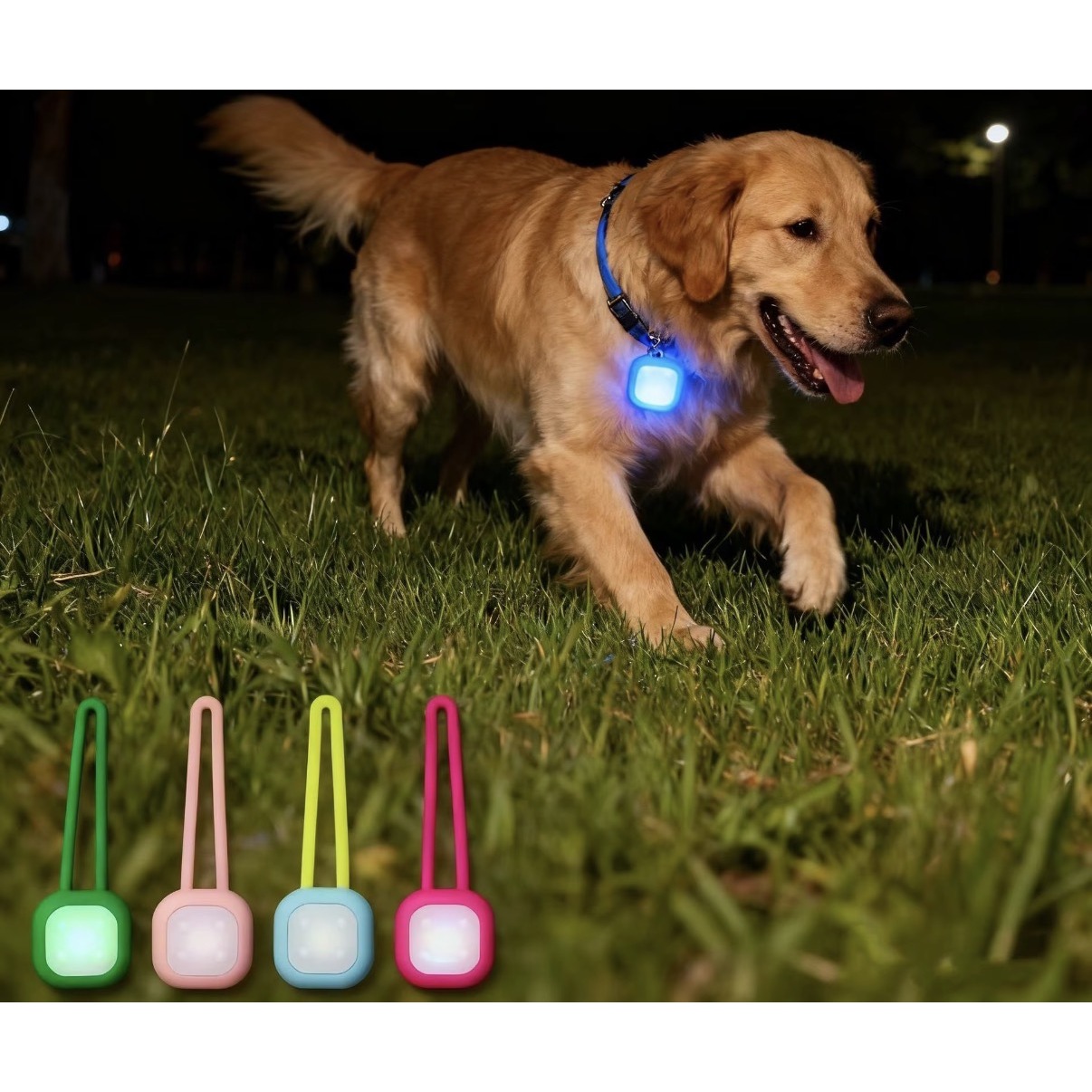
Accessory
LED Reflective Lead Light
Rechargeable clip-on light for dark walks.
Fits any dog

Pawpoint on YouTube
Watch the full Shih Tzu video
Breed deep-dives, history and honest ownership talk. New film every week.
Watch now