
Siberian Husky
sy-BEER-ee-uhn HUSS-kee
Russia· Chukotka, north-eastern Siberia
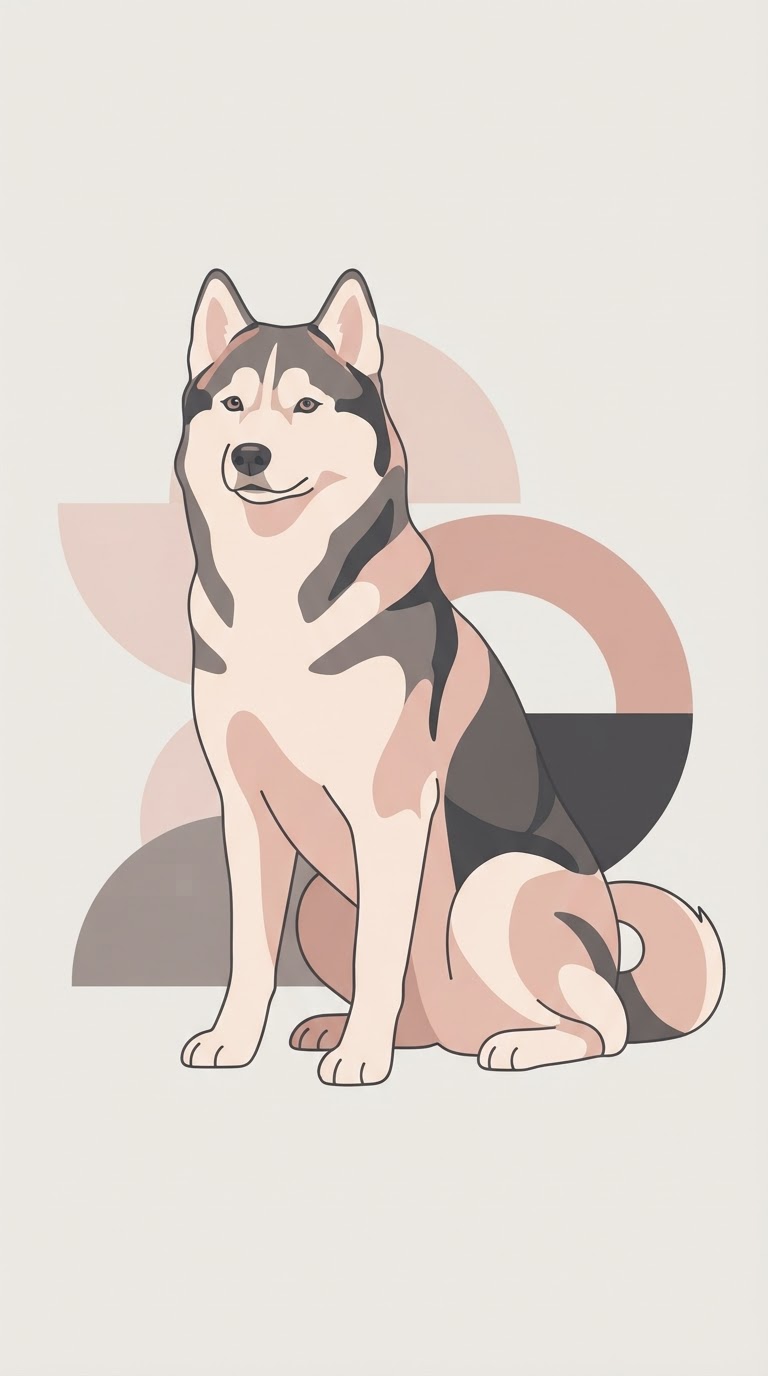
The Siberian Husky is a medium-sized Arctic sledge dog developed by the Chukchi people of north-eastern Siberia, built for speed and endurance over long distances rather than raw pulling power, with striking eyes and a thick weatherproof coat.
At a glance
Quick facts
Size
Medium
Exercise needs
90+ minutes daily
Home size suited to
Medium to large home
Grooming frequency
Twice weekly brush
Coat length
Medium
Sheds
Yes, heavily when moulting
Lifespan
12–14 years
Town or country
Either, with enough exercise
Garden size needed
Medium or larger
Where it comes from
Origins of the Siberian Husky
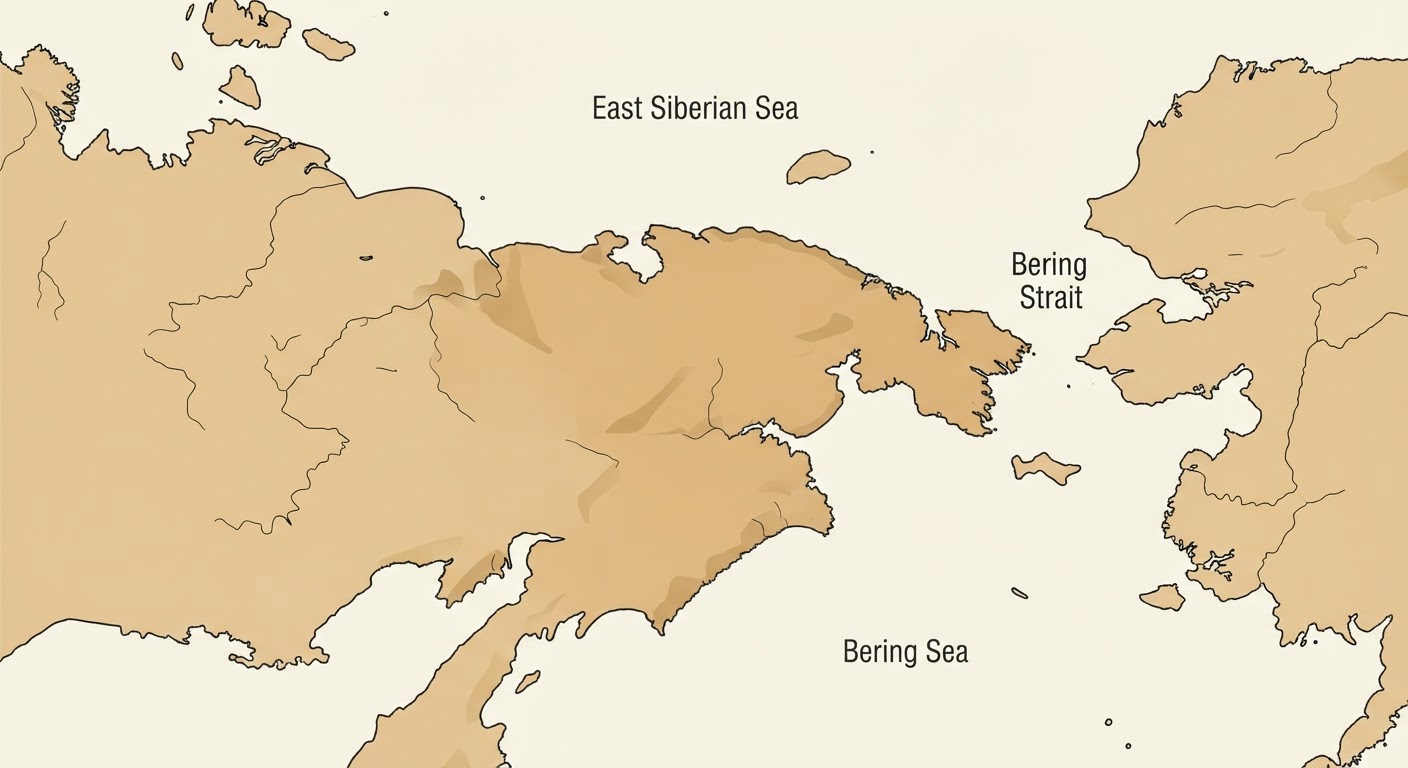
Bred by the Chukchi people of north-eastern Siberia, the Husky was developed for efficient, long-distance sledge travel across frozen tundra, valued as much for endurance as for speed.
- Region
- Chukotka, north-eastern Siberia
- Climate it was bred for
- Extreme Arctic cold
- Original job
- Pulling light sledges over long distances, family companion
Living with one
Temperament & needs
Our own ratings, based on the breed standard and how these dogs behave in ordinary homes.
Friendliness
4/5
How openly the Siberian Husky greets people it does not know.
Trainability
2/5
Intelligent but independent, with a strong prey drive and unreliable recall off-lead.
Energy
5/5
Extremely high stamina, bred to run for hours; needs serious daily exercise.
Barking
2/5
Not prone to barking but famous for howling and vocalising.
Grooming
4/5
Thick double coat sheds heavily twice a year and needs frequent brushing.
Suits a first-time owner
2/5
How forgiving the Siberian Husky is for someone taking on their first dog.
Sociability
4/5
Generally friendly, even with strangers, which makes it a poor guard dog.
Independence
4/5
Bred to work in a team but think for itself on the trail.
Illustrated breed standard
The points of the breed
Hover or tap a numbered point to read what the standard asks for.
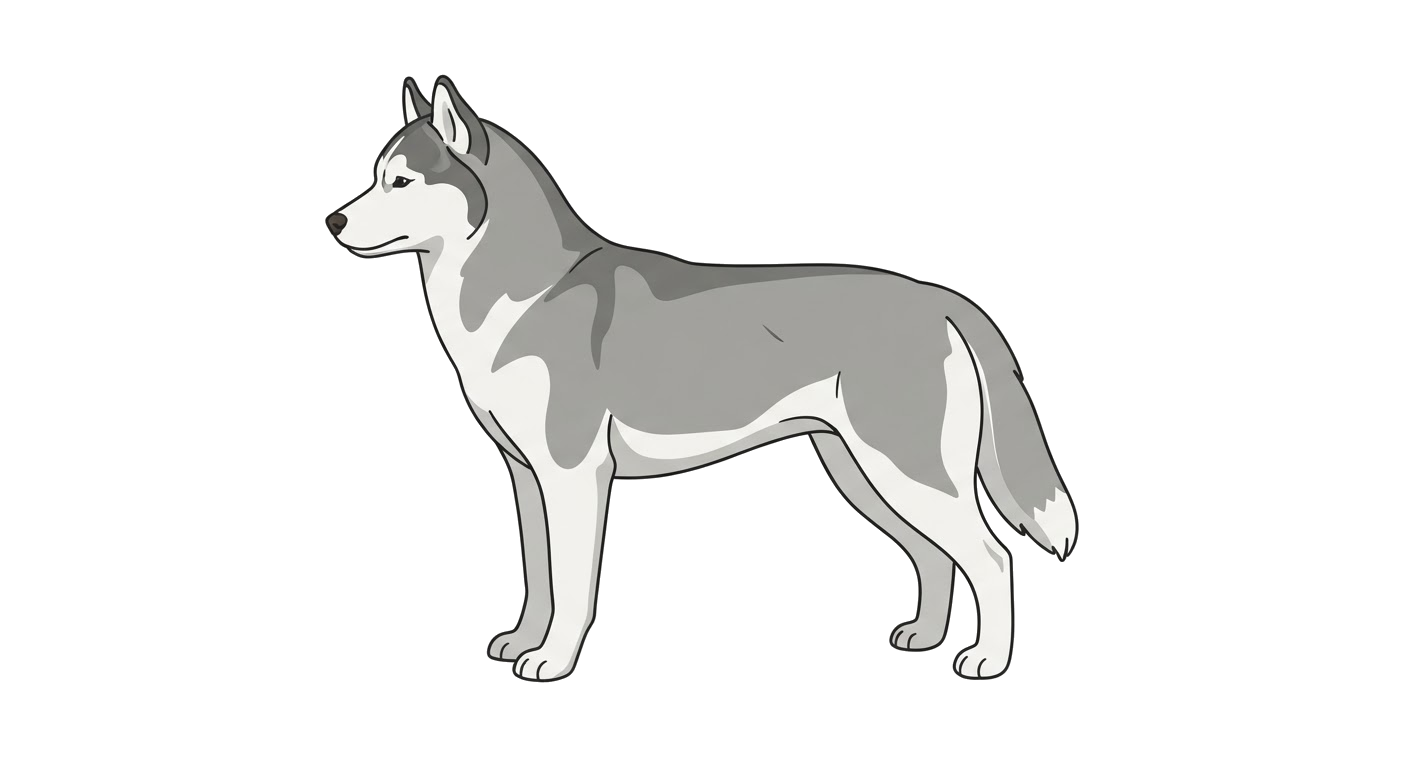
Point 1
Skull
The Siberian Husky's skull is judged on balance rather than size — proportionate to the body, with a clean cheek and a stop typical of the breed. Coarseness or an over-refined head are both faulted.
Colours & patterns
Recognised coats
Which coats the standard accepts — and which are simply popular.
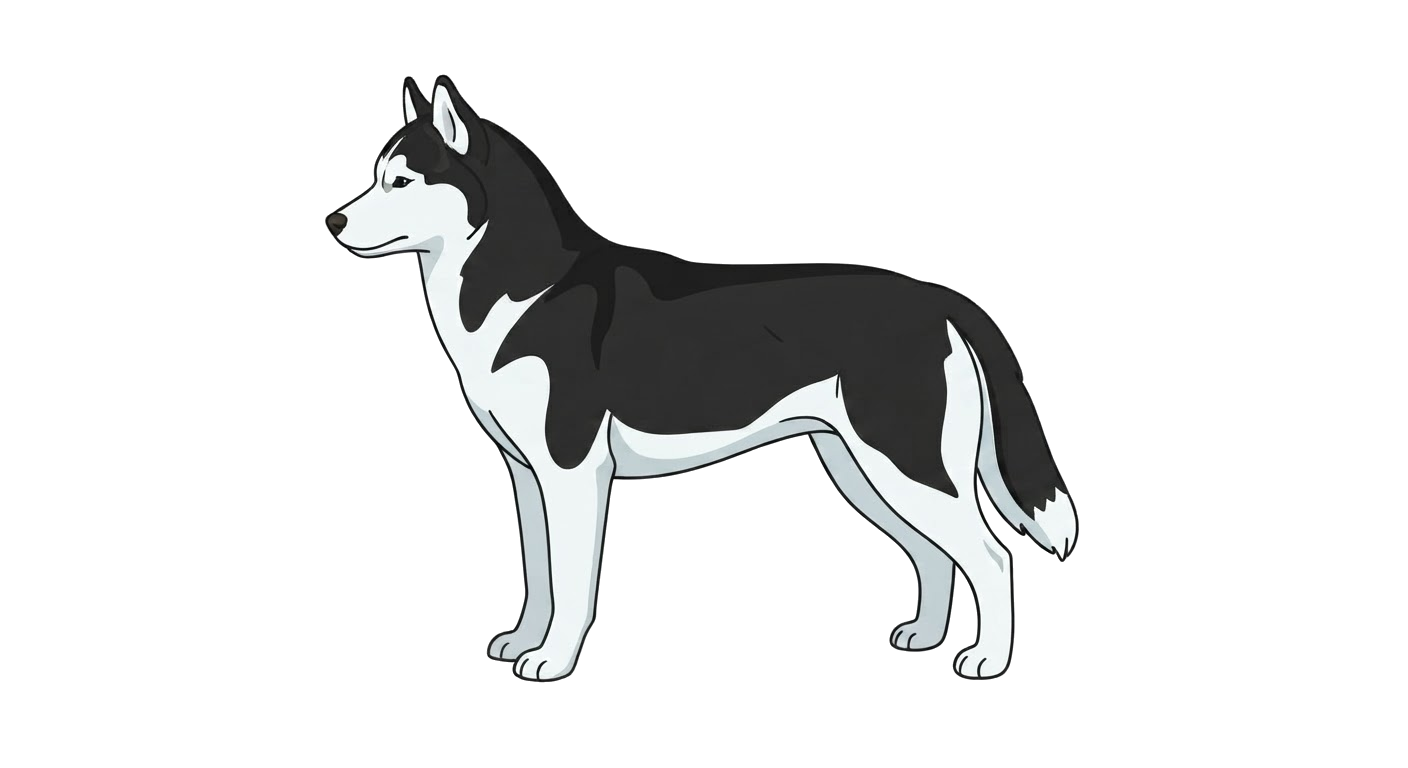
Black and White
Standard colour
One of the most common and classic Husky colourings.
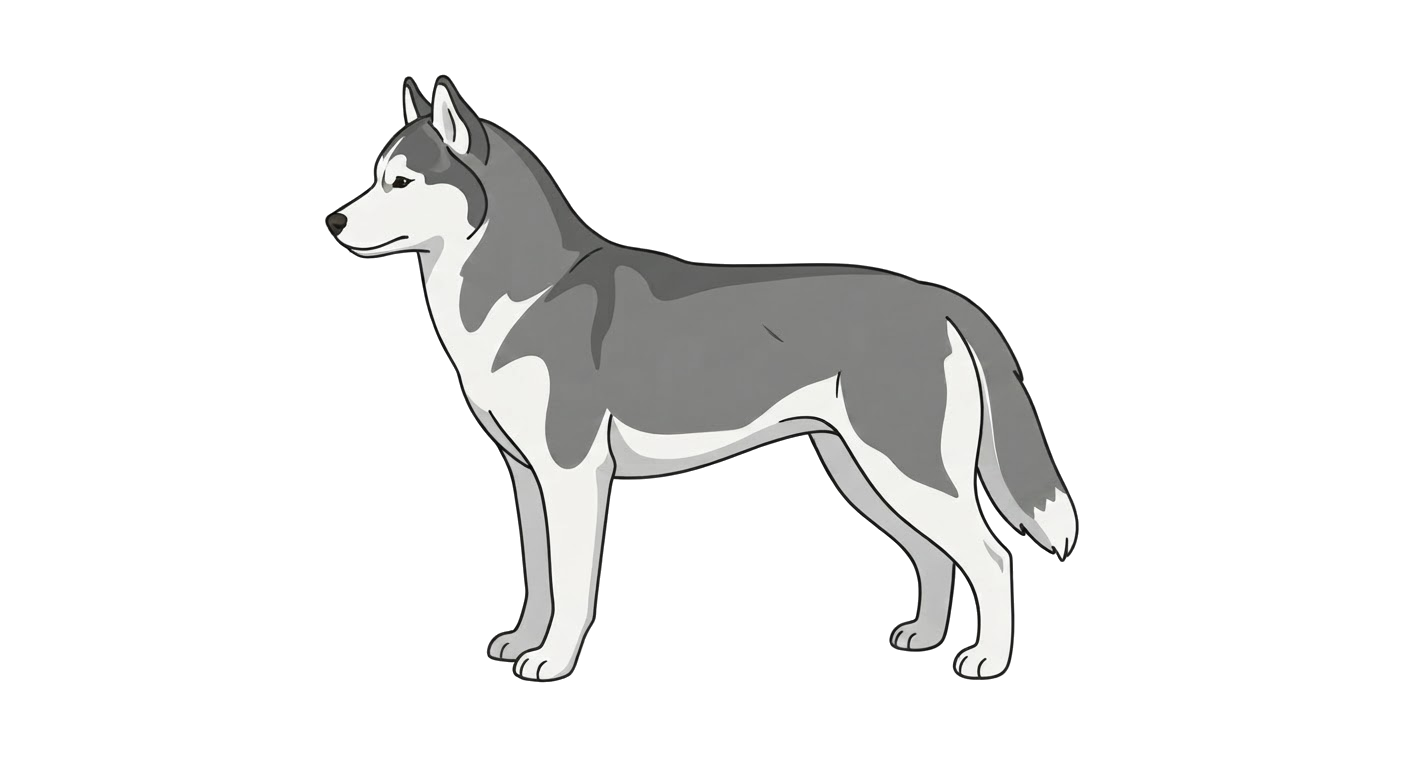
Grey and White
Standard colour
A wolf-like grey shade over white underparts.
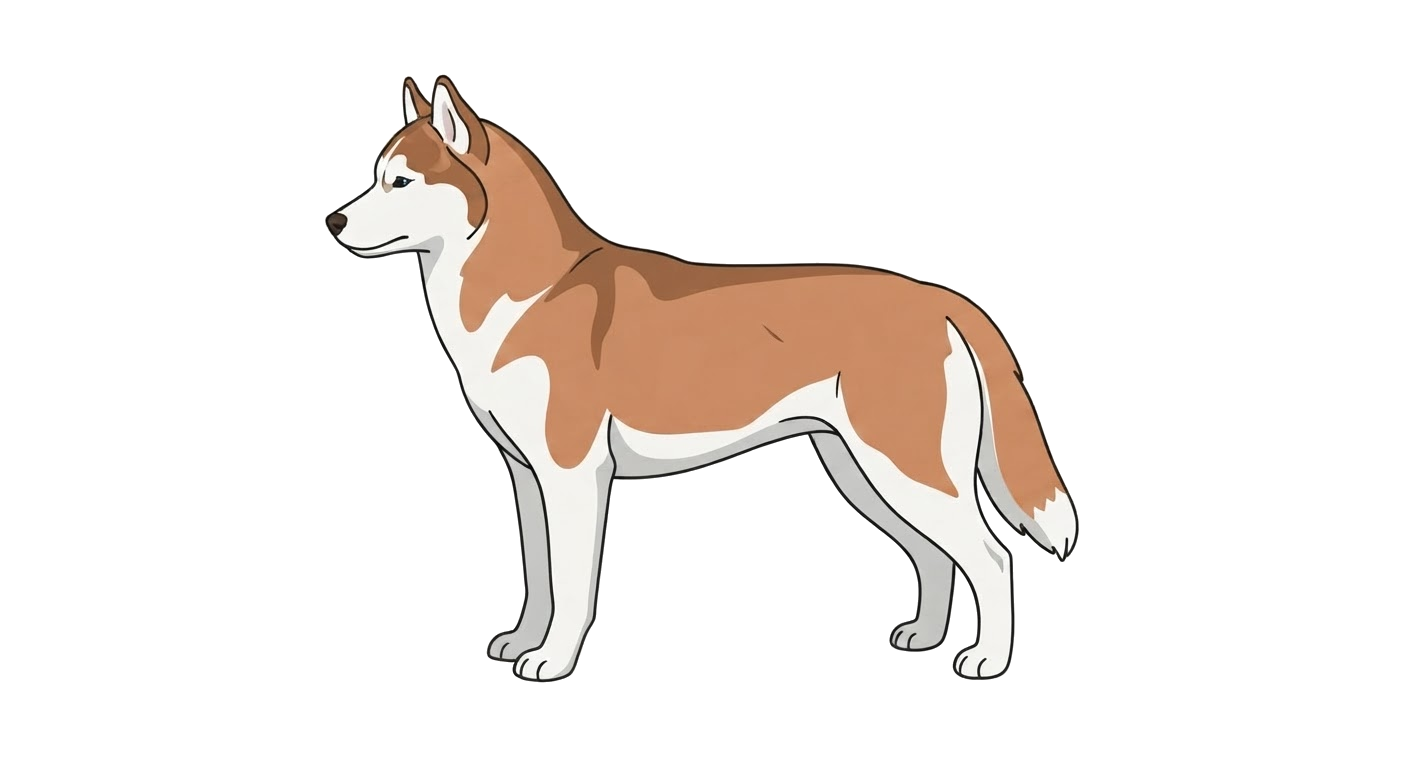
Red and White
Standard colour
A copper-red variant with white markings.
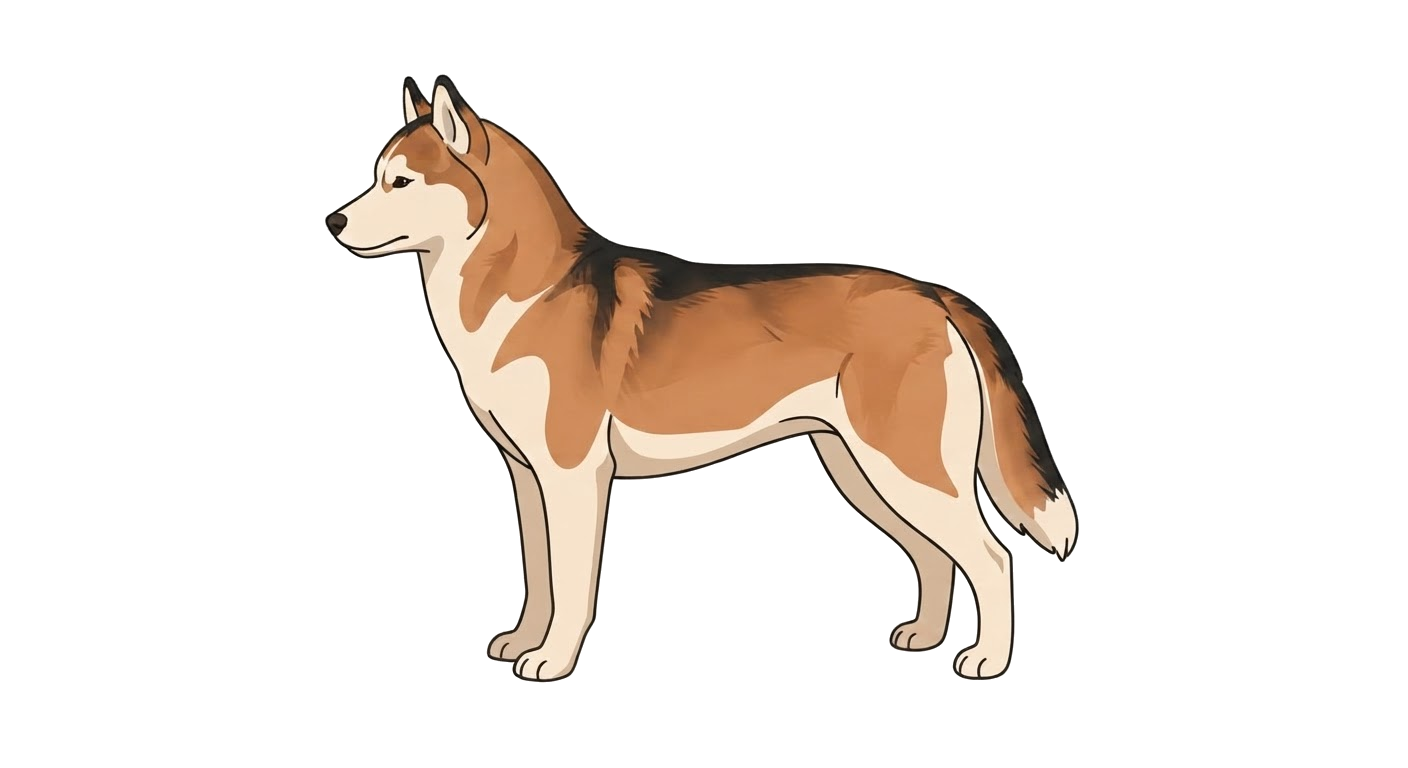
Sable
Standard colour
A warm agouti-banded coat colour.
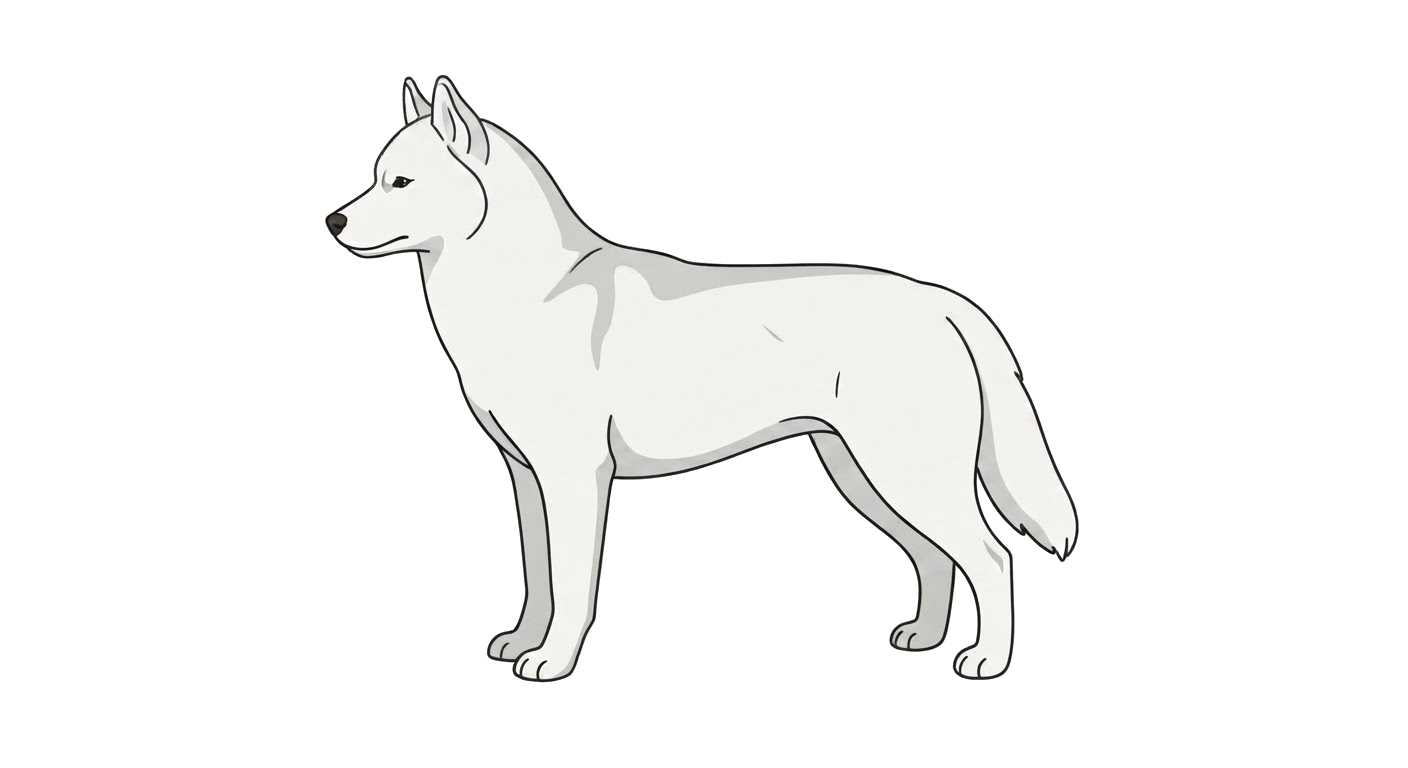
Pure White
Standard colour
An all-white coat, less common but fully standard.
Timeline
History & development
pre-1900s
Chukchi sledge dogs
The Chukchi people of Siberia bred these dogs over centuries for efficient long-distance sledge travel and family companionship.
1908
Alaska gold rush arrival
Huskies were imported to Alaska for use in sled dog races during the gold rush era.
1925
Serum run to Nome
Husky teams relayed diphtheria antitoxin to Nome, Alaska, a journey that brought the breed international fame.
1930
American Kennel Club recognition
The breed was formally recognised in the United States, with UK recognition following later.
1950s onward
The breed today
Kennel club registrations settled into a steady pattern and the Siberian Husky moved from a working specialist to a family companion, with breed clubs in the UK and abroad now focused on health testing and keeping true type alive.
Reference
Breed standard summary
- body
- Moderately compact, deep chest, level back.
- coat
- Medium length, dense double coat.
- ears
- Medium, triangular, erect, close-set.
- eyes
- Almond-shaped, blue, brown or one of each.
- gait
- Smooth and seemingly effortless.
- head
- Medium size, in proportion to the body, slightly rounded skull.
- size
- 51–60cm at the withers.
- tail
- Well-furred, carried in a sickle curve.
- colour
- Black and White, Grey and White, Red and White, Sable, Pure White. Colours outside this list are seen but are not accepted by the kennel clubs.
- temperament
- Typical of the breed: strongest in energy, sociability, independence. Nervousness or aggression are serious faults in the show ring and in the home.
- general appearance
- Medium-sized working dog, quick and light on its feet, free and graceful in action.
Health
What to screen for
Green means little to worry about, amber means ask the breeder for test results, red means manage it actively.
Hip dysplasia
Screen for it
Ask for hip scores under the official scheme before buying.
Progressive retinal atrophy
Screen for it
Request eye certification results from the parent dogs.
Juvenile cataracts
Screen for it
Ask for DNA test results, as a specific hereditary form is known in the breed.
Hypothyroidism
Low concern
Manageable with medication; ask if thyroid issues have appeared in the line.
General information only — always speak to your vet about your own dog.
From real owners
Dogs like this
Siberian Huskys added by PawPoint members through their pet passports. Share yours to appear here.
Loading the wall…
Made for the Siberian Husky
The book, plus prints, hoodies and mugs using our own Siberian Husky illustration — and one everyday accessory that suits any dog.

The book
Pawpoint: The Complete Dog Breed Book
Every officially recognised breed plus the unofficial ones nobody else documents. 400+ pages, hardback, printed and shipped from the UK.
Own stock — shipped by us
Framed poster
Siberian Husky Framed Poster
Museum-weight print of our Siberian Husky illustration, framed or unframed.
Printed to order
Hoodie
Siberian Husky Hoodie
Heavyweight hoodie carrying the Siberian Husky illustration on the chest.
Printed to order
Mug
Siberian Husky Mug
Ceramic mug with the Siberian Husky illustration wrapped around it.
Printed to order
Accessory
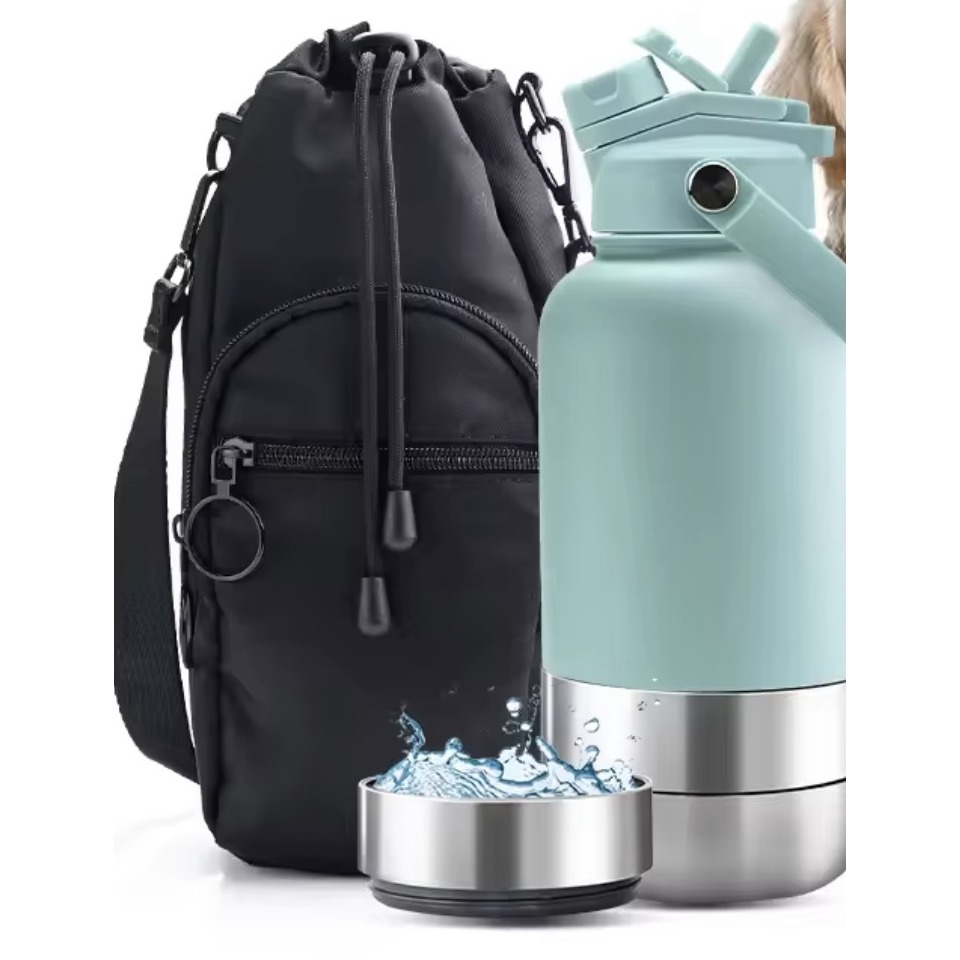
Travel Water Bottle & Bowl
550ml bottle with a fold-out drinking trough.
Fits any dog
Pawpoint on YouTube
Watch the full Siberian Husky video
Breed deep-dives, history and honest ownership talk. New film every week.
Watch now