
Sloughi
SLOO-ghee
Morocco· Maghreb: Morocco, Algeria, Tunisia
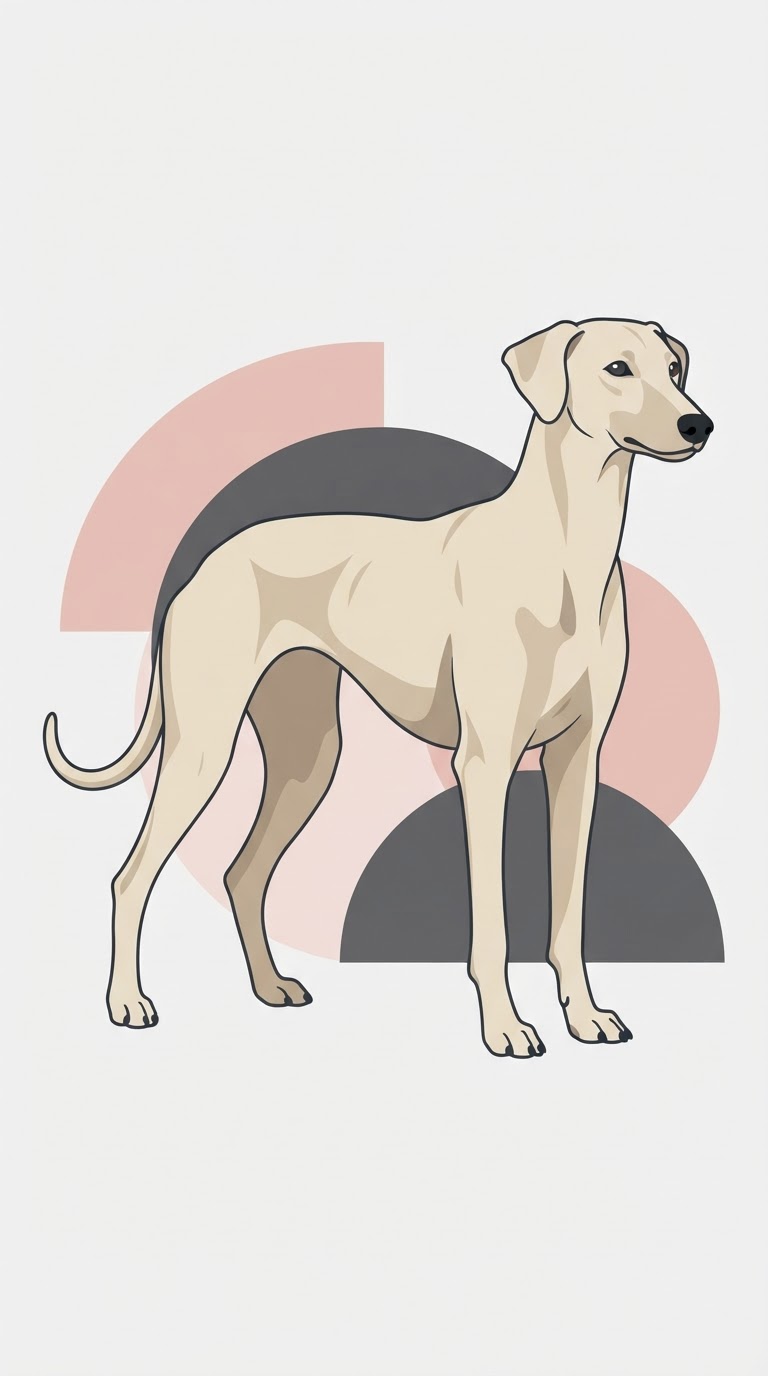
The Sloughi is a short-haired North African sighthound bred by desert and mountain communities in the Maghreb to course gazelle, hare and jackal by sight at high speed.
At a glance
Quick facts
Size
Large
Exercise needs
1-1.5 hours daily with sprint opportunities
Home size suited to
Large home with space to stretch out
Grooming frequency
Weekly brush
Coat length
Short
Sheds
Yes
Lifespan
12-15 years
Town or country
Happiest in the country
Garden size needed
Large and securely fenced
Where it comes from
Origins of the Sloughi
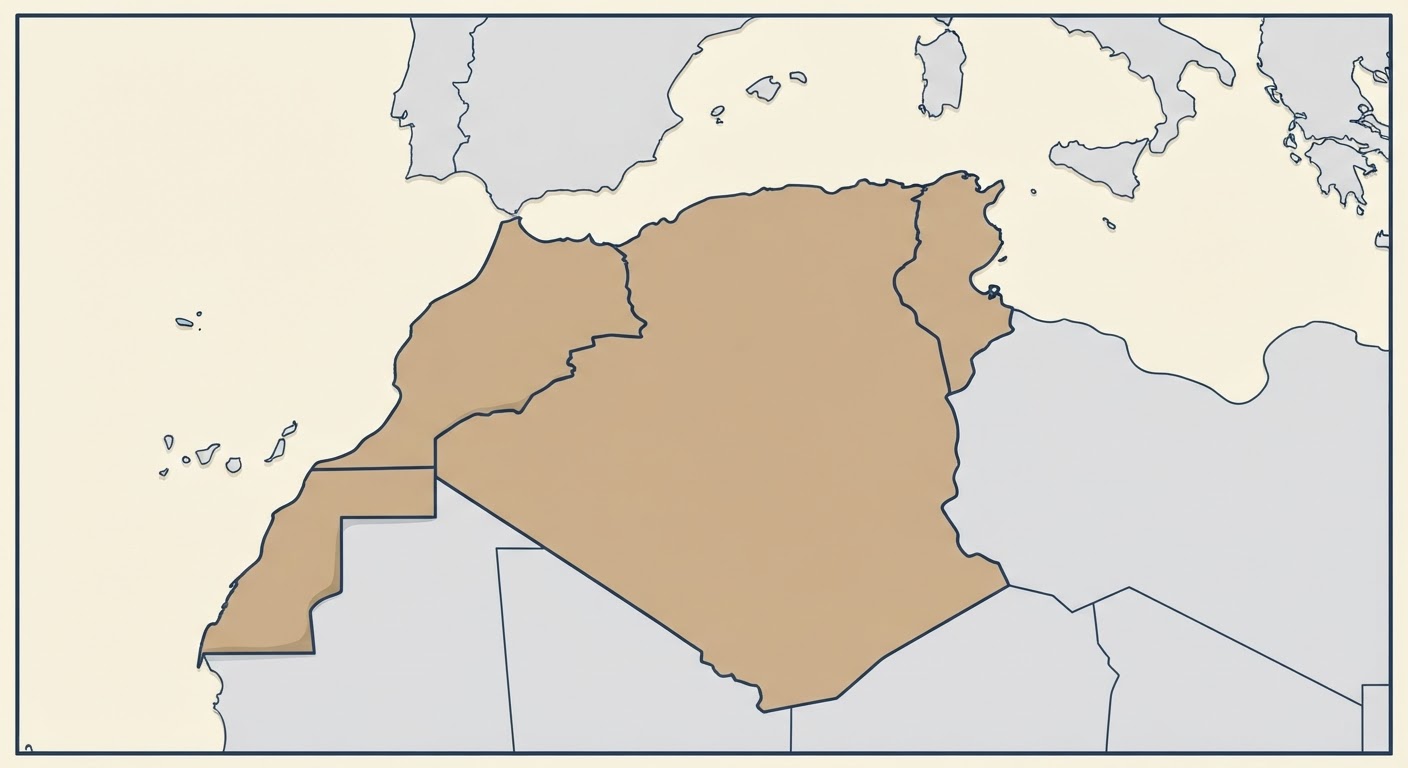
Bred across the arid plains and rocky uplands of the Maghreb, where Berber and Arab hunters relied on the Sloughi's speed and stamina to run down gazelle over open, unforgiving ground.
- Region
- Maghreb: Morocco, Algeria, Tunisia
- Climate it was bred for
- Hot, arid desert and semi-desert
- Original job
- Coursing gazelle and hare in open desert
The long read
About the breed
Sighthounds resembling the Sloughi appear in North African rock art and archaeological finds dating back thousands of years, and the breed was maintained for centuries by Berber and Arab tribes across what is now Morocco, Algeria and Tunisia, prized for its speed, stamina and ability to work in extreme heat. Unlike many European sighthounds, the Sloughi was rarely a purely aristocratic dog; it lived and worked alongside nomadic and settled communities as a genuine hunting partner, often treated with a status close to a family member rather than livestock. French officers and colonists stationed in North Africa in the early 20th century took an interest in the breed and began exporting dogs and documenting its type, leading to the first written standard in France in 1934.
Living with a Sloughi means accepting a dog that is reserved with strangers, deeply bonded to its own household, and built for sprinting rather than constant activity; a securely fenced space for controlled bursts of speed matters more than sheer volume of exercise. It is a quiet breed, rarely barking without good reason, and its short coat needs minimal grooming, though its thin skin and low body fat mean it feels the cold and can be easily scratched or bruised on rough or thorny ground.
Outside North Africa the Sloughi remains a fairly rare breed, kept mainly by experienced sighthound owners and a small lure-coursing community. It suits households that can offer calm, settled home life combined with genuine opportunities to run, and it is not a breed that thrives being left alone for long stretches or expected to enjoy the company of every visitor to the house.
Living with one
Temperament & needs
Our own ratings, based on the breed standard and how these dogs behave in ordinary homes.
Friendliness
2/5
How openly the Sloughi greets people it does not know.
Trainability
3/5
Intelligent but independent-minded, and does not respond well to repetition.
Energy
4/5
Needs daily sprint-style exercise in a securely fenced area.
Barking
1/5
Notably quiet, rarely barks without strong reason.
Grooming
1/5
Short, fine coat needs only occasional brushing.
Suits a first-time owner
2/5
How forgiving the Sloughi is for someone taking on their first dog.
Sociability
2/5
Reserved and aloof with strangers, deeply loyal to its own family.
Independence
4/5
A sighthound bred to hunt at a distance from its handler.
Illustrated breed standard
The points of the breed
Hover or tap a numbered point to read what the standard asks for.
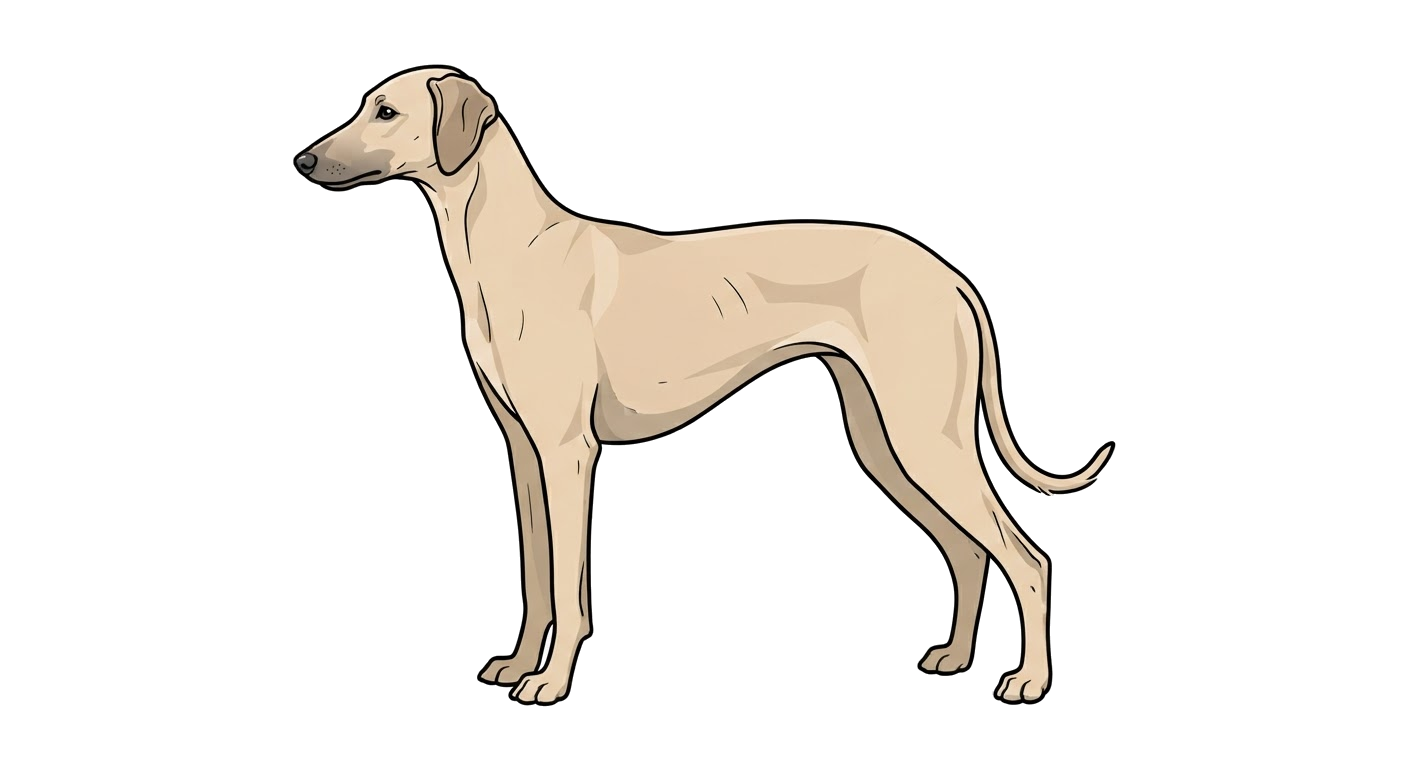
Point 1
Skull
The Sloughi's skull is judged on balance rather than size — proportionate to the body, with a clean cheek and a stop typical of the breed. Coarseness or an over-refined head are both faulted.
Colours & patterns
Recognised coats
Which coats the standard accepts — and which are simply popular.
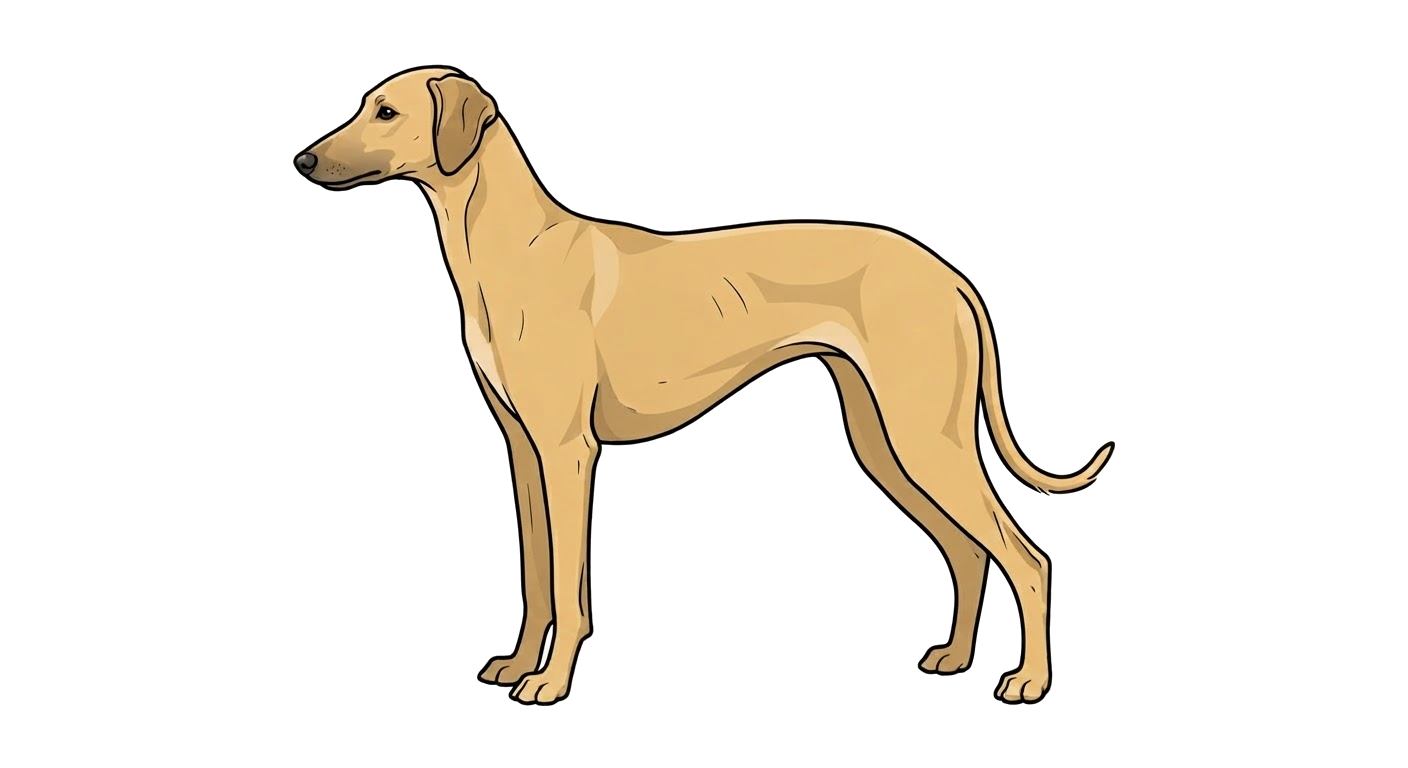
Sand/fawn
Standard colour
The most common and traditional Sloughi colour.
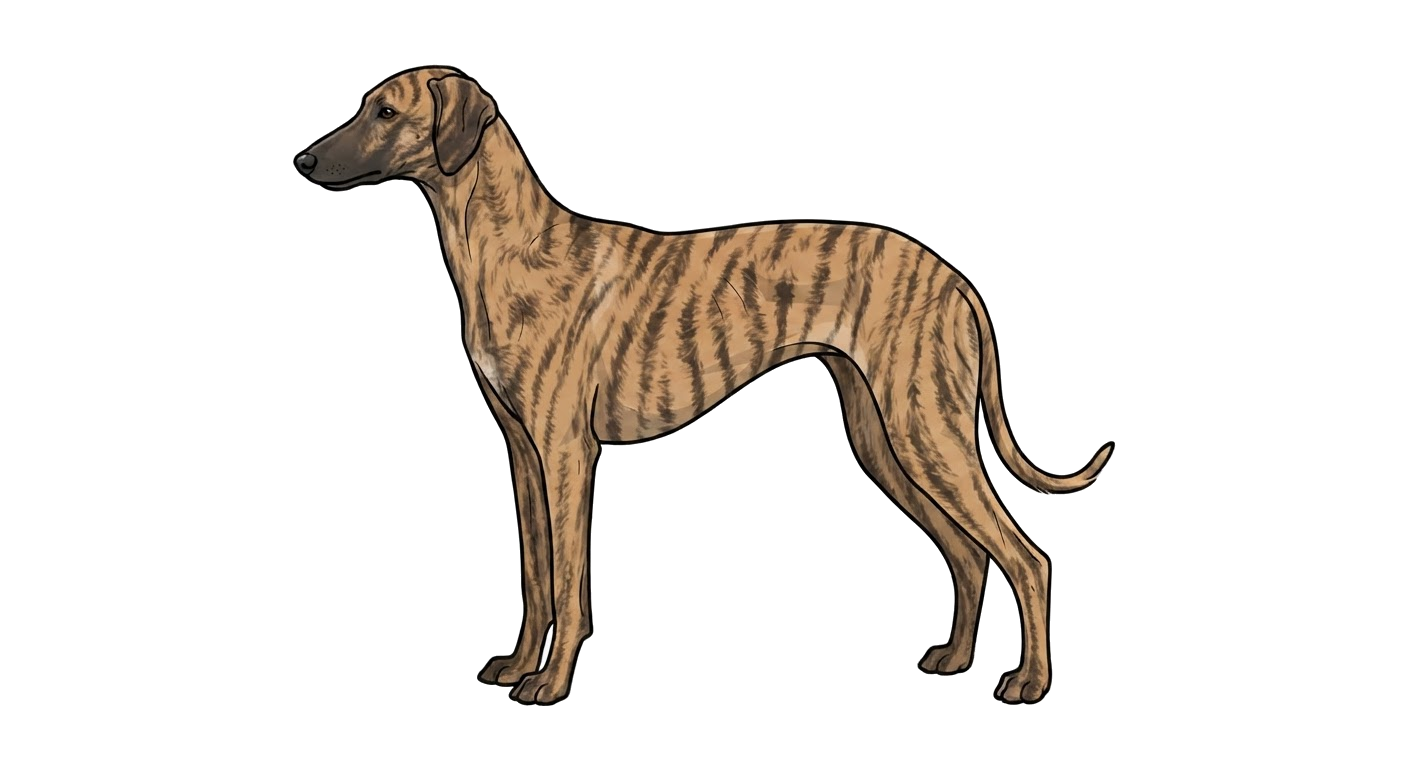
Brindle
Standard colour
Fawn base with darker striping, accepted in the standard.
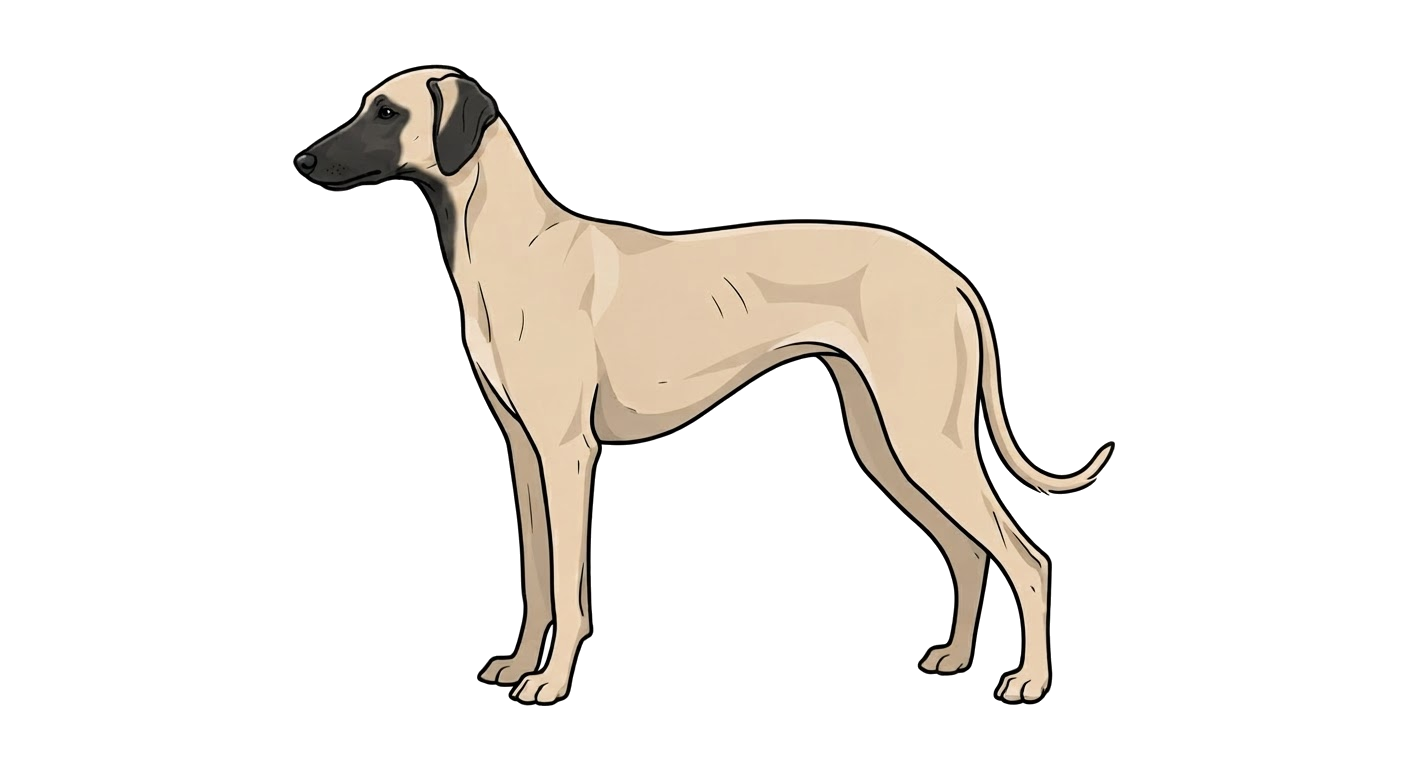
Sand with black mask
Standard colour
A black mask over a sand coat is typical and desired by many breeders.
Timeline
History & development
Ancient
North African origins
Sighthounds resembling the Sloughi appear in North African rock art and artefacts dating back thousands of years, used by nomadic desert peoples.
Centuries
Berber and Arab hunting culture
The breed was maintained by Berber and Arab tribes across Morocco, Algeria and Tunisia specifically for coursing gazelle and hare.
1900s
French colonial period
French officers and colonists in North Africa took an interest in the breed, bringing examples back to Europe and documenting its type.
1934
First French standard
An early written standard for the Sloughi was drawn up in France, helping formalise the breed outside its homeland.
1997
FCI recognition
The Federation Cynologique Internationale granted the Sloughi full breed recognition.
Reference
Breed standard summary
- body
- Longer than tall, with a moderately tucked-up abdomen and a fairly level topline.
- coat
- Short, fine, close and hard to the touch.
- ears
- Set high, triangular, hanging close to the head.
- eyes
- Large, dark, with a somewhat melancholic expression typical of the breed.
- gait
- Free, light, ground-covering, capable of explosive acceleration.
- head
- Long and chiselled, with a flat skull and slight stop.
- size
- 61-72cm at the withers.
- tail
- Long, thin, carried low with a slight curve at the tip.
- colour
- Sand/fawn, Brindle, Sand with black mask. Colours outside this list are seen but are not accepted by the kennel clubs.
- temperament
- Typical of the breed: strongest in energy, independence, trainability. Nervousness or aggression are serious faults in the show ring and in the home.
- general appearance
- A tall, lean sighthound of noble bearing, giving an impression of strength combined with elegance rather than fragility.
Health
What to screen for
Green means little to worry about, amber means ask the breeder for test results, red means manage it actively.
Progressive retinal atrophy
Screen for it
Ask breeders for eye certification and, where available, DNA test results.
Bloat (gastric dilatation-volvulus)
Watch closely
Feed smaller meals and avoid strenuous exercise right after eating.
Sensitivity to anaesthesia
Screen for it
Make sure your vet is aware sighthounds need adjusted anaesthetic protocols.
Thin skin, easily injured
Low concern
Take care in thorny or rough terrain; coats offer little protection.
General information only — always speak to your vet about your own dog.
From real owners
Dogs like this
Sloughis added by PawPoint members through their pet passports. Share yours to appear here.
Loading the wall…
Made for the Sloughi
The book, plus prints, hoodies and mugs using our own Sloughi illustration — and one everyday accessory that suits any dog.

The book
Pawpoint: The Complete Dog Breed Book
Every officially recognised breed plus the unofficial ones nobody else documents. 400+ pages, hardback, printed and shipped from the UK.
Own stock — shipped by us
Framed poster
Sloughi Framed Poster
Museum-weight print of our Sloughi illustration, framed or unframed.
Printed to order
Hoodie
Sloughi Hoodie
Heavyweight hoodie carrying the Sloughi illustration on the chest.
Printed to order
Mug
Sloughi Mug
Ceramic mug with the Sloughi illustration wrapped around it.
Printed to order
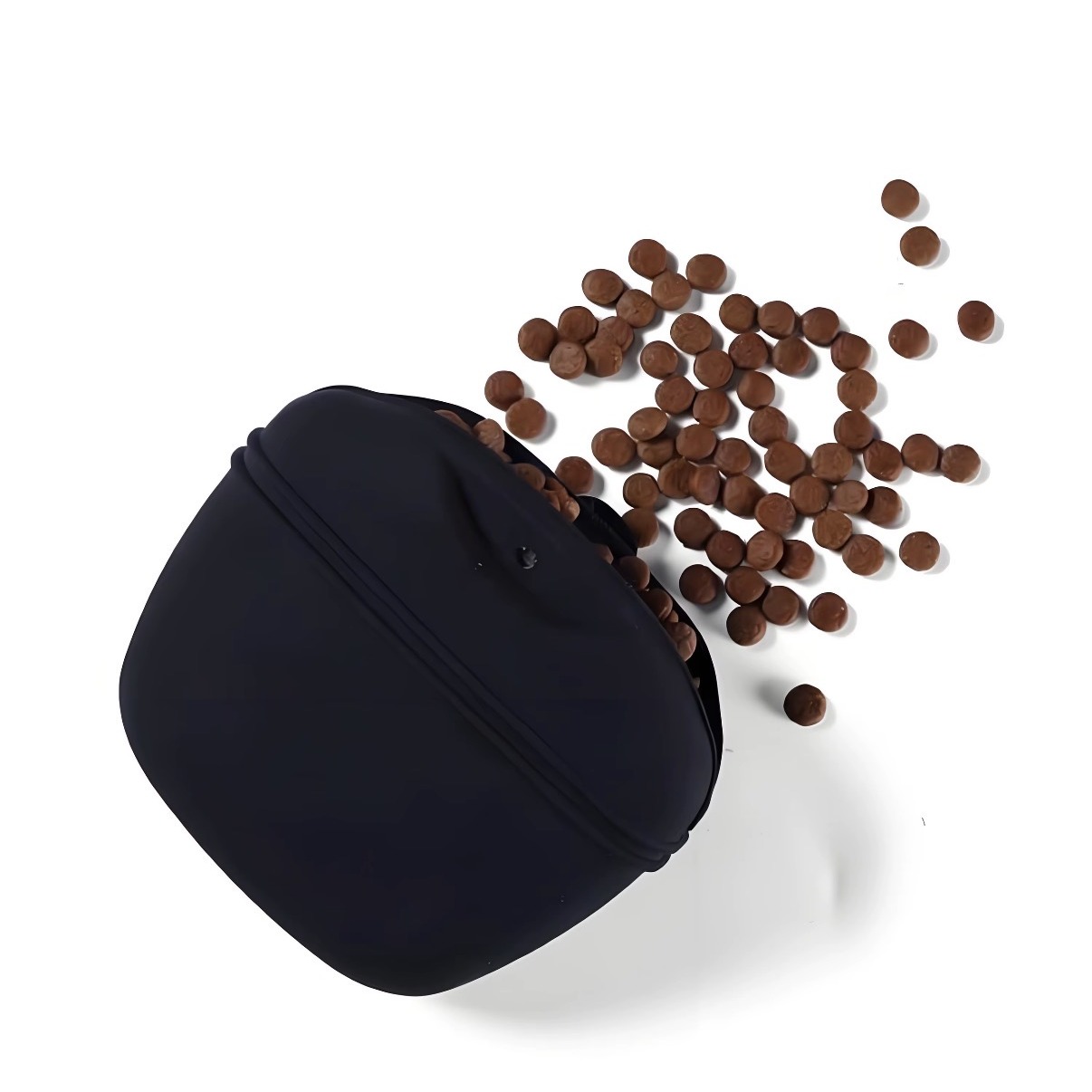
Accessory
Treat Pouch
Magnetic-close belt pouch for training sessions.
Fits any dog
Pawpoint on YouTube
Watch the full Sloughi video
Breed deep-dives, history and honest ownership talk. New film every week.
Watch now