
Spanish Mastiff
SPAN-ish MAS-tiff
Spain· Central and northern Spanish highlands, especially Extremadura and Castile
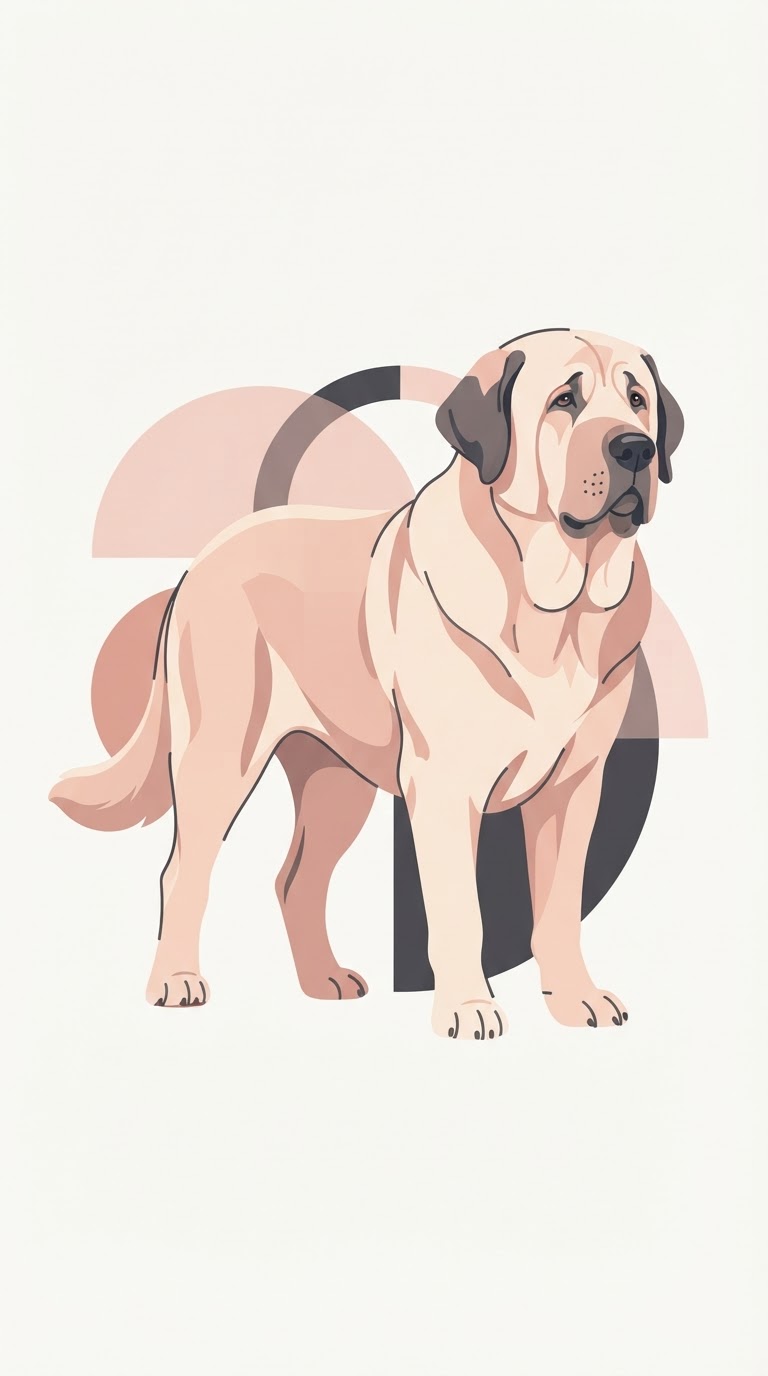
The Spanish Mastiff is one of the largest livestock guardian breeds, developed over centuries in Spain to protect flocks of sheep from wolves during long transhumant migrations.
At a glance
Quick facts
Size
Giant
Exercise needs
1 hour per day
Home size suited to
Large
Grooming frequency
Weekly brush
Coat length
Medium
Sheds
Yes
Lifespan
10-12 years
Town or country
Country preferred
Garden size needed
Large
Where it comes from
Origins of the Spanish Mastiff
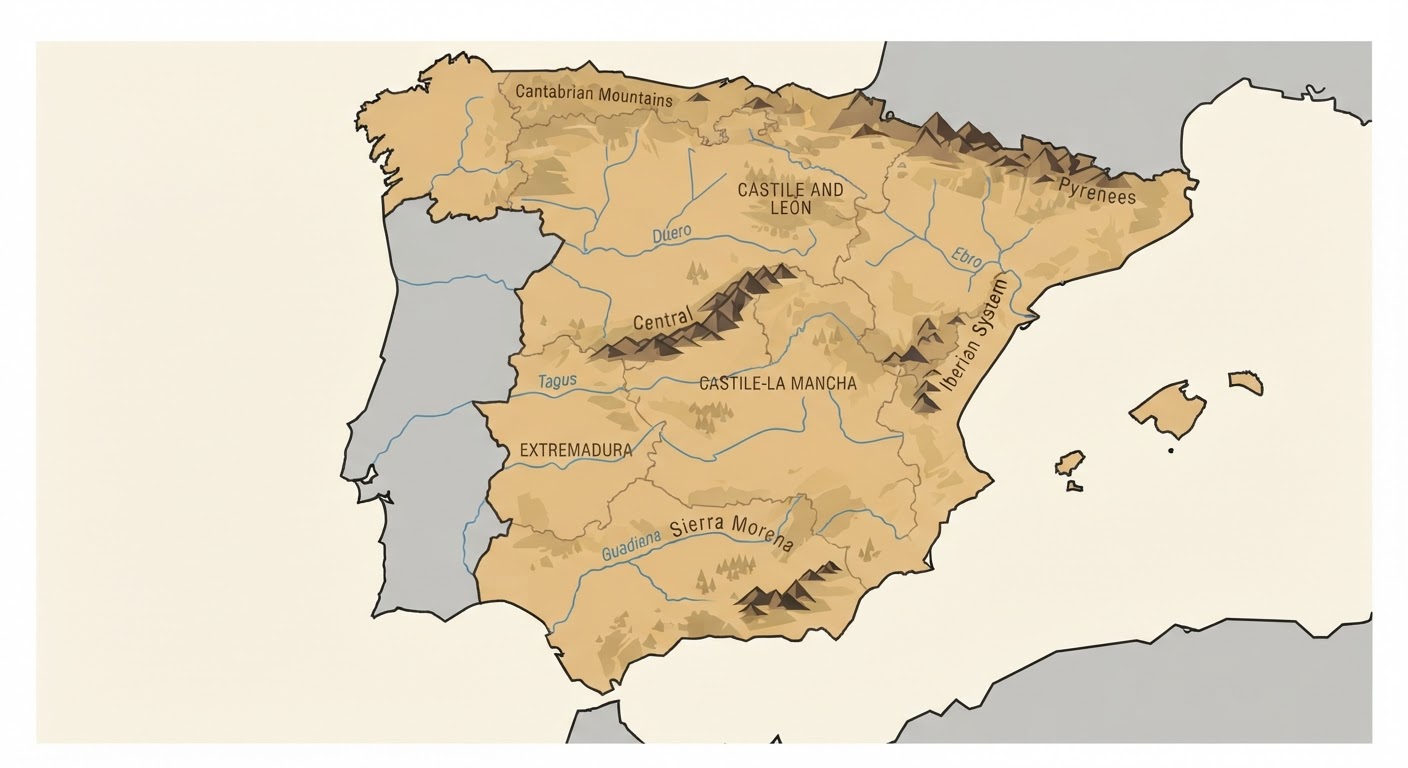
For centuries, huge migratory flocks of merino sheep crossed the Spanish meseta between summer and winter pastures, exposed to wolves and rough terrain along the way. Shepherds needed an enormous, fearless dog able to fight off predators independently over long, isolated journeys, and the Spanish Mastiff's size and endurance answered that need directly.
- Region
- Central and northern Spanish highlands, especially Extremadura and Castile
- Climate it was bred for
- Harsh continental climate with hot summers and cold winters
- Original job
- Livestock guardian against wolves on transhumant sheep drives
The long read
About the breed
Its working life demanded independence, courage and the physical size to confront predators, alongside a calm, low-energy disposition when not actively guarding, allowing it to conserve strength over long journeys.
As a companion it is gentle, affectionate and protective of its family, but its guardian instincts mean it can be wary of strangers and needs firm, consistent guidance along with early socialisation.
Still used as a working guardian in rural Spain, the breed has also found a role as a calm, imposing companion for those with the space and experience to manage a giant dog.
Living with one
Temperament & needs
Our own ratings, based on the breed standard and how these dogs behave in ordinary homes.
Friendliness
3/5
How openly the Spanish Mastiff greets people it does not know.
Trainability
3/5
How readily the breed takes to training in an ordinary home.
Energy
3/5
How much daily exercise and stimulation the breed expects.
Barking
3/5
How vocal the breed tends to be day to day.
Grooming
3/5
How much coat work the breed needs to stay comfortable.
Suits a first-time owner
3/5
How forgiving the Spanish Mastiff is for someone taking on their first dog.
Illustrated breed standard
The points of the breed
Hover or tap a numbered point to read what the standard asks for.
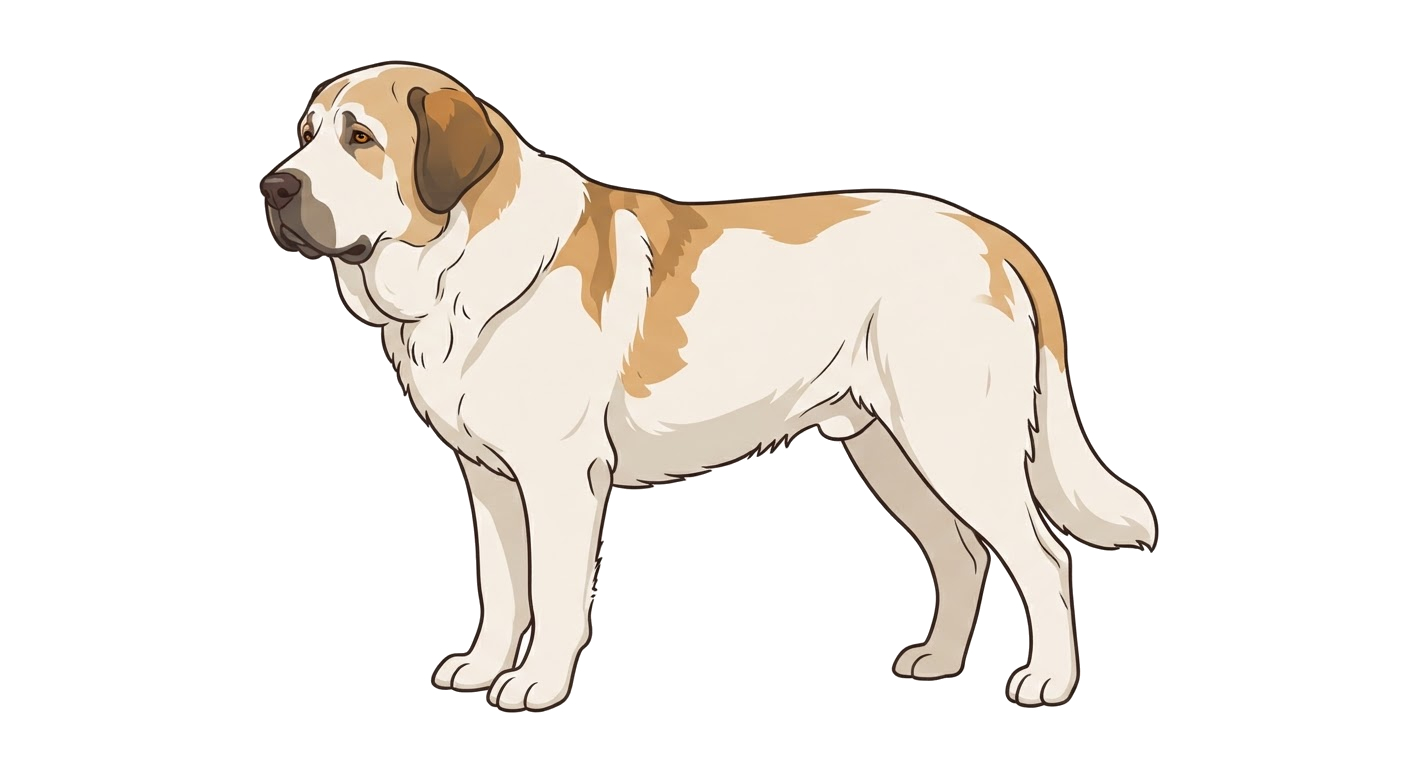
Point 1
Skull
The Spanish Mastiff's skull is judged on balance rather than size — proportionate to the body, with a clean cheek and a stop typical of the breed. Coarseness or an over-refined head are both faulted.
Timeline
History & development
1000s
Guardian of transhumance
Mastiff-type dogs accompanied migratory merino flocks across Spain, protecting them from wolves.
1273
Mesta protections
The powerful shepherds' guild, the Mesta, relied on these dogs to safeguard the sheep trade central to the Spanish economy.
1900s
Decline with transhumance
As migratory sheep farming declined, the breed's numbers fell and it became largely confined to specific regions.
1946
First breed standard
An early standard was drawn up as fanciers sought to preserve the working type.
1990s
Renewed interest
Growing interest in livestock guardian breeds internationally helped stabilise and grow the population.
Reference
Breed standard summary
- body
- Long, deep and powerfully muscled with a broad chest and strong loin.
- coat
- Thick, dense and moderately long, weatherproof, with a mane-like effect around the neck.
- ears
- Medium-sized, set at eye level and hanging flat.
- eyes
- Small to medium, almond-shaped, dark and expressive.
- head
- Large, broad skull with a moderate stop and a deep, slightly pendulous-lipped muzzle.
- size
- Dogs 77cm and over, bitches 72cm and over at the withers
- colour
- Fawn, wolf grey, black, red, yellow or brindle, plain or with white markings.
- temperament
- Calm, noble and protective, gentle with family but wary of strangers and other dogs when guarding.
- general appearance
- A massive, heavily boned mastiff with a powerful, rectangular frame built for strength and endurance rather than speed.
Health
What to screen for
Green means little to worry about, amber means ask the breeder for test results, red means manage it actively.
General information only — always speak to your vet about your own dog.
From real owners
Dogs like this
Spanish Mastiffs added by PawPoint members through their pet passports. Share yours to appear here.
Loading the wall…
Made for the Spanish Mastiff
The book, plus prints, hoodies and mugs using our own Spanish Mastiff illustration — and one everyday accessory that suits any dog.

The book
Pawpoint: The Complete Dog Breed Book
Every officially recognised breed plus the unofficial ones nobody else documents. 400+ pages, hardback, printed and shipped from the UK.
Own stock — shipped by us
Framed poster
Spanish Mastiff Framed Poster
Museum-weight print of our Spanish Mastiff illustration, framed or unframed.
Printed to order
Hoodie
Spanish Mastiff Hoodie
Heavyweight hoodie carrying the Spanish Mastiff illustration on the chest.
Printed to order
Mug
Spanish Mastiff Mug
Ceramic mug with the Spanish Mastiff illustration wrapped around it.
Printed to order
Accessory
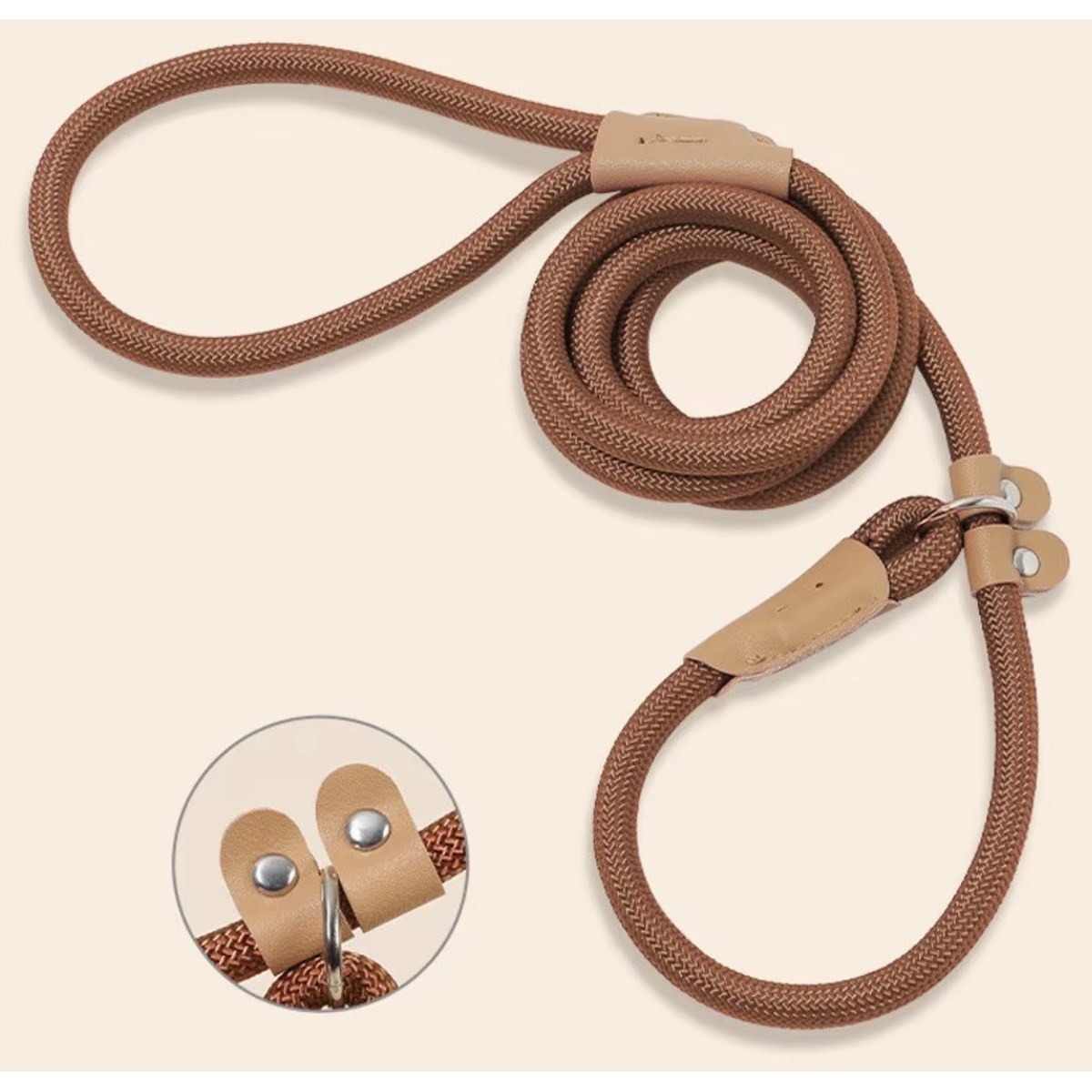
Rope Slip Lead
Braided rope lead with a leather stop, 150cm. Good for training walks.
Fits any dog

Pawpoint on YouTube
Watch the full Spanish Mastiff video
Breed deep-dives, history and honest ownership talk. New film every week.
Watch now