
Spinone Italiano
spee-NOH-nay ee-tal-YAH-noh
Italy· Piedmont
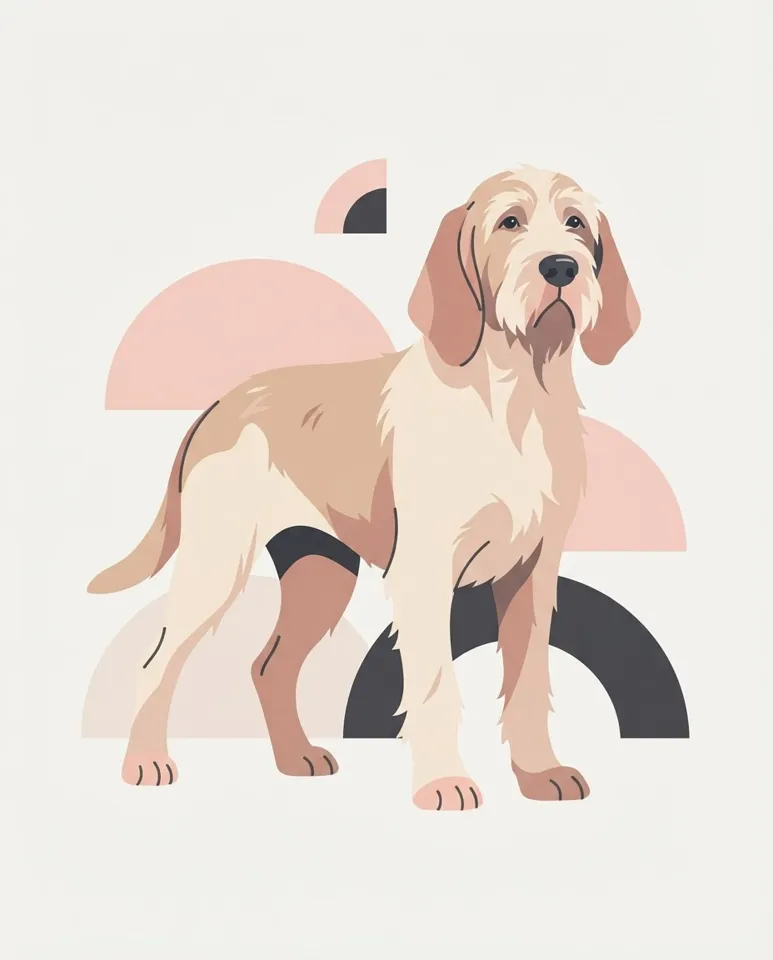
The Spinone Italiano is a rough-coated Italian pointing dog, built for a long day's hunting over rough ground and known for a calm, almost old-fashioned gentleness at home.
At a glance
Quick facts
- Size
- Large
- Exercise needs
- Over an hour a day, ideally including fieldwork
- Home size suited to
- Medium to large home
- Grooming frequency
- Weekly brush, hand-strip a few times a year
- Coat length
- Wiry
- Sheds
- Yes, heavily when moulting
- Lifespan
- 10-12 years
- Town or country
- Either, with enough exercise
- Garden size needed
- Medium or larger
Where it comes from
Origins of the Spinone Italiano
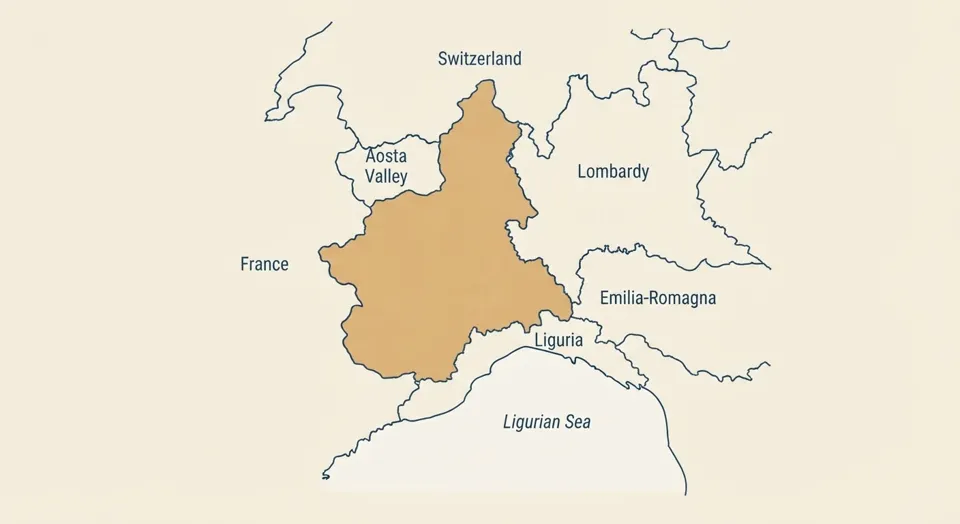
Developed in the hills and marshes of Piedmont, where hunters needed a dog tough enough for brambles and cold water but calm enough to work slowly and methodically.
- Region
- Piedmont
- Climate it was bred for
- Cold winters, hot dry summers, hilly terrain
- Original job
- Pointing and retrieving game over rough terrain and water
The long read
About the breed
Its ancestors were pointing dogs kept in the hills and marshes of Piedmont, valued for methodical, unhurried work rather than speed. Hunters needed a dog that could push through brambles and cold water all day, point steadily, then retrieve without damaging the game, and the Spinone's harsh, weatherproof coat and deliberate gait were shaped by exactly that job.
At home the Spinone is famous for its patience, often described as one of the gentlest gundog breeds with children, and it forms close bonds with its family. It is not a hyperactive dog; it moves and works at its own steady pace, and this can look like laziness to owners expecting a springer-type sporting breed. The wiry coat, beard and heavy jowls need regular grooming and cleaning, especially after eating and drinking.
Today the breed remains a working gundog in Italy and is increasingly kept as a calm family companion elsewhere, though it still needs a good amount of exercise, ideally including some fieldwork or scent games, to stay content.
Living with one
Temperament & needs
Our own ratings, based on the breed standard and how these dogs behave in ordinary homes.
Friendliness
5/5
How openly the Spinone Italiano greets people it does not know.
Trainability
4/5
Willing and thoughtful, though can be slow and deliberate.
Energy
3/5
Steady rather than frantic, but needs daily fieldwork or a long walk.
Barking
1/5
One of the quietest gundog breeds.
Grooming
3/5
Wiry coat needs hand-stripping a few times a year and beard cleaning after meals.
Suits a first-time owner
3/5
How forgiving the Spinone Italiano is for someone taking on their first dog.
Sociability
5/5
Famously gentle and patient, especially with children.
Independence
3/5
Works well with a handler but is not clingy.
Illustrated breed standard
The points of the breed
Hover or tap a numbered point to read what the standard asks for.
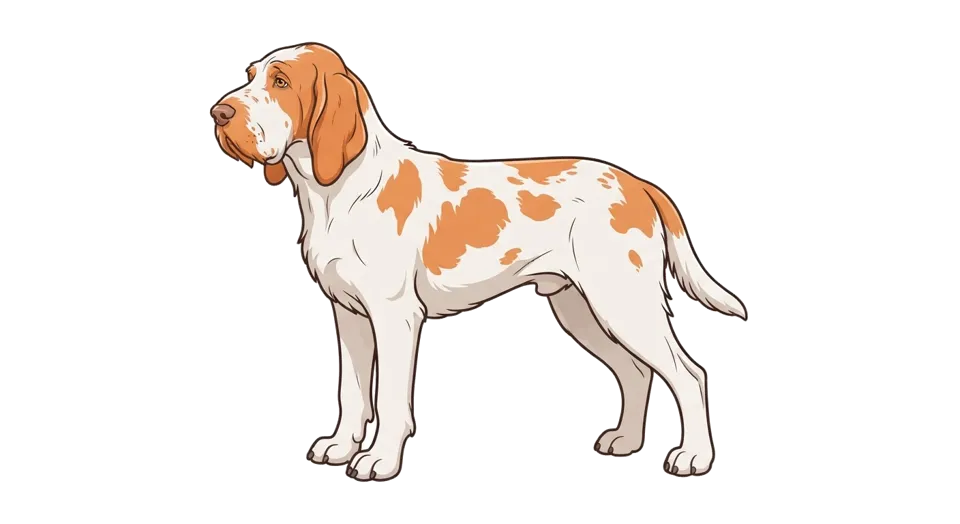
Point 1
Skull
The Spinone Italiano's skull is judged on balance rather than size — proportionate to the body, with a clean cheek and a stop typical of the breed. Coarseness or an over-refined head are both faulted.
Colours & patterns
Recognised coats
Which coats the standard accepts — and which are simply popular.
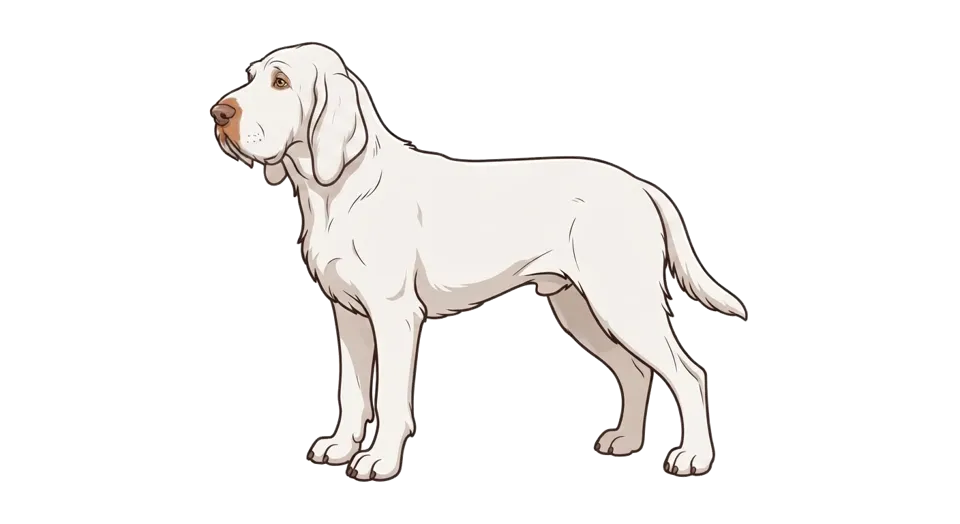
Solid white
Standard colour
A clean, pure white with no markings.
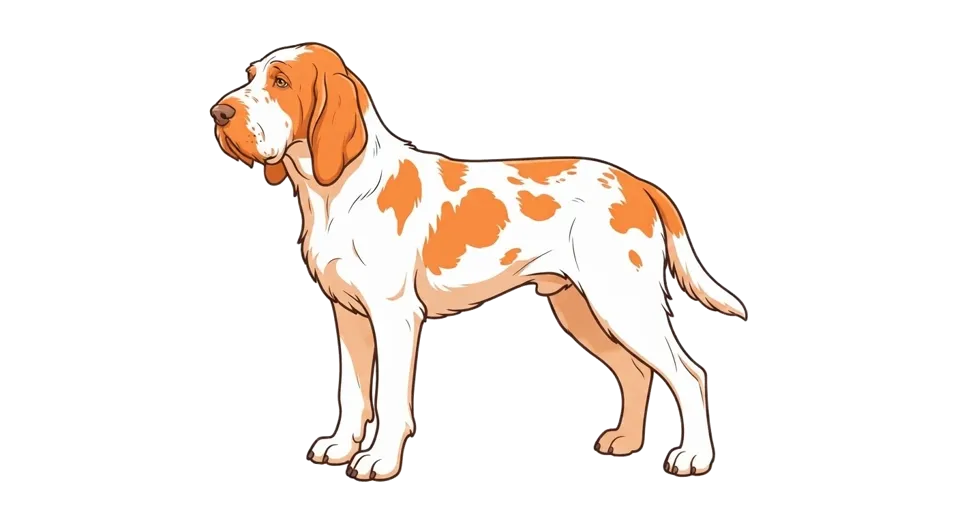
White and orange
Standard colour
White base with orange patches or roan flecking.
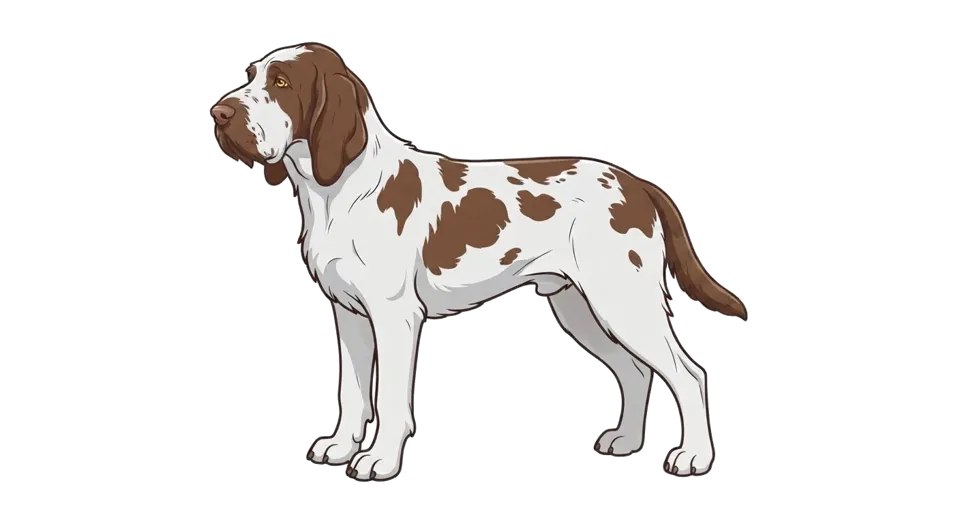
White and brown
Standard colour
White base with brown patches, sometimes roaned.
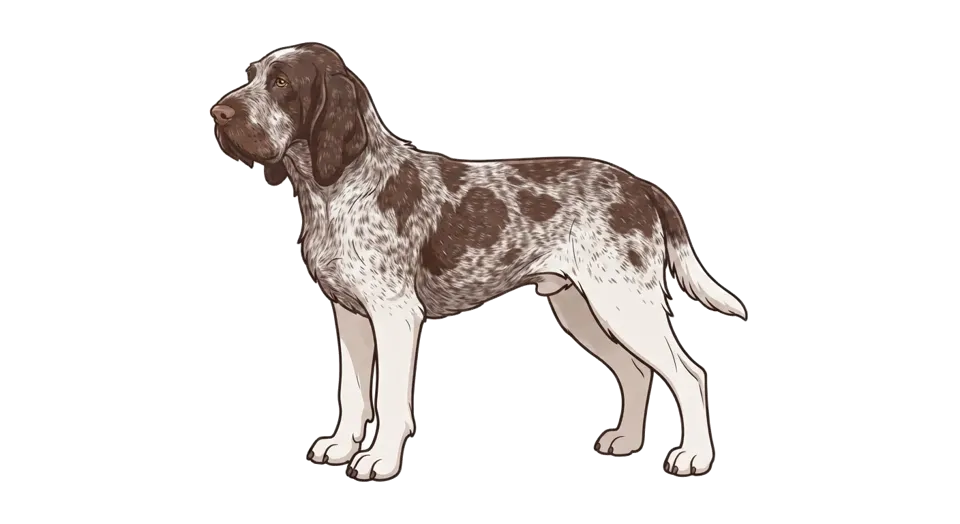
Brown roan
Standard colour
Brown and white hairs intermingled for a flecked look.
Timeline
History & development
antiquity
Ancient roots
Rough-coated pointing dogs resembling the Spinone appear in Piedmontese art for centuries.
1897
First written standard
An early standard was drawn up as Italian hunters formalised the breed.
1955
FCI recognition
The Federation Cynologique Internationale recognised the breed.
1980s
Spread beyond Italy
The Spinone gained a following in Britain and North America as a family and gundog breed.
Reference
Breed standard summary
- body
- Robust, almost square, with a broad deep chest.
- coat
- Wiry, dense, with a thick undercoat and prominent beard and eyebrows.
- ears
- Set roughly at eye level, triangular, hanging close to the cheek.
- eyes
- Large, round, ochre to dark ochre.
- gait
- Ambling trot at ease, changing to a purposeful gallop when hunting.
- head
- Long, with a Roman-nosed profile and bushy eyebrows.
- size
- Large · 58-70 cm · 29-39 kg
- tail
- Traditionally docked; carried horizontally when working.
- colour
- Solid white, White and orange, White and brown, Brown roan. Colours outside this list are seen but are not accepted by the kennel clubs.
- temperament
- Typical of the breed: strongest in sociability, trainability, energy. Nervousness or aggression are serious faults in the show ring and in the home.
- general appearance
- Strongly built, rough-coated gundog with an honest, patient expression.
Health
What to screen for
Green means little to worry about, amber means ask the breeder for test results, red means manage it actively.
Hip dysplasia
Screen for it
Ask for OFA or BVA/KC hip scores on both parents.
Elbow dysplasia
Screen for it
Ask for elbow scoring alongside hip scores.
Cerebellar ataxia
Watch closely
DNA testing is available; ask breeders for clear or carrier status.
Entropion/ectropion
Low concern
Have eyes checked as loose skin can cause lid problems.
General information only — always speak to your vet about your own dog.
From real owners
Spinone Italianos in the PAWPOINT Pack
Spinone Italianos added by PawPoint members through their pet passports. Share yours to appear here.
Loading the wall…
Made for the Spinone Italiano
The book, plus hoodies, tees and mugs featuring the Spinone Italiano.