
St Bernard
saynt BUR-nuhd
Switzerland· Great St Bernard Pass, Alps
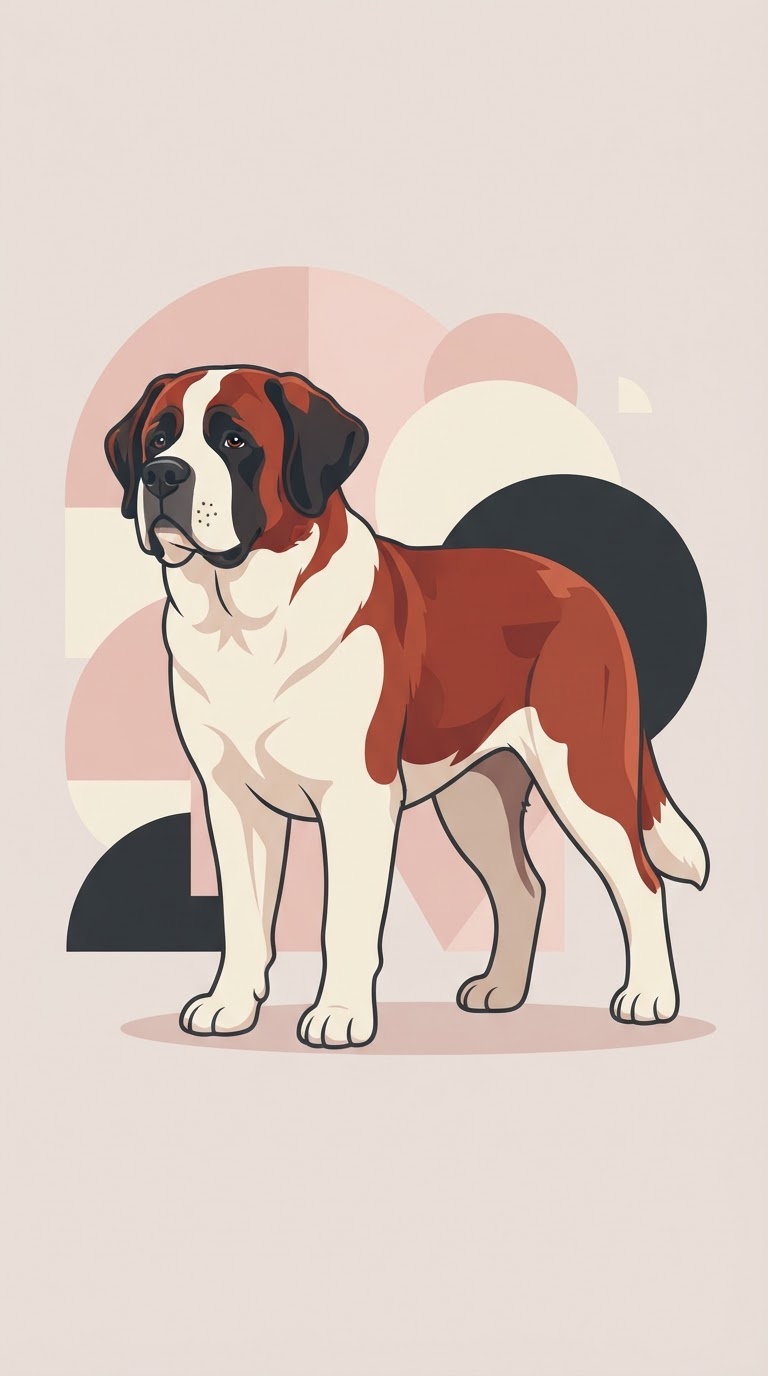
The St Bernard is a giant Swiss mountain dog bred by monks to find travellers lost in Alpine snow, now better known as a gentle, slobbery family companion.
At a glance
Quick facts
Size
Giant
Exercise needs
30-60 minutes a day
Home size suited to
Large home with space to stretch out
Grooming frequency
Weekly brush
Coat length
Short
Sheds
Yes, heavily when moulting
Lifespan
8-10 years
Town or country
Better suited to the country
Garden size needed
Large and securely fenced
Where it comes from
Origins of the St Bernard

Bred at the hospice on the Great St Bernard Pass, over 2,400 metres up in the Alps, where monks needed a dog powerful and weatherproof enough to find travellers buried by avalanches.
- Region
- Great St Bernard Pass, Alps
- Climate it was bred for
- High-altitude alpine cold and heavy snowfall
- Original job
- Alpine rescue and guarding for hospice travellers
The long read
About the breed
The breed developed at the hospice on the Great St Bernard Pass, over 2,400 metres up between Switzerland and Italy, where monks kept large mountain dogs from at least the 1660s to guard the hospice and accompany travellers through avalanche-prone terrain. By the early 1800s dogs from the hospice, most famously one named Barry credited with saving dozens of lives, had become renowned across Europe for finding people buried in snow.
Living with a St Bernard means living with a genuinely enormous dog that is, in temperament, closer to a large soft toy than a working mountain rescuer. They are patient with children, slow to anger and not naturally aggressive, but their sheer size means careful early training matters, since an untrained adult St Bernard can be difficult to manage on a lead or around visitors. Both coat types shed heavily, and the breed drools, especially after eating or drinking, so households need to be prepared for the mess that comes with the size.
Today the St Bernard is kept almost entirely as a companion rather than a working dog, though a few are still bred at the original hospice for ceremonial purposes. Its short lifespan and susceptibility to joint and heart problems are the main trade-offs of choosing such a large breed.
Living with one
Temperament & needs
Our own ratings, based on the breed standard and how these dogs behave in ordinary homes.
Friendliness
5/5
How openly the St Bernard greets people it does not know.
Trainability
4/5
Eager to please but slow-maturing and needs patient, early training given its size.
Energy
2/5
Moderate walks suit it better than long strenuous exercise.
Barking
2/5
Deep-voiced but not a frequent barker.
Grooming
3/5
Sheds heavily; both smooth and rough coats need regular brushing.
Suits a first-time owner
4/5
How forgiving the St Bernard is for someone taking on their first dog.
Sociability
5/5
Famously patient and affectionate with families.
Independence
2/5
Prefers to be near its people.
Illustrated breed standard
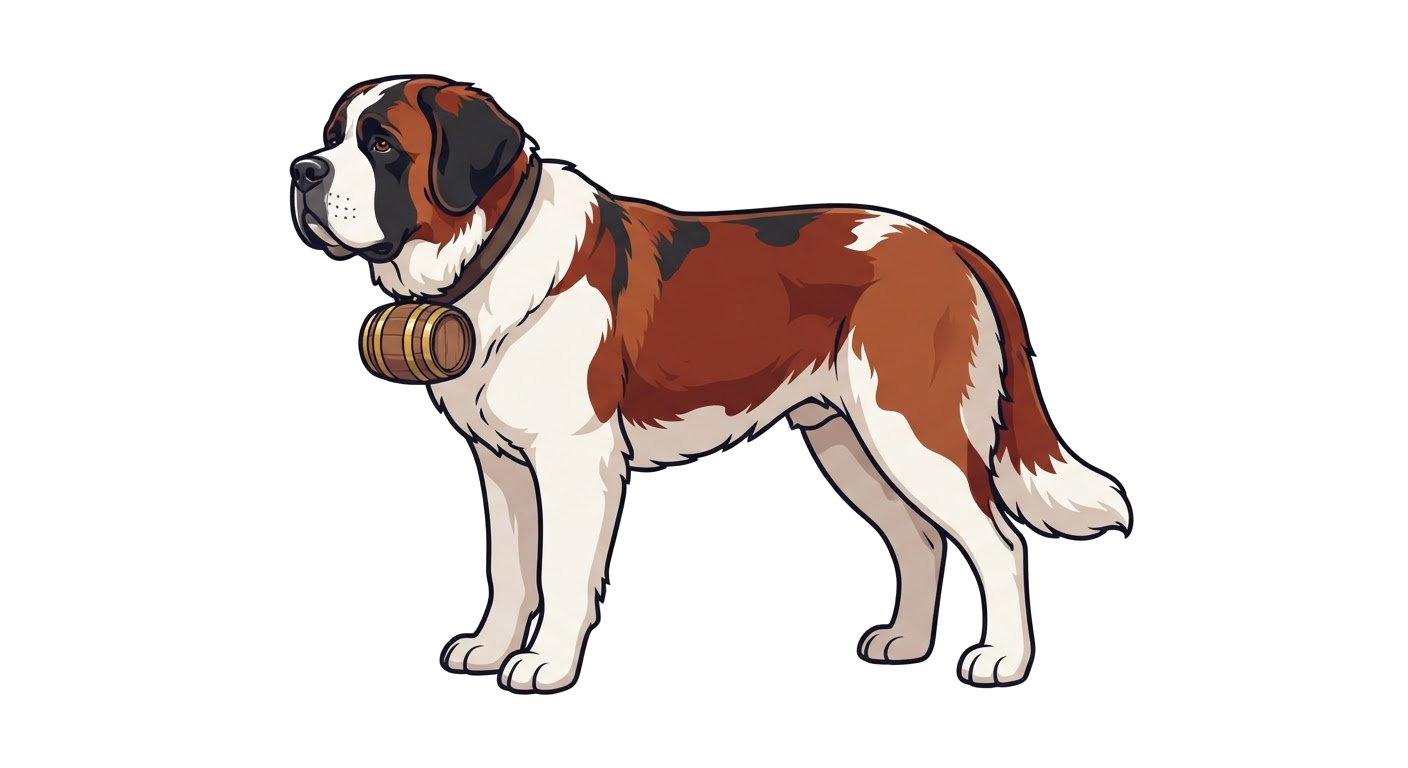
The points of the breed
Hover or tap a numbered point to read what the standard asks for.
Point 1
Skull
The St Bernard's skull is judged on balance rather than size — proportionate to the body, with a clean cheek and a stop typical of the breed. Coarseness or an over-refined head are both faulted.
Colours & patterns
Recognised coats
Which coats the standard accepts — and which are simply popular.
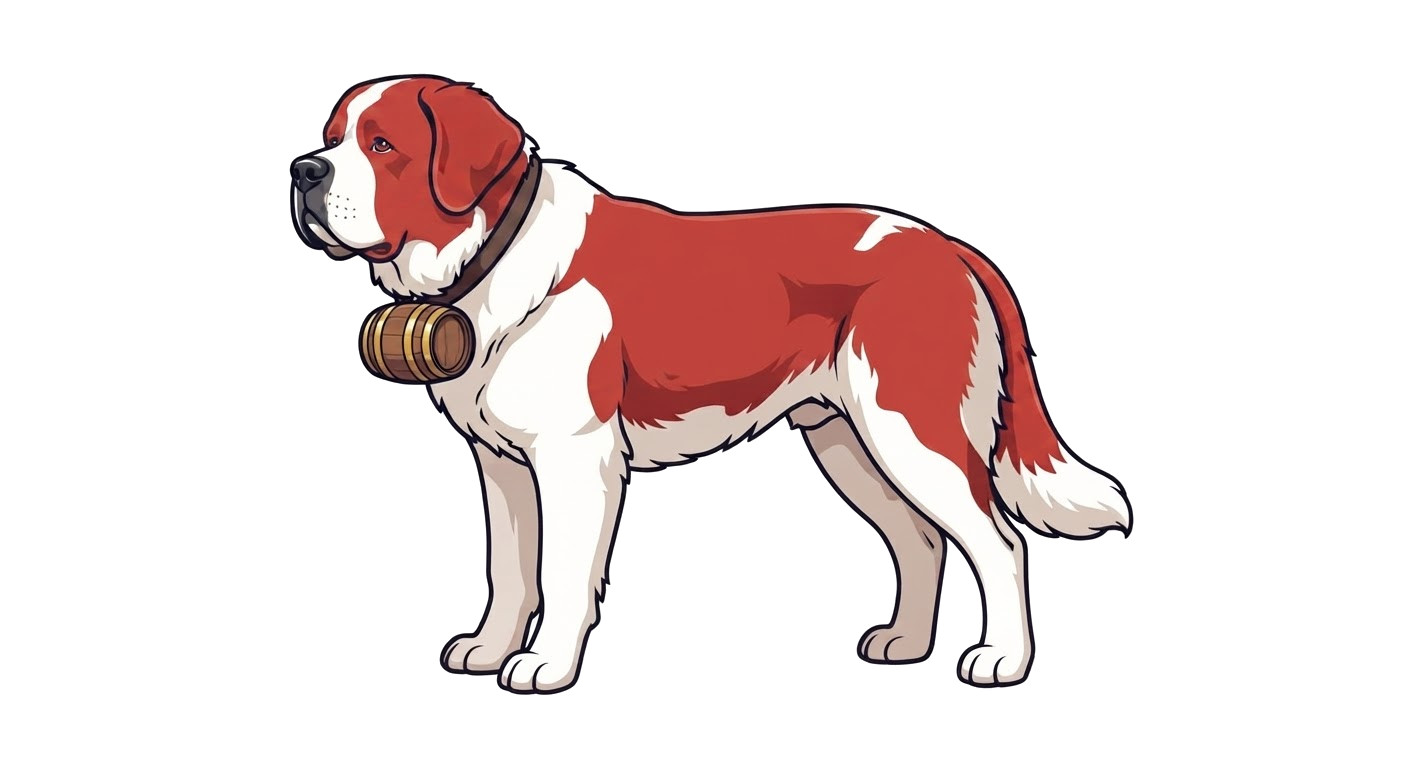
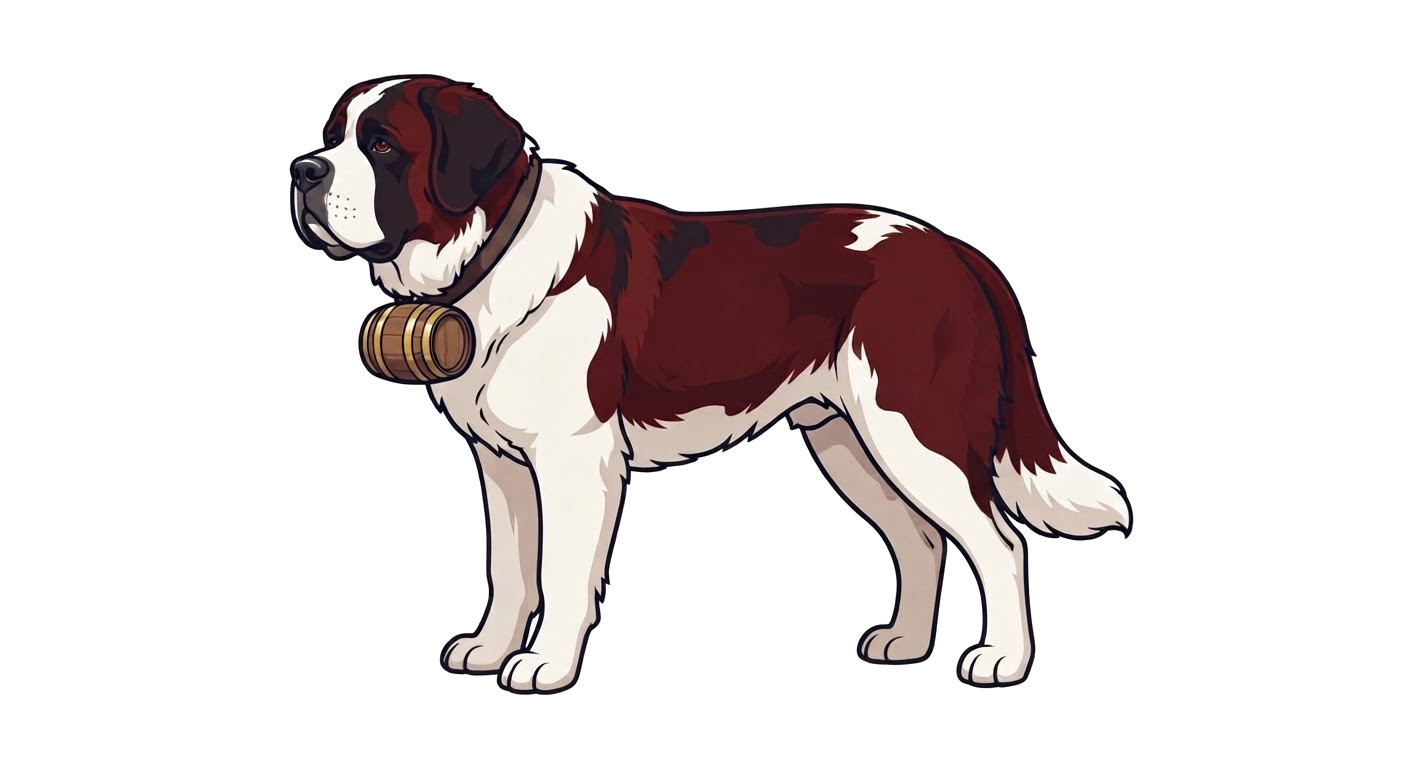
Red and white
Standard colour
The most familiar colouring, red-brown patches on a white base.
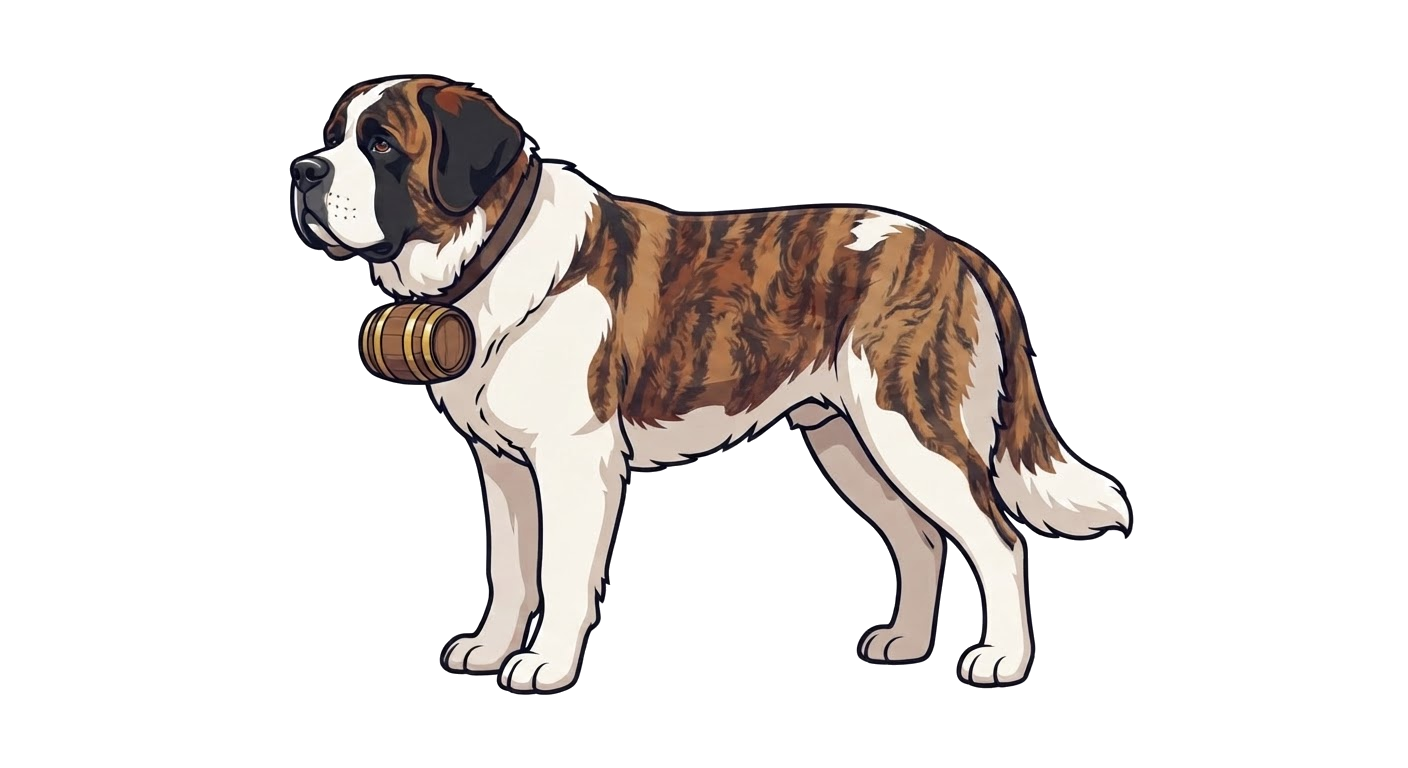
Brindle and white
Standard colour
Brindle patches over white, less common but standard.
Mahogany and white
Standard colour
A deeper reddish-brown variant of the standard pattern.
Timeline
History & development
1660s
Hospice origins
Monks at the Great St Bernard hospice began keeping large mountain dogs for company and guarding.
1800
Rescue fame begins
Dogs from the hospice, most famously one named Barry, became renowned for finding snowbound travellers.
1880
Swiss Kennel Club recognition
The breed was formally recognised and named St Bernard.
1887
International standard agreed
Swiss, German and other clubs agreed a unified standard for the breed.
1950s onward
The breed today
Kennel club registrations settled into a steady pattern and the St Bernard moved from a working specialist to a family companion, with breed clubs in the UK and abroad now focused on health testing and keeping true type alive.
Reference
Breed standard summary
- body
- Broad, deep-chested, strongly built with a level back.
- coat
- Smooth: dense and close; Rough: dense, flat to slightly wavy with feathering.
- ears
- Medium-sized, set high, dropping close to the cheeks.
- eyes
- Medium-sized, dark brown, with tight-fitting lids preferred.
- gait
- Steady, powerful, ground-covering rather than showy.
- head
- Large and massive, with a short, wide muzzle.
- size
- Giant · 65-90 cm · 54-82 kg
- tail
- Long and heavy, carried low with an upward curve at the tip when alert.
- colour
- Red and white, Brindle and white, Mahogany and white. Colours outside this list are seen but are not accepted by the kennel clubs.
- temperament
- Typical of the breed: strongest in sociability, trainability, grooming. Nervousness or aggression are serious faults in the show ring and in the home.
- general appearance
- Powerful, muscular giant breed with an intelligent, kindly expression.
Health
What to screen for
Green means little to worry about, amber means ask the breeder for test results, red means manage it actively.
Hip and elbow dysplasia
Watch closely
Insist on both parents' hip and elbow scores; this is a common problem in the breed.
Dilated cardiomyopathy
Watch closely
Ask about cardiac screening in the breeding lines.
Gastric torsion (bloat)
Watch closely
Feed smaller meals and avoid vigorous exercise straight after eating.
Entropion
Low concern
Have eyelids checked, as loose facial skin can cause lid problems.
General information only — always speak to your vet about your own dog.
From real owners
Dogs like this
St Bernards added by PawPoint members through their pet passports. Share yours to appear here.
Loading the wall…
Made for the St Bernard
The book, plus prints, hoodies and mugs using our own St Bernard illustration — and one everyday accessory that suits any dog.

The book
Pawpoint: The Complete Dog Breed Book
Every officially recognised breed plus the unofficial ones nobody else documents. 400+ pages, hardback, printed and shipped from the UK.
Own stock — shipped by us
Framed poster
St Bernard Framed Poster
Museum-weight print of our St Bernard illustration, framed or unframed.
Printed to order
Hoodie
St Bernard Hoodie
Heavyweight hoodie carrying the St Bernard illustration on the chest.
Printed to order
Mug
St Bernard Mug
Ceramic mug with the St Bernard illustration wrapped around it.
Printed to order
Accessory
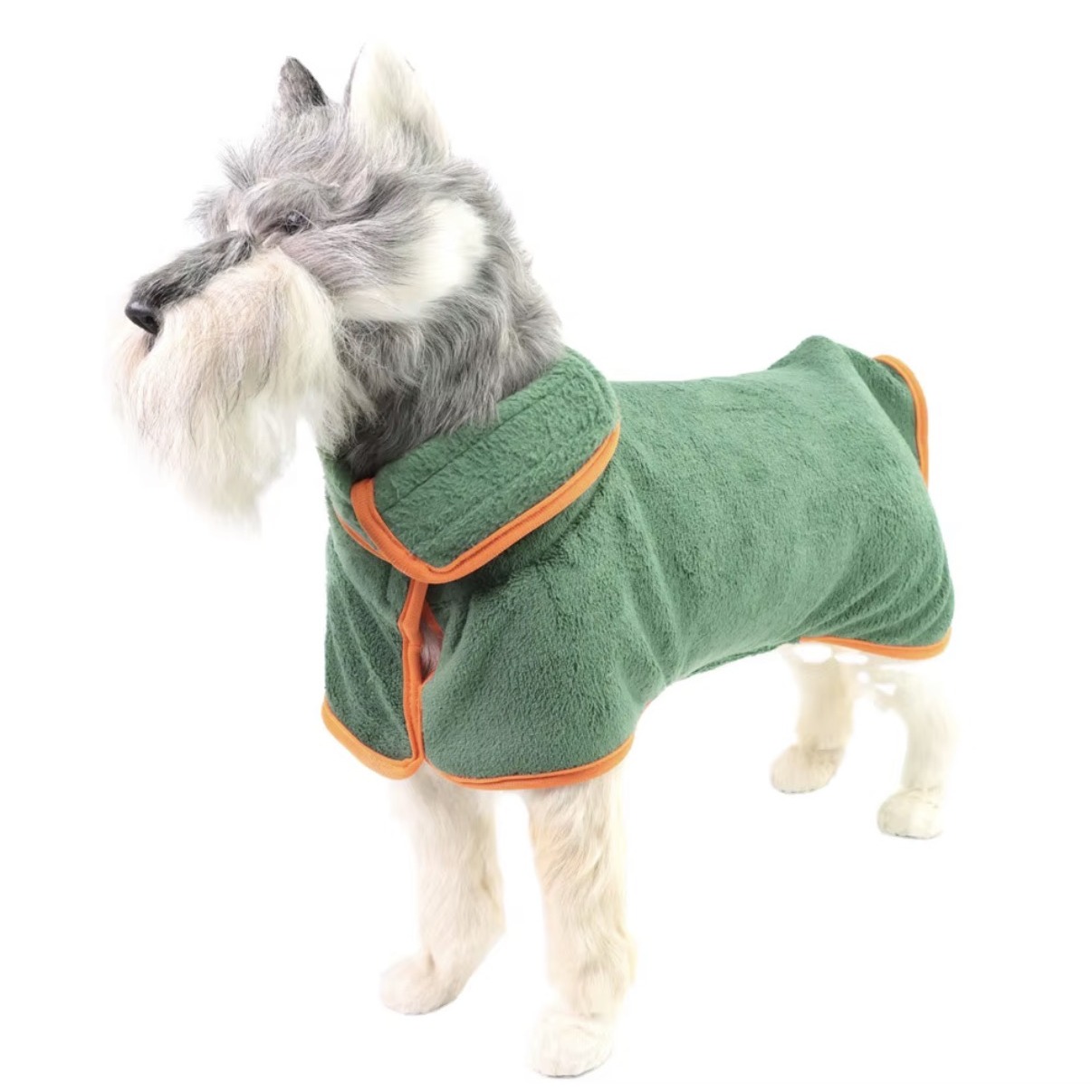
Drying Towel Robe
Microfibre robe that soaks up a wet-walk shake.
Fits any dog

Pawpoint on YouTube
Watch the full St Bernard video
Breed deep-dives, history and honest ownership talk. New film every week.
Watch now