
Tangkhul Hui
TANG-khool HWEE
India· Manipur (Ukhrul District), North East India
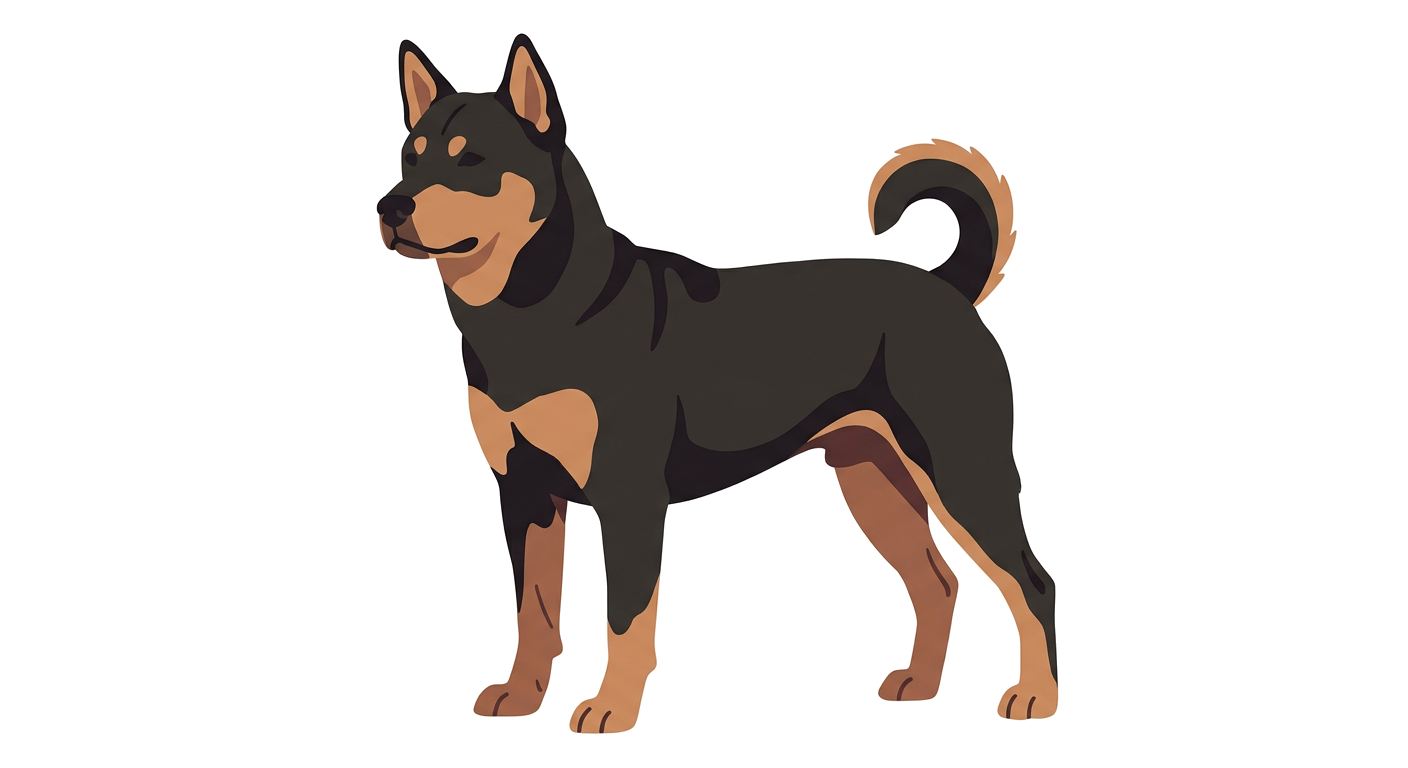
The Tangkhul Hui is a rare, indigenous landrace dog originating from the Ukhrul district and surrounding hill regions of Manipur in North East India. Historically bred and maintained by the Tangkhul Naga people, these dogs were valued as versatile companions adapted to the rugged montane forests. Their primary traditional roles encompassed big and small game hunting, tracking, and vigilant protection of family homesteads.
At a glance
Quick facts
Size
Medium
Exercise needs
High (active, outdoor-focused)
Home size suited to
Spacious home with secure grounds
Grooming frequency
Low (weekly brushing)
Coat length
Short to medium
Sheds
Moderate
Lifespan
10–14 years (estimated)
Town or country
Rural or semi-rural
Garden size needed
Large and securely fenced
Where it comes from
Origins of the Tangkhul Hui
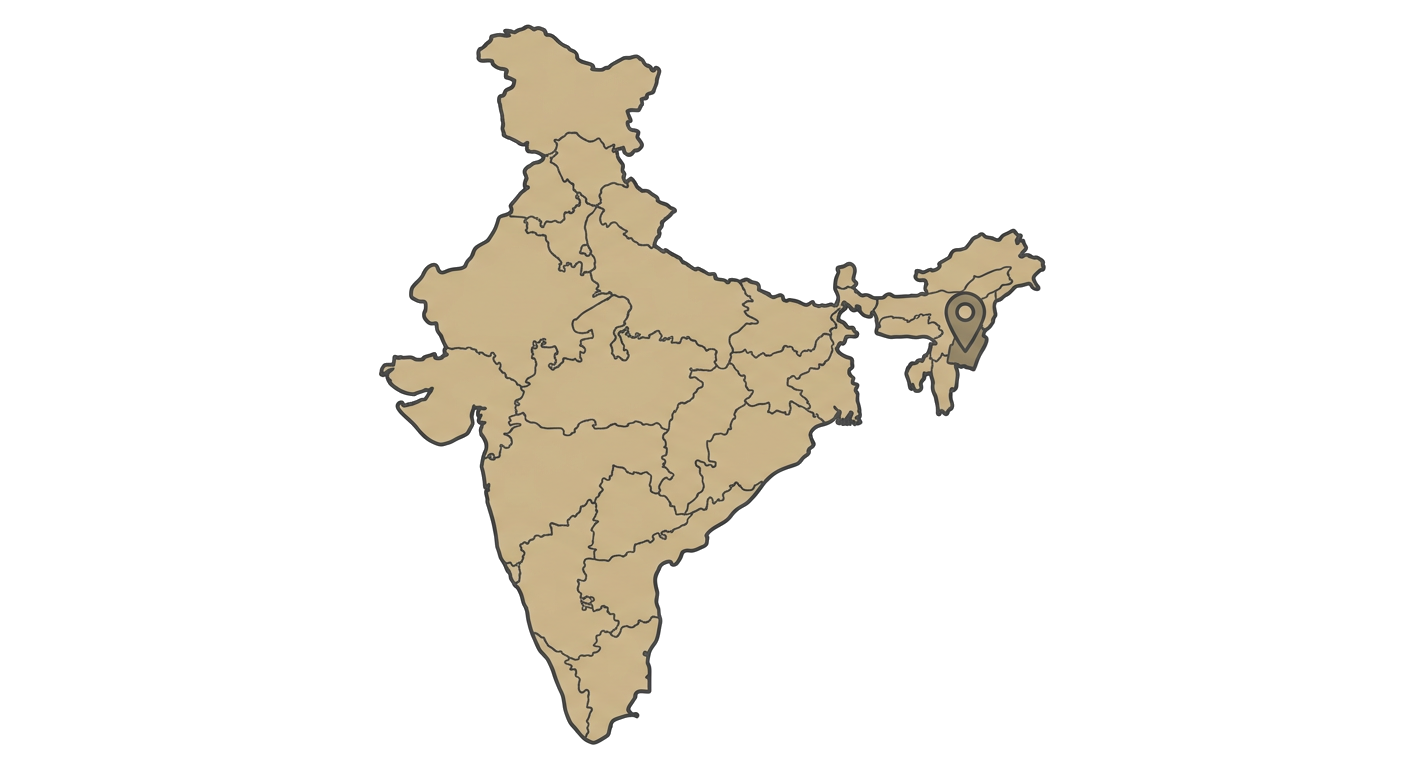
Indigenous to the mountainous Ukhrul district of Manipur, where it served the Tangkhul Naga community as a hunting and guard dog.
- Region
- Manipur (Ukhrul District), North East India
- Climate it was bred for
- Subtropical highland and temperate montane forest
- Original job
- Big-game hunting, forest tracking, and homestead guardian
The long read
About the breed
Characterised by a lean, muscular build and typically displaying a distinctive black-and-tan coat pattern, the Tangkhul Hui exhibits the typical spitz-and-hound blend seen in several Southeast Asian landraces. They possess acute senses, high stamina, and natural prey drive, alongside a reserved and alert disposition toward strangers. Like many indigenous landraces, they thrive best in outdoor-oriented, active environments where their natural working instincts can be engaged.
Today, the Tangkhul Hui is critically scarce, with purebred numbers believed to be low due to widespread cross-breeding and modern shifts away from traditional hunting practices. Detailed scientific documentation and formal kennel club recognition remain absent, though regional enthusiasts and indigenous conservation advocates have made initial efforts to document, safeguard, and revive the breed before it is lost entirely.
Illustrated breed standard
The points of the breed
Hover or tap a numbered point to read what the standard asks for.
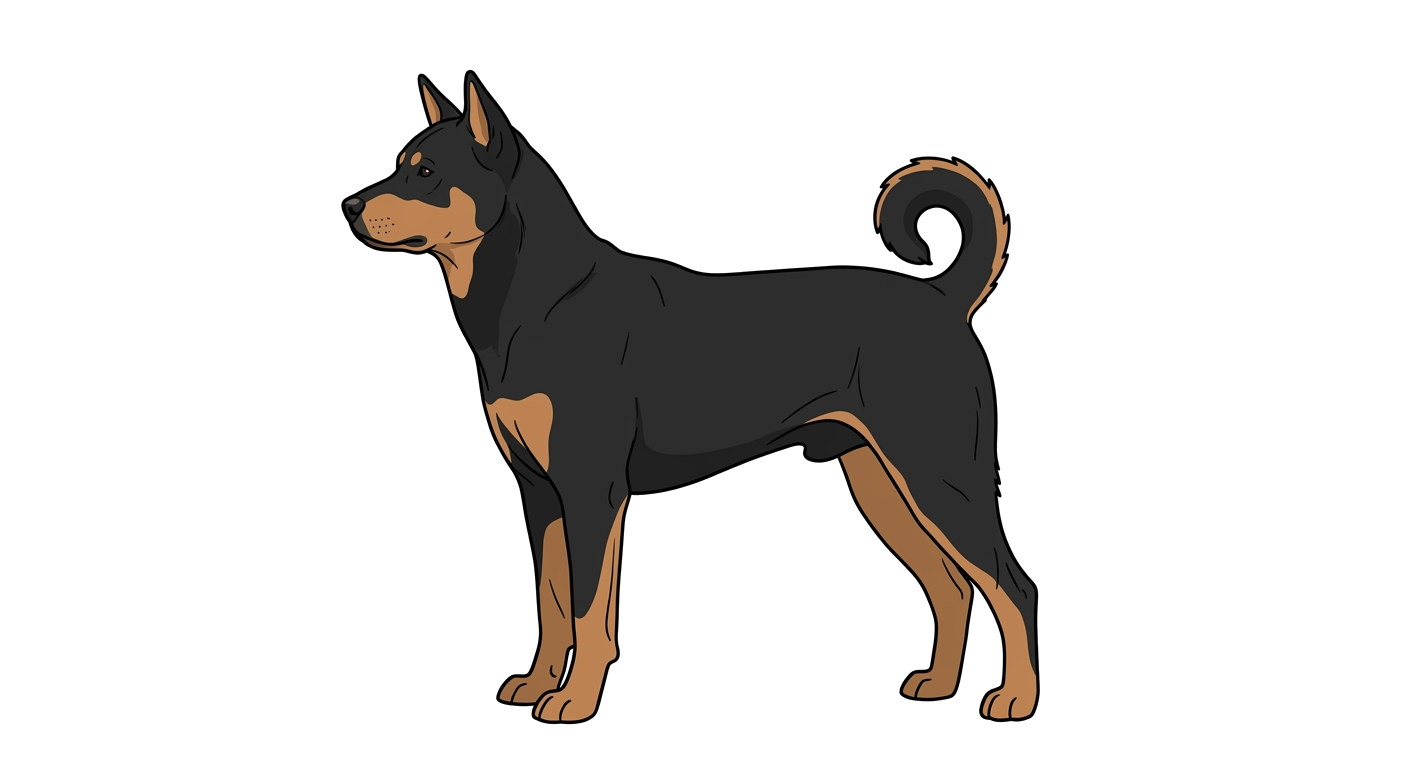
Point 1
Skull
The Tangkhul Hui's skull is judged on balance rather than size — proportionate to the body, with a clean cheek and a stop typical of the breed. Coarseness or an over-refined head are both faulted.
Colours & patterns
Recognised coats
Which coats the standard accepts — and which are simply popular.
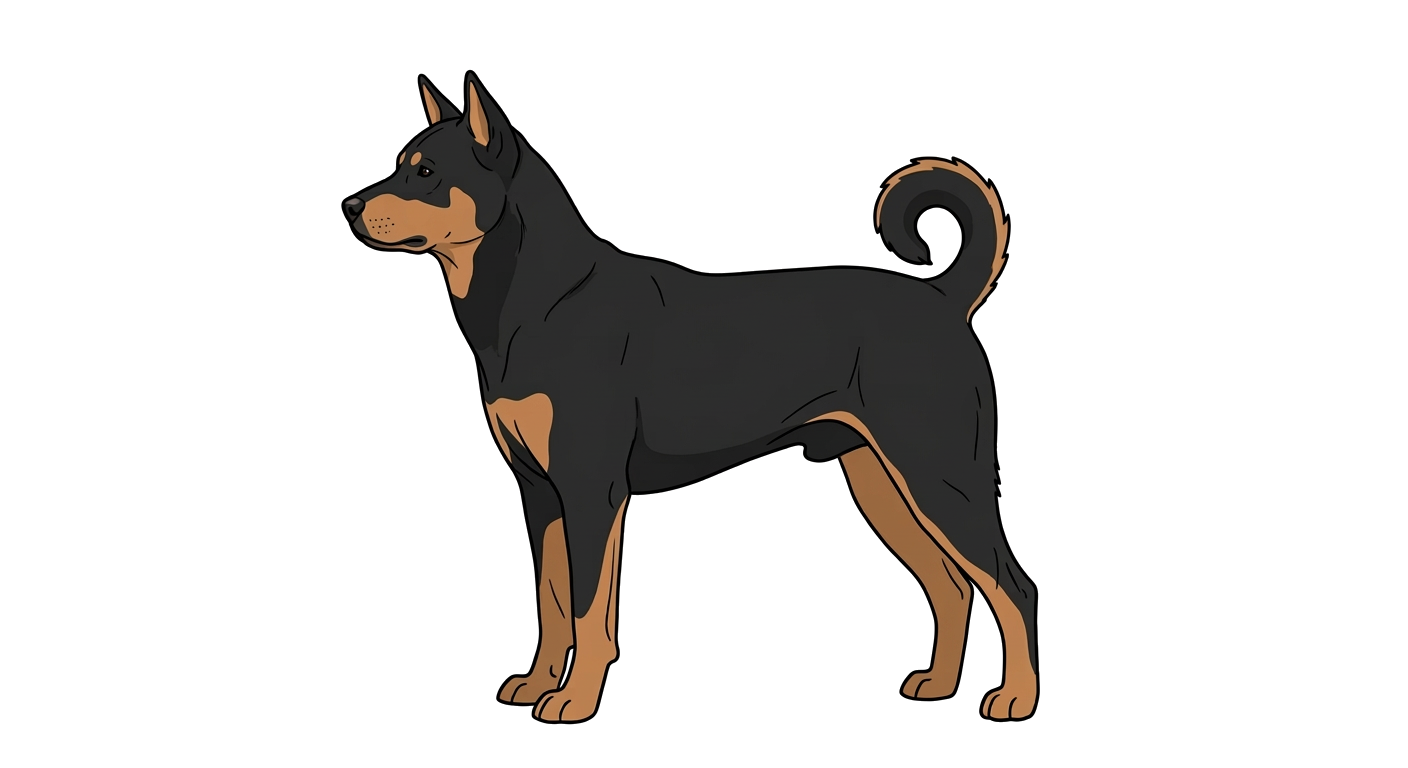
Black and Tan
Standard colour
The quintessential and most commonly described colouration, featuring defined tan points.
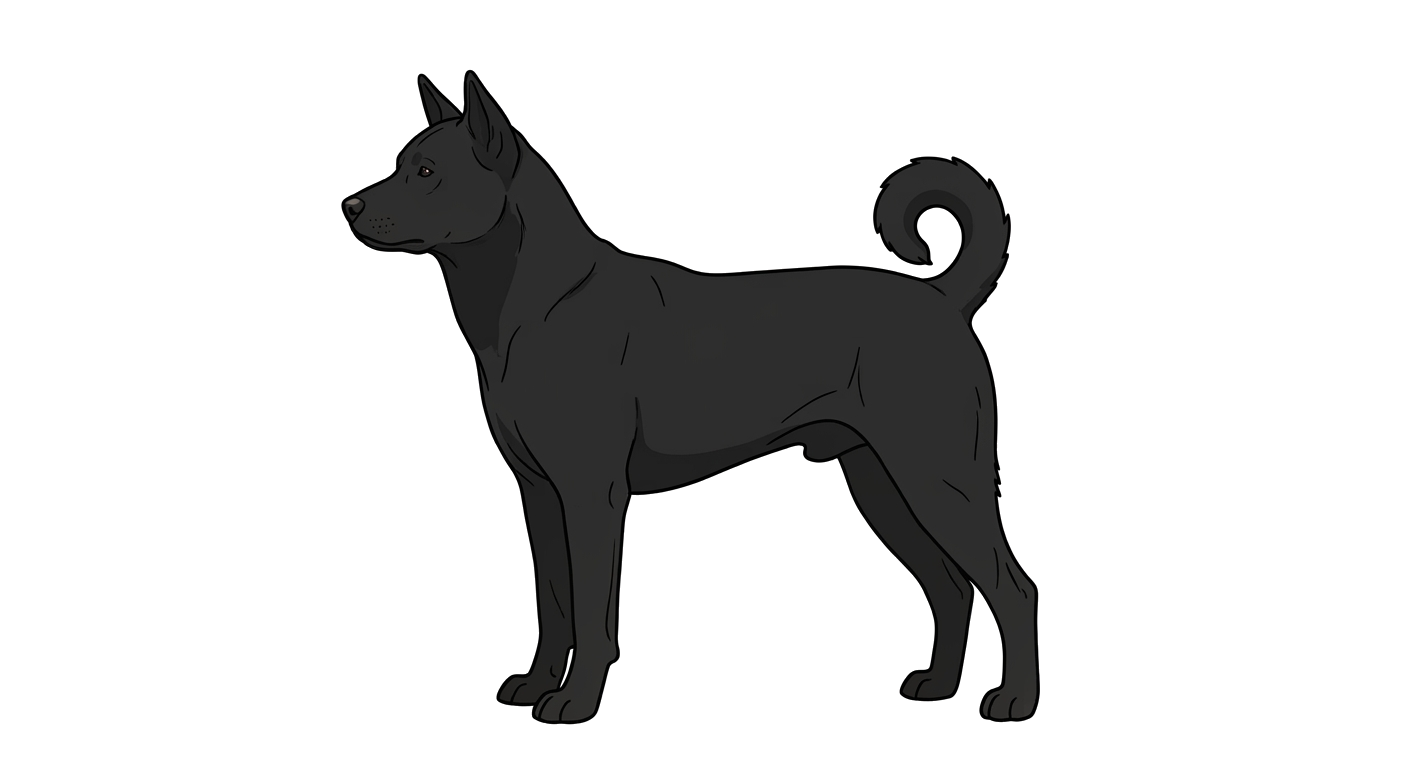
Solid Black
Standard colour
Less frequent, uniform black coat observed occasionally in traditional populations.
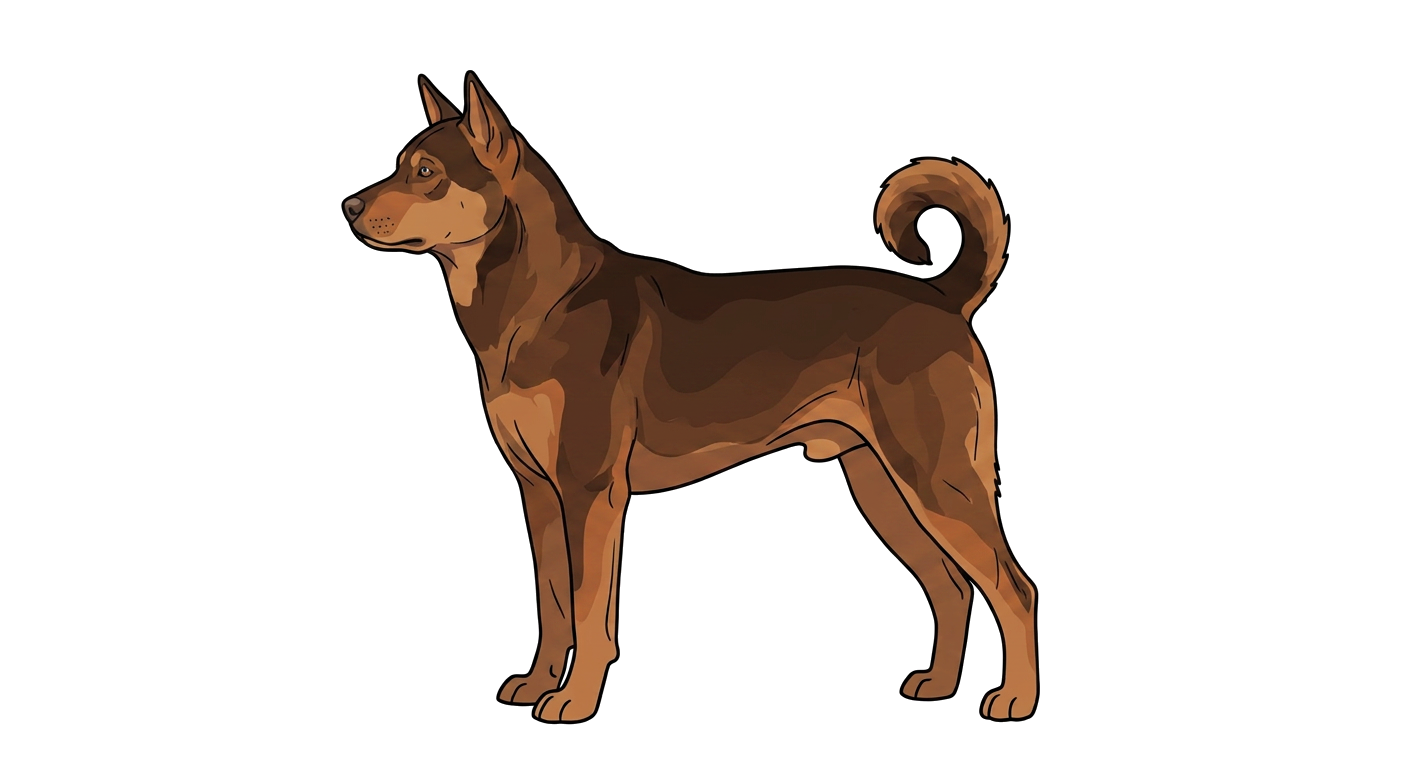
Tan / Reddish-Brown
Standard colour
Variations of reddish-tan to dark brown, documented across local highland landrace strains.
Timeline
History & development
Traditional Era
Tribal Working Partner
Maintained selectively by Tangkhul Naga hunters across the forested hills of Manipur for tracking deer, wild boar, and guarding isolated settlements.
Late 20th Century
Population Decline
Modernisation, shifts away from subsistence hunting, and the introduction of non-native breeds led to significant dilution and population decline.
2010s–Present
Conservation Awareness
Regional cynologists and indigenous advocates began surveying remaining populations in Manipur to document the landrace and promote conservation.
Reference
Breed standard summary
- body
- Firm and athletic with a deep chest, well-sprung ribs, a level back, and a slightly tucked-up abdomen.
- coat
- Short to medium double coat, dense and harsh to the touch, providing resilience against rain and thorn-dense undergrowth.
- ears
- Medium-sized, triangular, erect or semi-erect, mobile, and set high on the skull.
- eyes
- Almond-shaped, medium in size, set slightly obliquely, typically dark brown with an alert, watchful gaze.
- gait
- Light-footed, nimble, and ground-covering, demonstrating remarkable agility on rough and uneven inclines.
- head
- Wedge-shaped and clean-cut, tapering smoothly to the muzzle, with a moderate stop and tight skin.
- size
- Medium; height roughly 45–55 cm at the withers, weight approximately 15–22 kg.
- tail
- Moderately long, carried curved over the back or slightly lowered in resting posture, covered in dense hair.
- colour
- Predominantly black and tan, often with tan points over the eyes, muzzle, chest, and lower limbs; occasionally solid black or dark brindle variants occur.
- muzzle
- Moderately long, straight, and strong, ending in a black, well-pigmented nose with open nostrils.
- temperament
- Vigilant, loyal to the family, independent-minded, and possessing pronounced prey drive and protective instincts.
- general appearance
- Medium-sized, agile, and well-muscled landrace dog with an alert expression, balanced proportions, and functional athleticism suited to steep terrain.
Health
What to screen for
Green means little to worry about, amber means ask the breeder for test results, red means manage it actively.
Infectious Diseases
Watch closely
Canine distemper and parvovirus remain regional risks where routine preventative vaccination programmes are limited.
Tick-Borne Illnesses
Watch closely
Common exposure to woodland ticks makes conditions such as babesiosis and ehrlichiosis a practical health concern.
Musculoskeletal Injuries
Screen for it
Active hunting and terrain navigation can lead to strains, soft-tissue tears, or paw pad injuries if unmonitored.
General information only — always speak to your vet about your own dog.
From real owners
Dogs like this
Tangkhul Huis added by PawPoint members through their pet passports. Share yours to appear here.
Loading the wall…
Made for the Tangkhul Hui
The book, plus prints, hoodies and mugs using our own Tangkhul Hui illustration — and one everyday accessory that suits any dog.
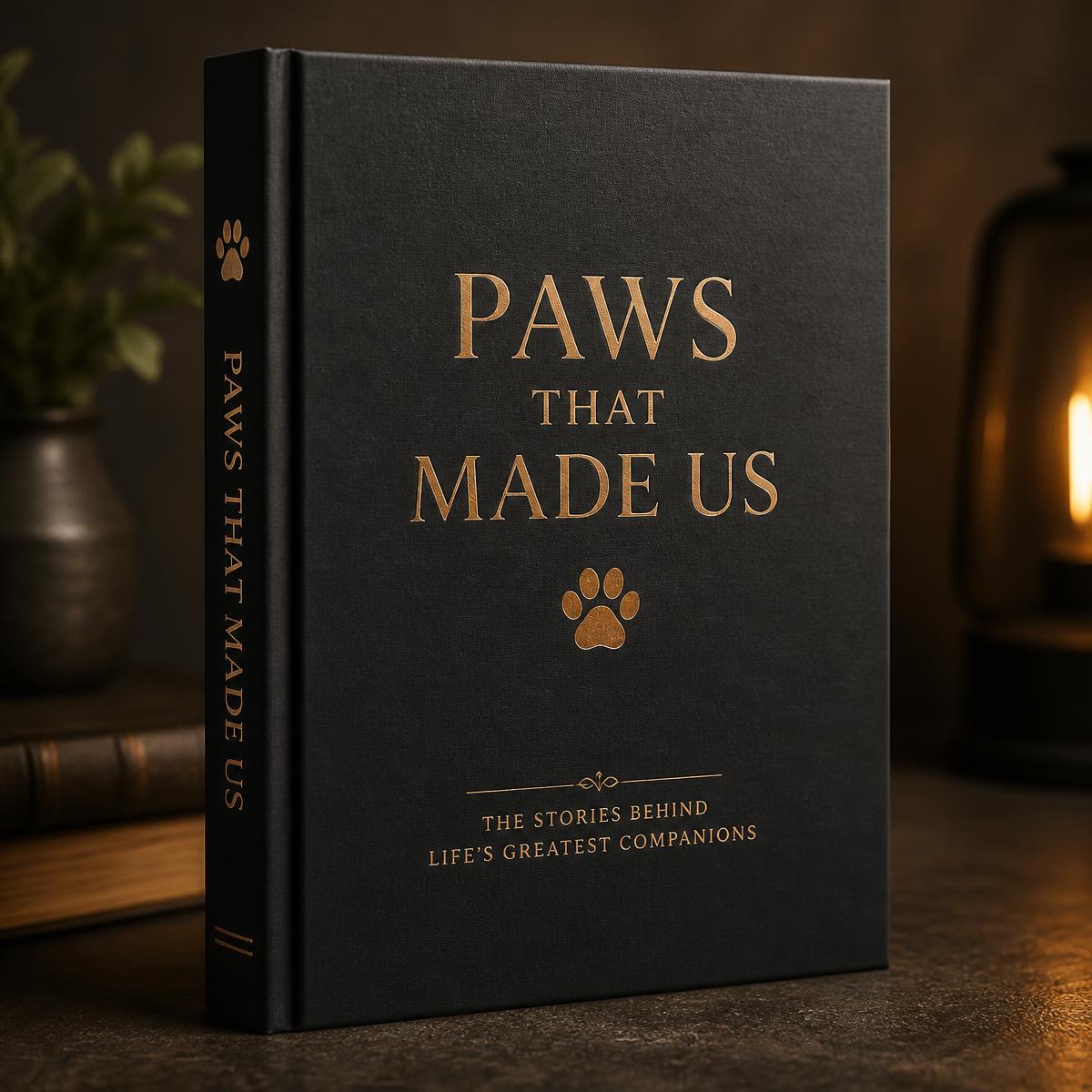
The book
Pawpoint: The Complete Dog Breed Book
Every officially recognised breed plus the unofficial ones nobody else documents. 400+ pages, hardback, printed and shipped from the UK.
Own stock — shipped by us
Framed poster
Tangkhul Hui Framed Poster
Museum-weight print of our Tangkhul Hui illustration, framed or unframed.
Printed to order
Hoodie
Tangkhul Hui Hoodie
Heavyweight hoodie carrying the Tangkhul Hui illustration on the chest.
Printed to order
Mug
Tangkhul Hui Mug
Ceramic mug with the Tangkhul Hui illustration wrapped around it.
Printed to order
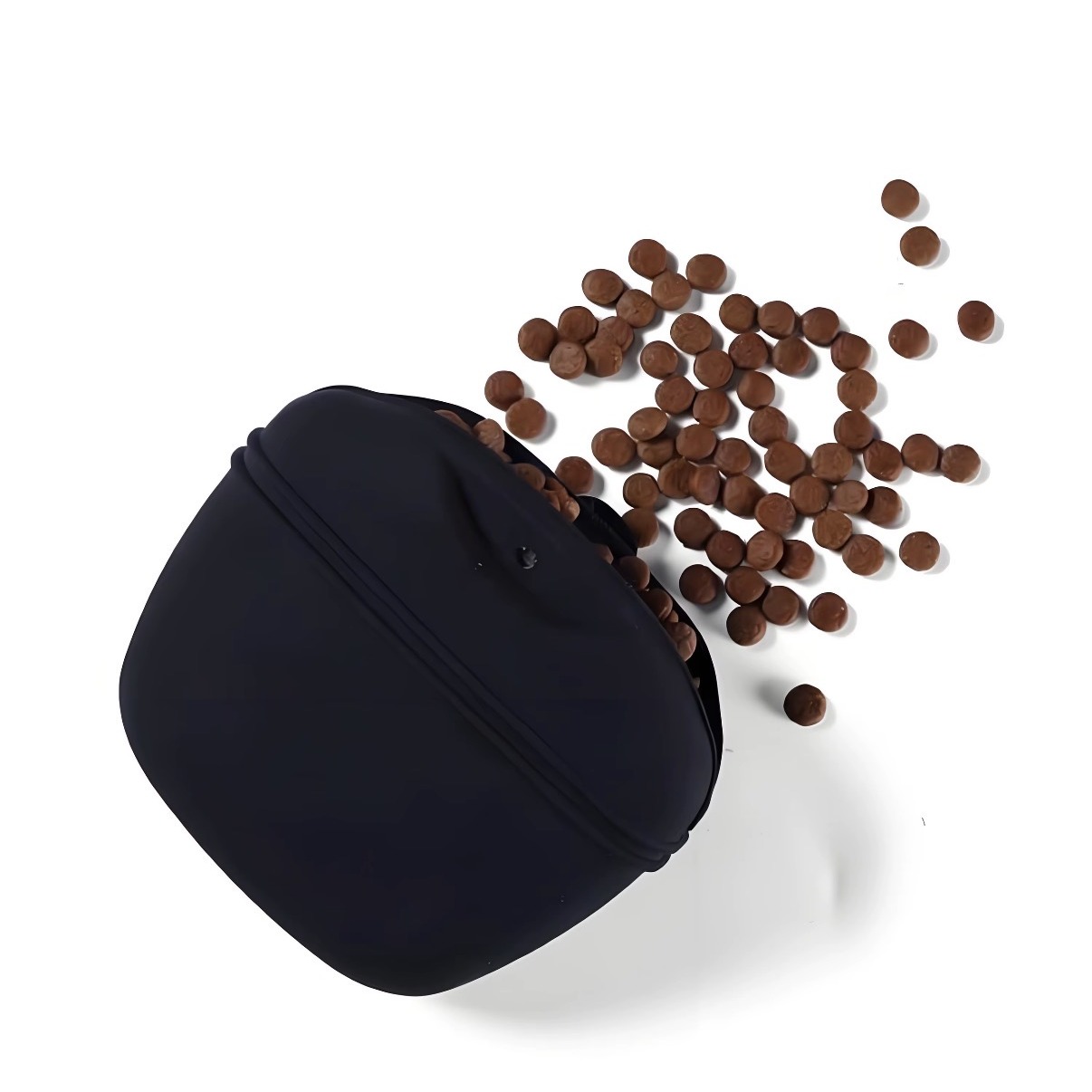
Accessory
Treat Pouch
Magnetic-close belt pouch for training sessions.
Fits any dog
Pawpoint on YouTube
Watch the full Tangkhul Hui video
Breed deep-dives, history and honest ownership talk. New film every week.
Watch now