Tibetan Mastiff
ti-BET-uhn MASS-tif
China· Tibetan plateau and Himalayas
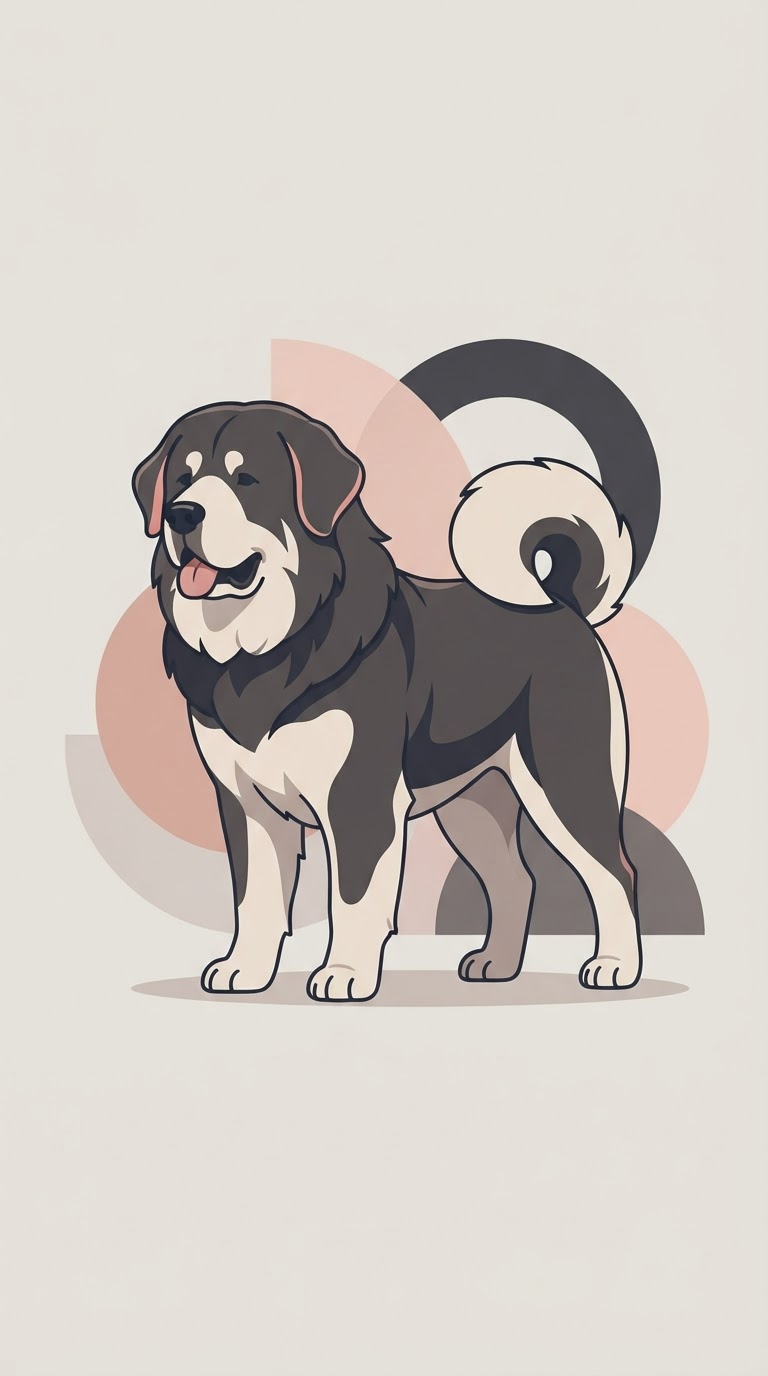
The Tibetan Mastiff is a huge, heavily coated guardian breed from the Himalayan plateau, bred for centuries to sit outside a tent or monastery through the night and see off wolves, leopards and strangers alike.
At a glance
Quick facts
Size
Giant
Exercise needs
30-60 minutes a day, low intensity
Home size suited to
Large home with space to stretch out
Grooming frequency
Twice weekly brush
Coat length
Medium
Sheds
Yes, heavily when moulting
Lifespan
10-14 years
Town or country
Better suited to the country
Garden size needed
Large and securely fenced
Where it comes from
Origins of the Tibetan Mastiff
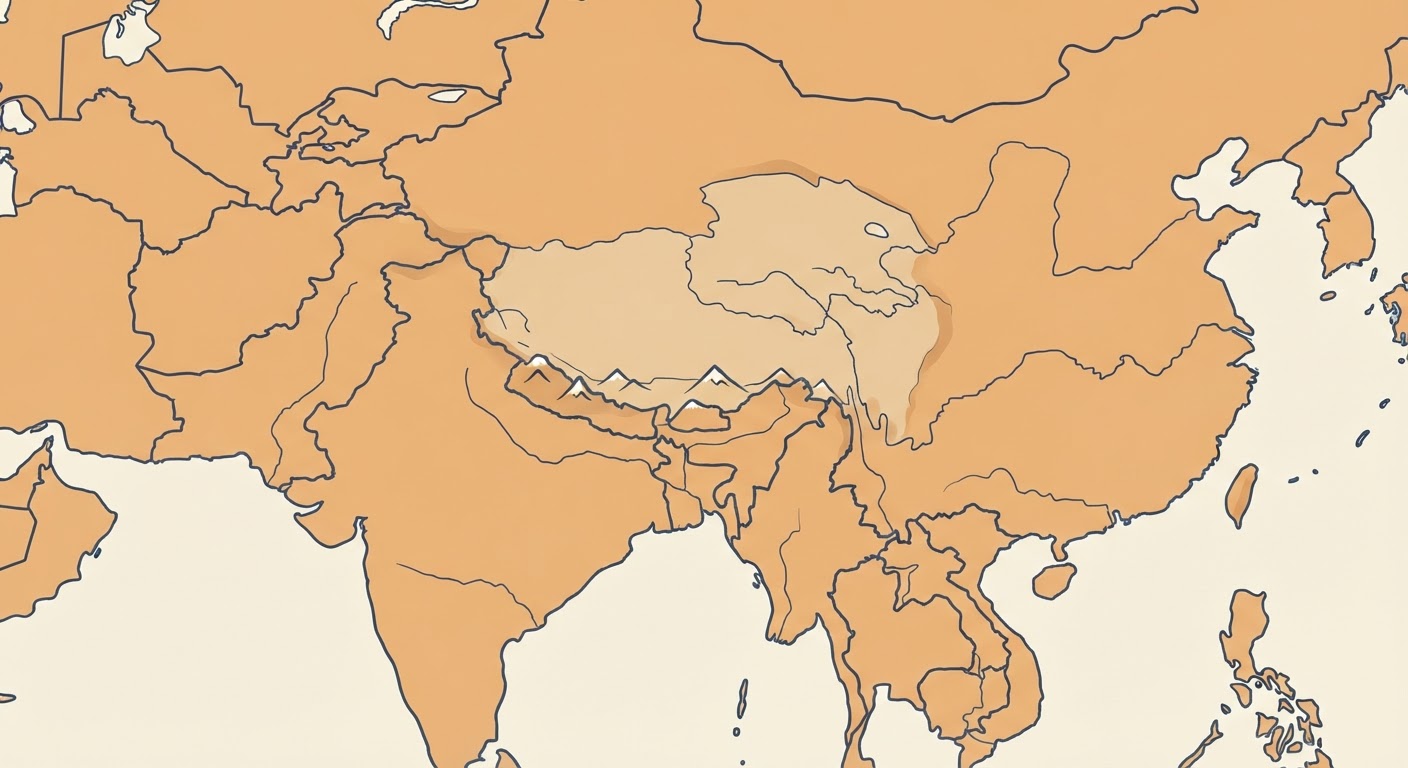
Bred on the high, cold Tibetan plateau to guard nomadic camps and monasteries through the night. Its thick double coat and sheer bulk let it withstand freezing temperatures while deterring wolves and leopards from the flock.
- Region
- Tibetan plateau and Himalayas
- Climate it was bred for
- High-altitude, harsh cold winters
- Original job
- Guarding livestock and monasteries
The long read
About the breed
Nomadic herders and monasteries across Tibet, Nepal and parts of Mongolia kept these dogs loose or chained near the perimeter of the camp, relying on their deep bark and imposing size rather than active fighting to deter predators of livestock. Marco Polo and other early Western travellers wrote of enormous Tibetan dogs, and the breed's mythic reputation grew in the West largely through such secondhand accounts long before any reached Europe or America in numbers.
Living with a Tibetan Mastiff means living with a dog bred to make its own decisions after dark. It is aloof with strangers, deeply bonded to its own family, and naturally suspicious of anything unfamiliar entering its territory, traits that suit a rural guarding role far better than a suburban garden. It matures slowly, often not reaching full temperament until three years old, and its independent, sometimes stubborn character makes it a poor match for a first-time owner expecting quick obedience. The dense double coat, heaviest around the neck in a mane-like ruff, needs serious brushing through its heavy annual shed.
Outside its homeland the breed has had an odd modern history, briefly reaching absurd prices in China as a status symbol in the 2000s before the market collapsed. Today it remains rare, kept mostly by people prepared for a large, independent-minded guardian rather than a companion dog, and works best with secure fencing, early socialisation and realistic expectations about how much it will ever defer to a stranger.
Living with one
Temperament & needs
Our own ratings, based on the breed standard and how these dogs behave in ordinary homes.
Friendliness
2/5
How openly the Tibetan Mastiff greets people it does not know.
Trainability
2/5
Independent-minded, needs an experienced, patient handler.
Energy
2/5
Calm by day, most active at dusk and through the night.
Barking
4/5
Deep, carrying bark used to warn off intruders at night.
Grooming
4/5
Heavy double coat with a substantial annual shed.
Suits a first-time owner
2/5
How forgiving the Tibetan Mastiff is for someone taking on their first dog.
Sociability
2/5
Aloof with strangers, deeply loyal to its own family.
Independence
5/5
Bred to make its own guarding decisions unsupervised.
Illustrated breed standard
The points of the breed
Hover or tap a numbered point to read what the standard asks for.
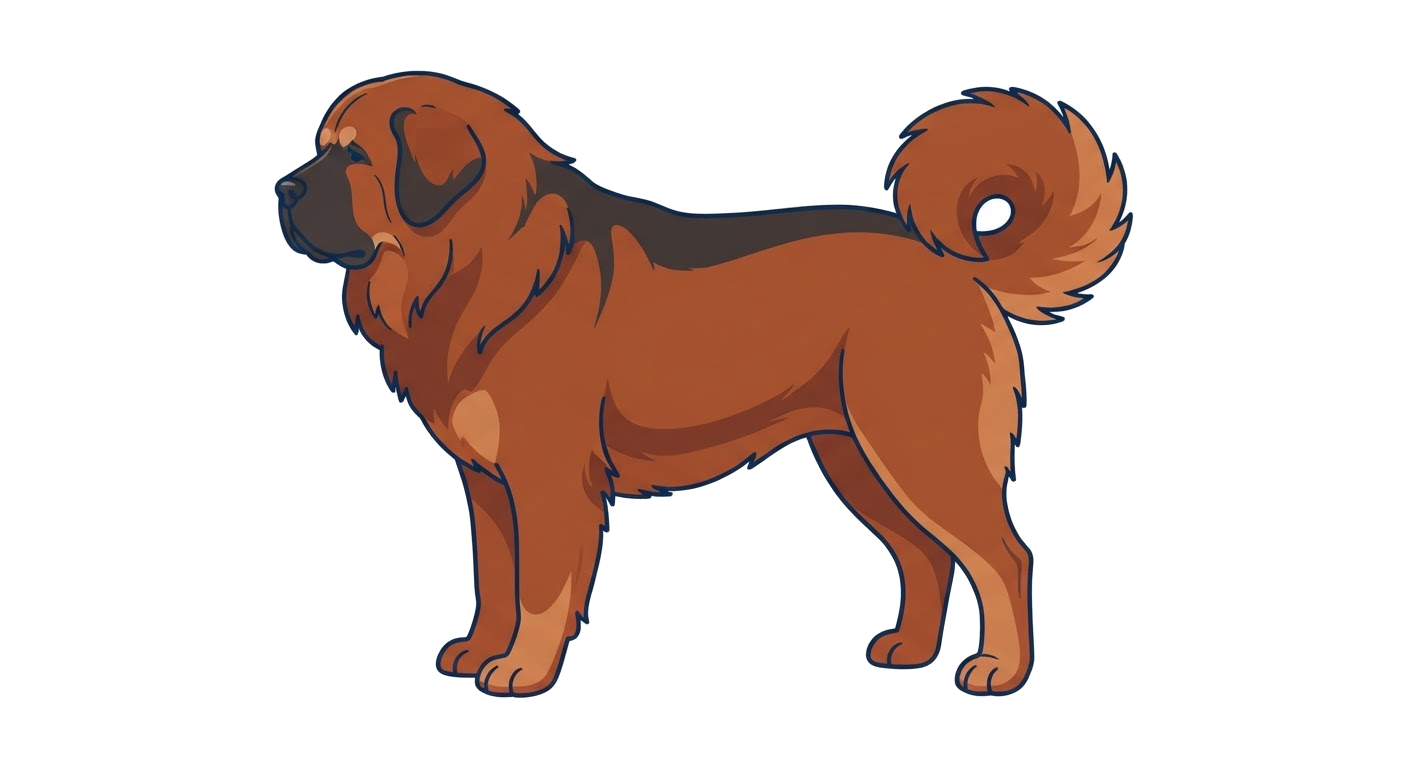
Point 1
Skull
The Tibetan Mastiff's skull is judged on balance rather than size — proportionate to the body, with a clean cheek and a stop typical of the breed. Coarseness or an over-refined head are both faulted.
Colours & patterns
Recognised coats
Which coats the standard accepts — and which are simply popular.
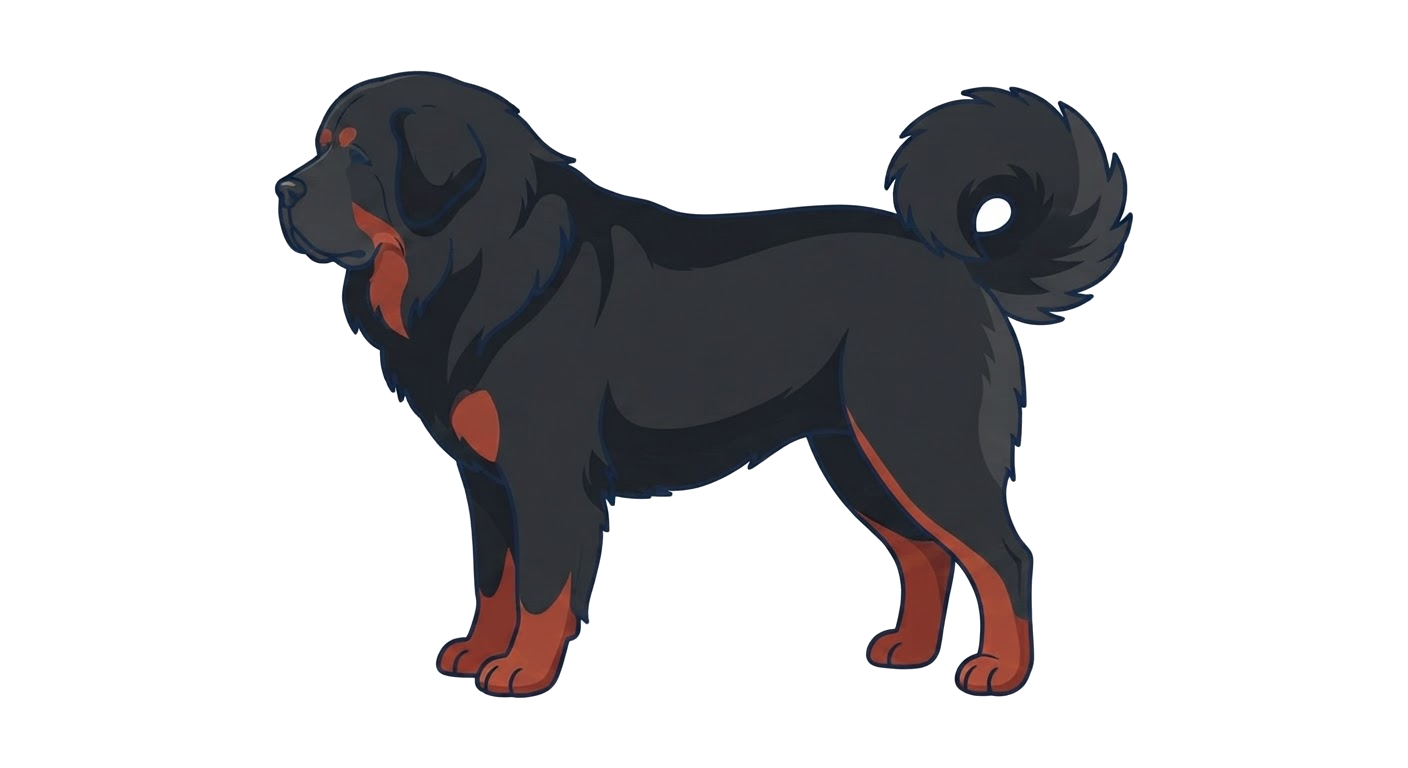
Black
Standard colour
Solid black, sometimes with tan markings.
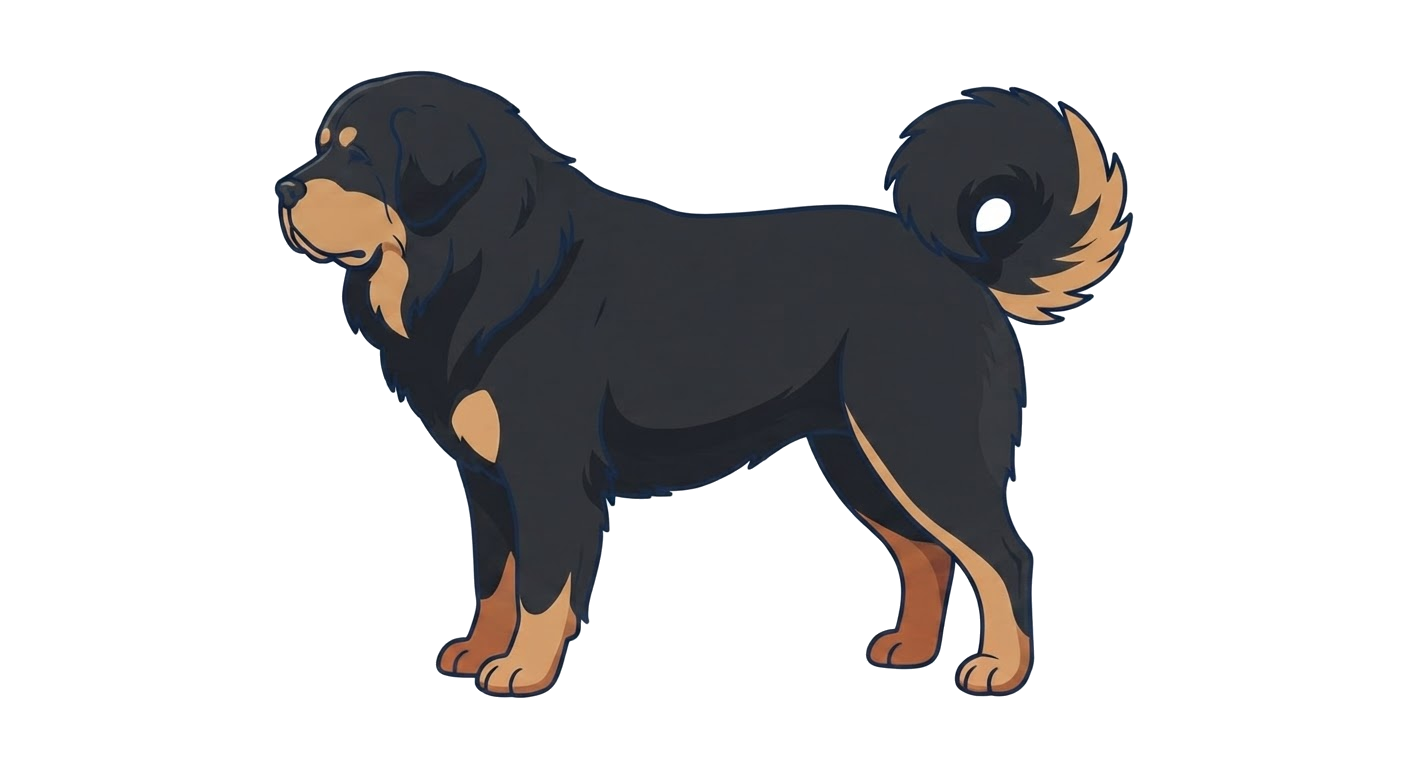
Black and tan
Standard colour
Black with defined tan points on face and legs.
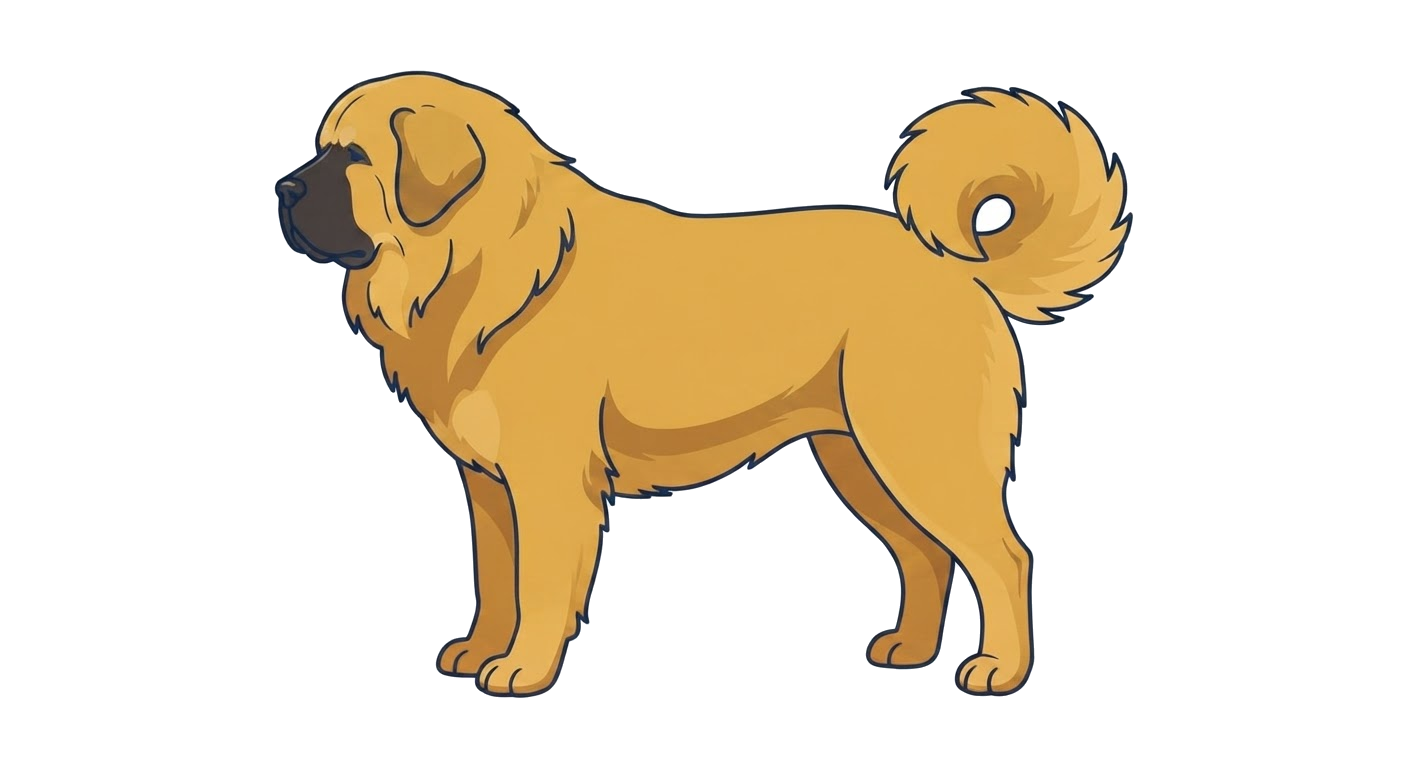
Gold
Standard colour
Ranges from pale gold to deep russet.
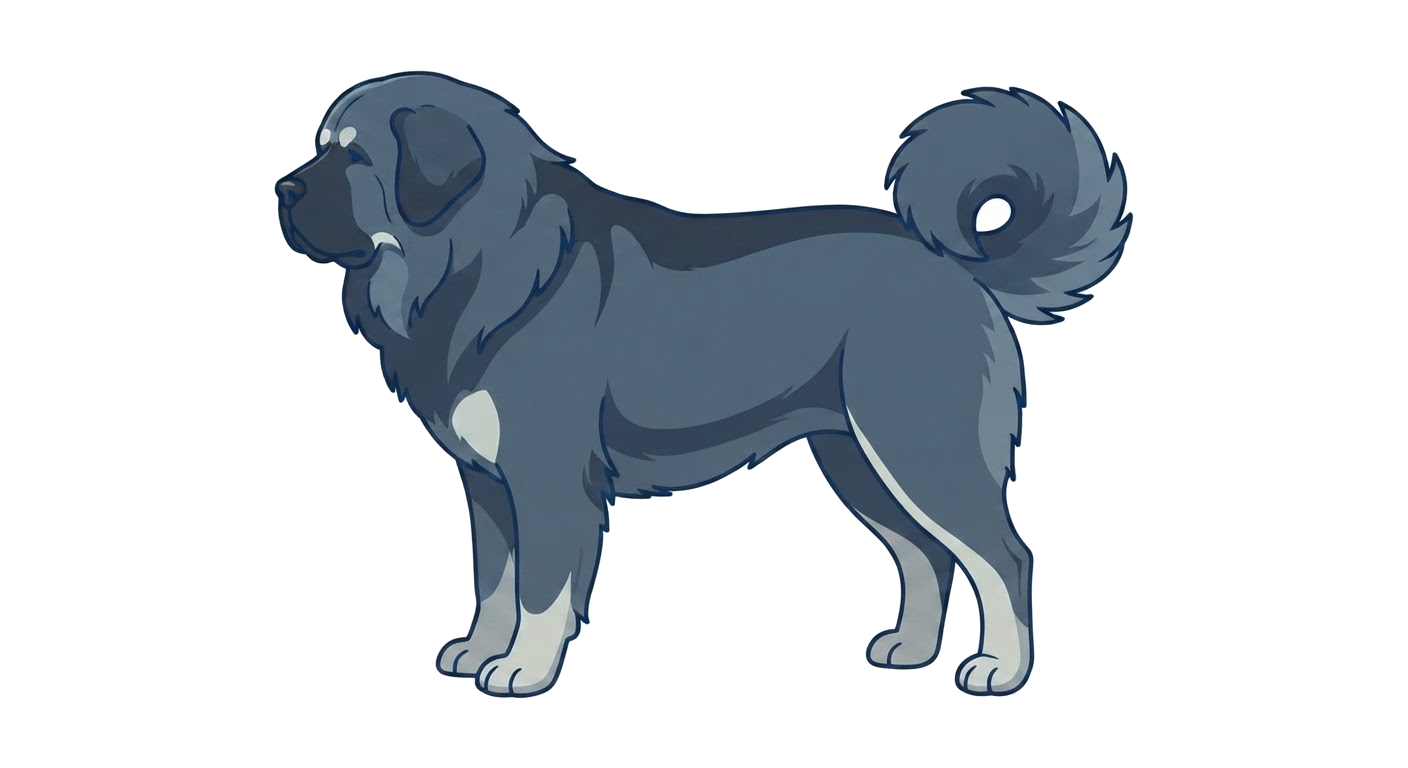
Blue-grey
Standard colour
A diluted slate colour, less common than black or gold.
Timeline
History & development
13th century
Marco Polo's account
European travellers including Marco Polo described huge guardian dogs kept by Tibetan communities, seeding the breed's legend in the West.
1847
First dog to Britain
A Tibetan Mastiff was reportedly presented to Queen Victoria, among the earliest specimens to reach England.
1970s
Western breeding programmes begin
Imports to the United States and Europe established the first organised Western breeding lines.
2011
Chinese status symbol boom
Prices for Tibetan Mastiffs briefly reached millions of yuan in China before the speculative market collapsed.
2006
UK Kennel Club recognition
The breed was formally recognised in the UK Working Group.
Reference
Breed standard summary
- body
- Powerful, well muscled, with a level back and deep chest.
- coat
- Thick double coat, longer around the neck forming a mane.
- ears
- Medium, pendant, dropping forward close to the head.
- eyes
- Medium, deep-set, dark brown, giving a thoughtful expression.
- gait
- Deliberate, powerful, with good reach when moving freely.
- head
- Broad and heavy, with a pronounced stop and heavy wrinkling.
- size
- Giant, heavily built, males notably larger than females.
- tail
- Medium length, carried curled over the back when alert.
- colour
- Black, Black and tan, Gold, Blue-grey. Colours outside this list are seen but are not accepted by the kennel clubs.
- temperament
- Typical of the breed: strongest in independence, barking, grooming. Nervousness or aggression are serious faults in the show ring and in the home.
- general appearance
- Massive, heavily boned, with a solemn, dignified bearing.
Health
What to screen for
Green means little to worry about, amber means ask the breeder for test results, red means manage it actively.
Hip dysplasia
Screen for it
Ask for BVA/KC or OFA hip scores on both parents given the breed's size.
Hypothyroidism
Screen for it
Request thyroid testing results from the breeder.
Entropion
Low concern
Check both parents' eyes have been examined for eyelid abnormalities.
Canine inherited demyelinative neuropathy
Watch closely
A known issue in the breed; ask breeders about genetic screening where available.
General information only — always speak to your vet about your own dog.
From real owners
Dogs like this
Tibetan Mastiffs added by PawPoint members through their pet passports. Share yours to appear here.
Loading the wall…
Made for the Tibetan Mastiff
The book, plus prints, hoodies and mugs using our own Tibetan Mastiff illustration — and one everyday accessory that suits any dog.
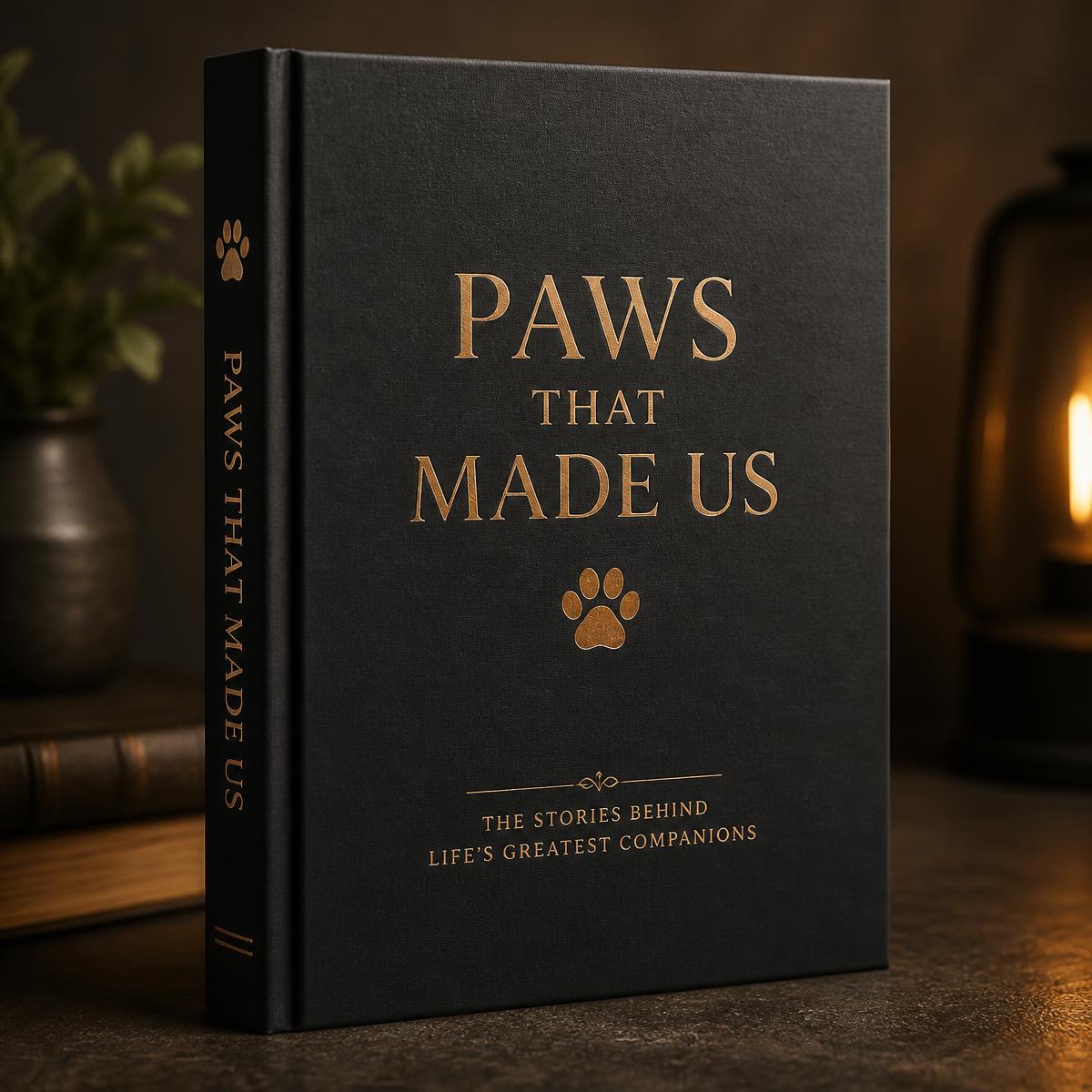
The book
Pawpoint: The Complete Dog Breed Book
Every officially recognised breed plus the unofficial ones nobody else documents. 400+ pages, hardback, printed and shipped from the UK.
Own stock — shipped by us
Framed poster
Tibetan Mastiff Framed Poster
Museum-weight print of our Tibetan Mastiff illustration, framed or unframed.
Printed to order
Hoodie
Tibetan Mastiff Hoodie
Heavyweight hoodie carrying the Tibetan Mastiff illustration on the chest.
Printed to order
Mug
Tibetan Mastiff Mug
Ceramic mug with the Tibetan Mastiff illustration wrapped around it.
Printed to order
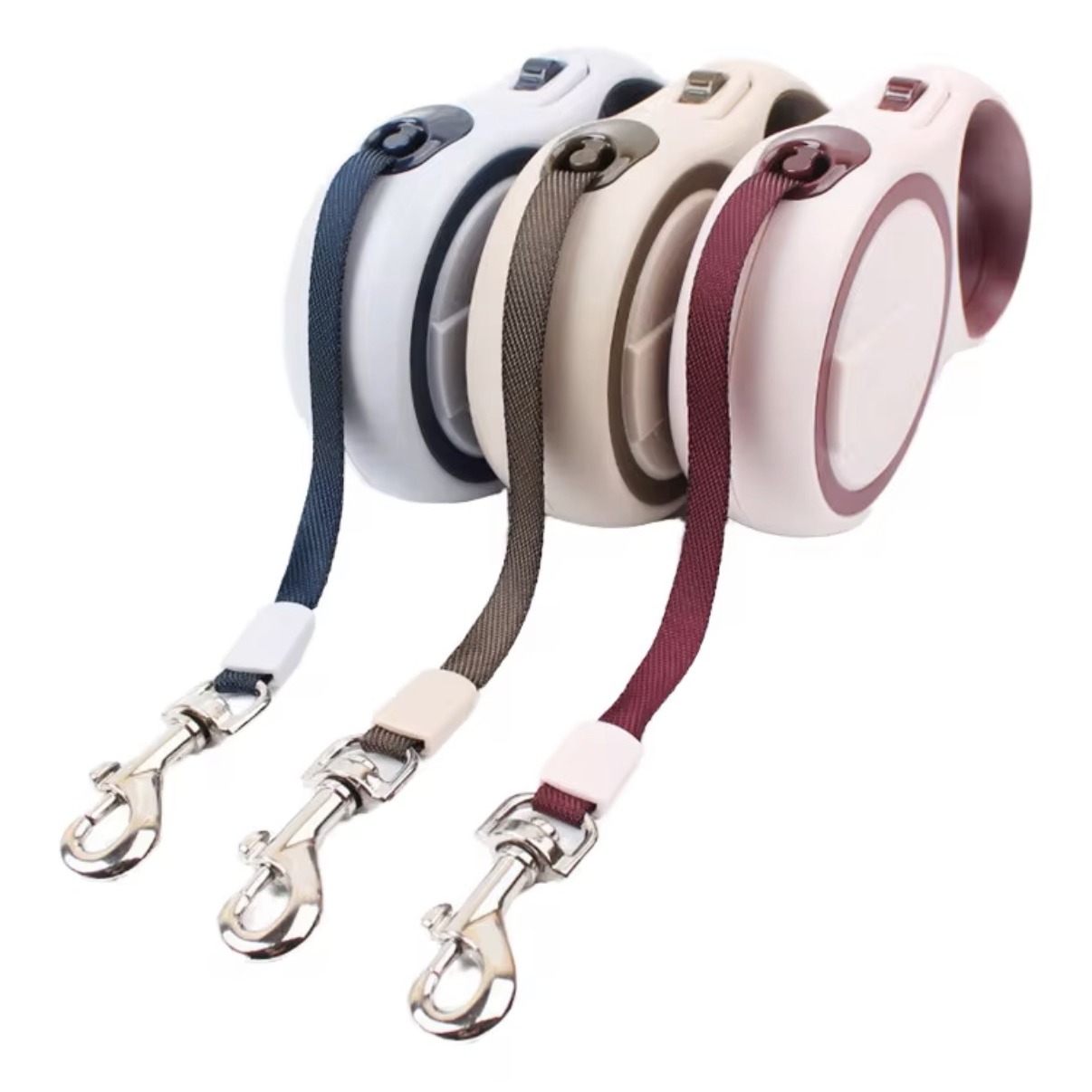
Accessory
Retractable Lead
5m retractable with one-touch brake.
Fits any dog
Pawpoint on YouTube
Watch the full Tibetan Mastiff video
Breed deep-dives, history and honest ownership talk. New film every week.
Watch now