
Welsh Terrier
WELSH TER-ee-uhr
United Kingdom· Wales
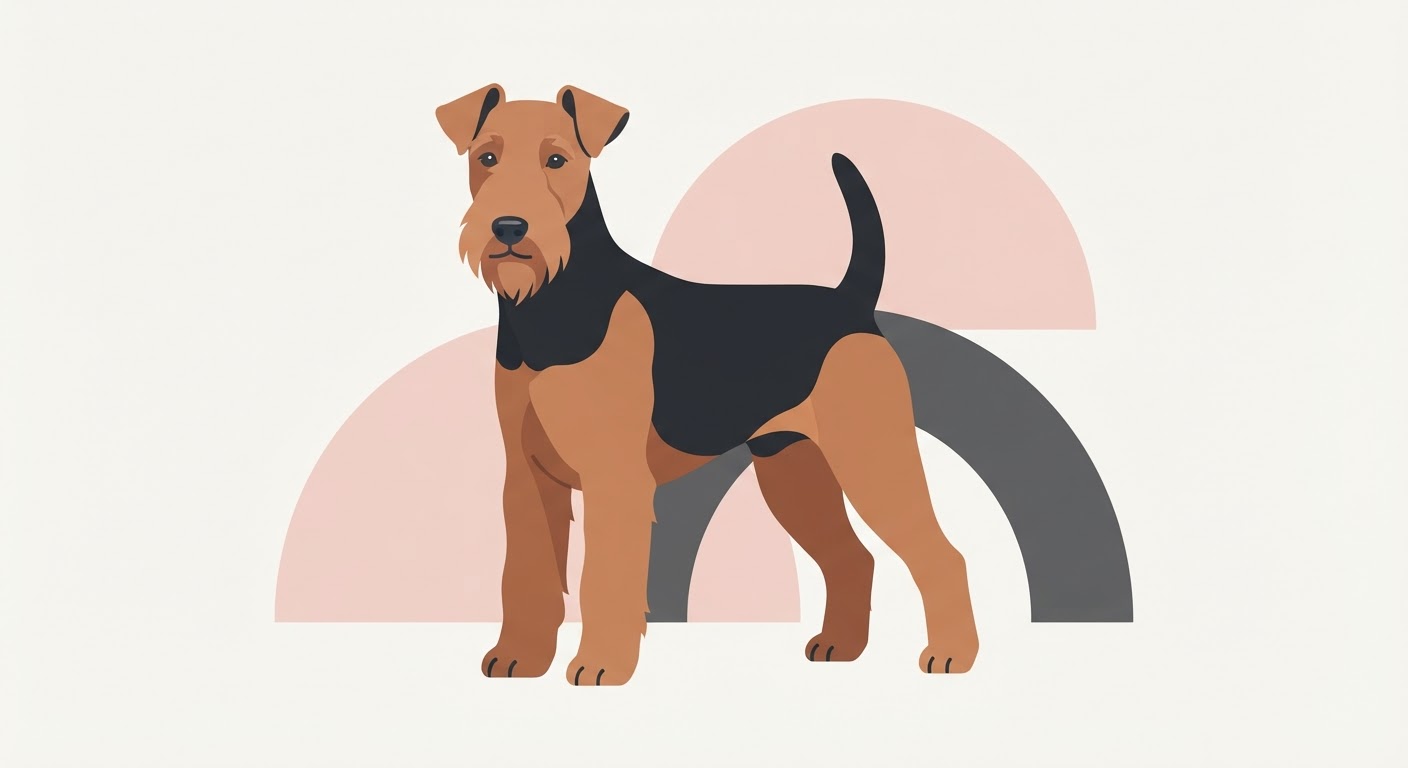
The Welsh Terrier is a sturdy, wire-coated terrier from the Welsh hills, bred to go to ground after fox, otter and badger and to hold its own against quarry far larger than itself.
At a glance
Quick facts
Size
Medium
Exercise needs
45-60 minutes a day
Home size suited to
Small to medium home
Grooming frequency
Weekly brush, hand-strip a few times a year
Coat length
Wiry
Sheds
Yes, heavily when moulting
Lifespan
12-15 years
Town or country
Either, with enough exercise
Garden size needed
Small to medium
Where it comes from
Origins of the Welsh Terrier
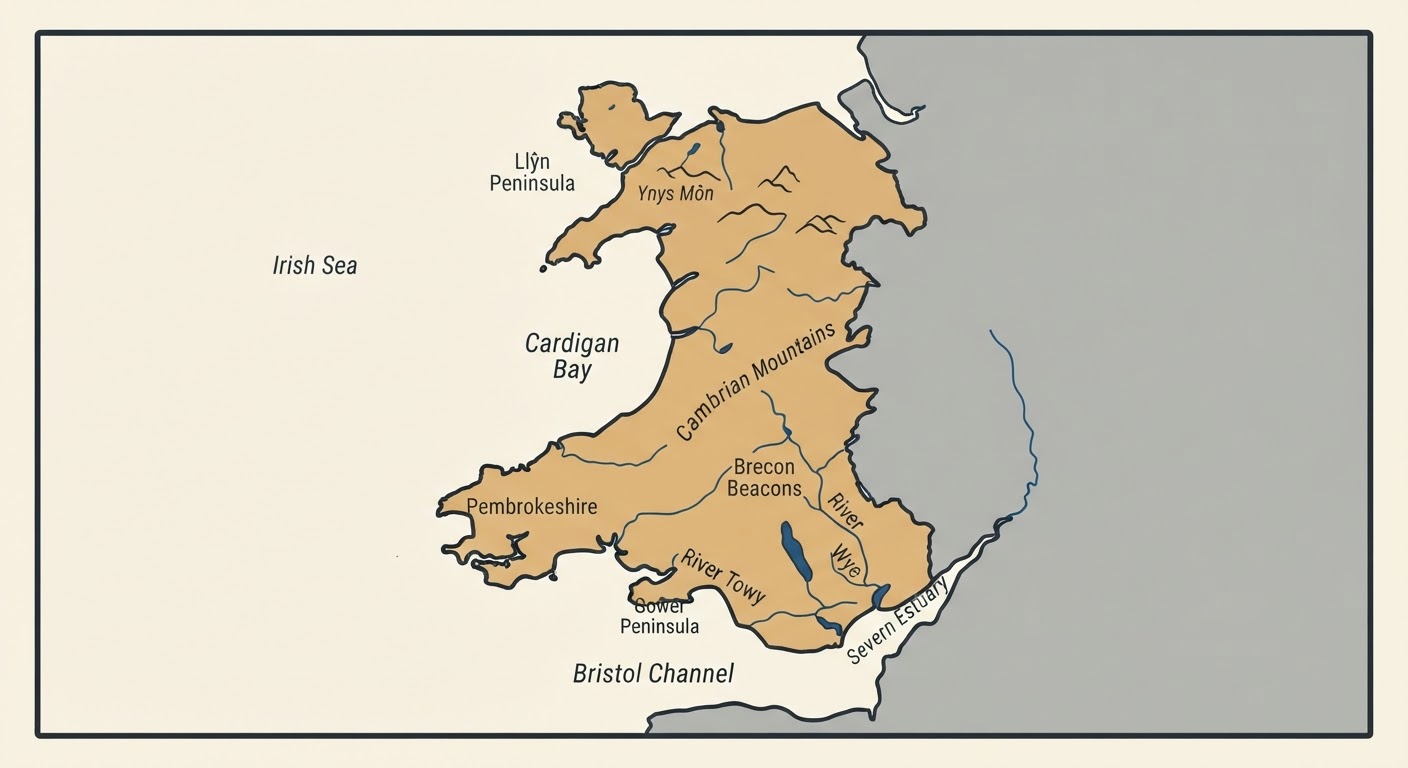
Descended from old rough-coated Welsh terriers used to work alongside hounds, going to ground where larger dogs could not follow. The wet, rugged hill country demanded a hardy, weatherproof coat and real physical courage.
- Region
- Wales
- Climate it was bred for
- Wet, hilly upland terrain
- Original job
- Going to ground after fox, otter and badger
The long read
About the breed
It descends from the old rough-coated black-and-tan terriers once common across Wales and the border counties, and its type was fixed and separated from similar breeds such as the Lakeland Terrier through nineteenth-century show breeding and increasingly precise breed standards. It worked in packs alongside hounds, going underground where the hounds could not follow, and needed both courage and a fairly biddable temperament to work as part of a team rather than purely on its own initiative.
Living with a Welsh Terrier suits someone wanting classic terrier grit in a slightly calmer, more manageable package than some of its relatives. It is game and confident, happy to dig or chase given the chance, but it is generally regarded as less excitable and more even-tempered than many terriers, making it a reasonably good family dog provided its exercise needs are met. It is intelligent and trainable but retains an independent streak typical of terriers bred to make quick decisions underground. The wiry coat is low-shedding but needs hand-stripping a couple of times a year to keep it in proper condition, which is worth discussing with a groomer early on.
Today the Welsh Terrier is a solid, if not hugely fashionable, choice among terrier fanciers, valued for combining traditional working ability with a temperament that copes reasonably well with normal family life, provided its digging instincts and terrier energy are given a legitimate outlet.
Living with one
Temperament & needs
Our own ratings, based on the breed standard and how these dogs behave in ordinary homes.
Friendliness
3/5
How openly the Welsh Terrier greets people it does not know.
Trainability
3/5
Intelligent but independent-minded like most terriers.
Energy
4/5
Active and game, needs a proper daily walk plus play.
Barking
3/5
Alert and vocal when something catches its interest.
Grooming
3/5
Wiry coat needs hand-stripping a couple of times a year.
Suits a first-time owner
3/5
How forgiving the Welsh Terrier is for someone taking on their first dog.
Sociability
3/5
Even-tempered for a terrier, generally good with familiar people.
Independence
3/5
Bred to make quick decisions underground on its own.
Illustrated breed standard
The points of the breed
Hover or tap a numbered point to read what the standard asks for.
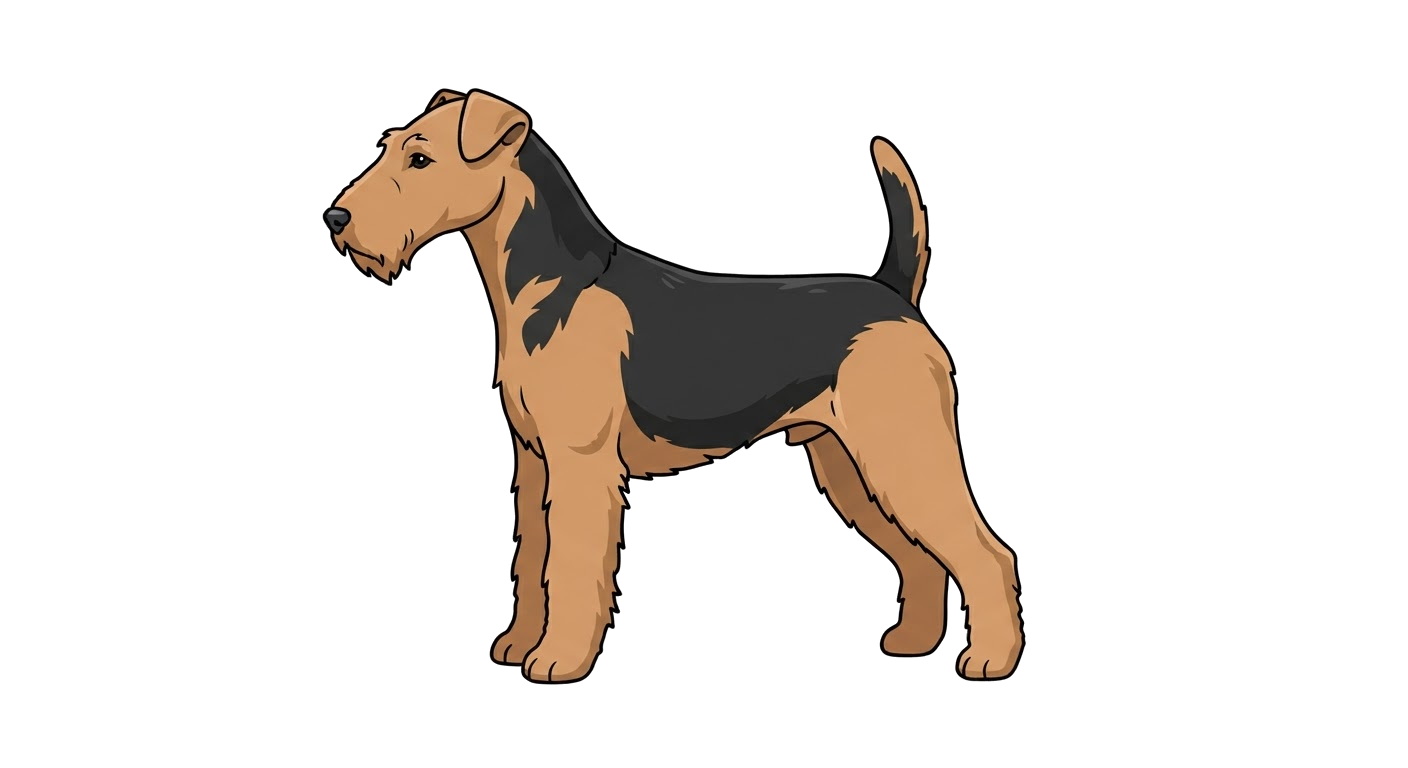
Point 1
Skull
The Welsh Terrier's skull is judged on balance rather than size — proportionate to the body, with a clean cheek and a stop typical of the breed. Coarseness or an over-refined head are both faulted.
Colours & patterns
Recognised coats
Which coats the standard accepts — and which are simply popular.
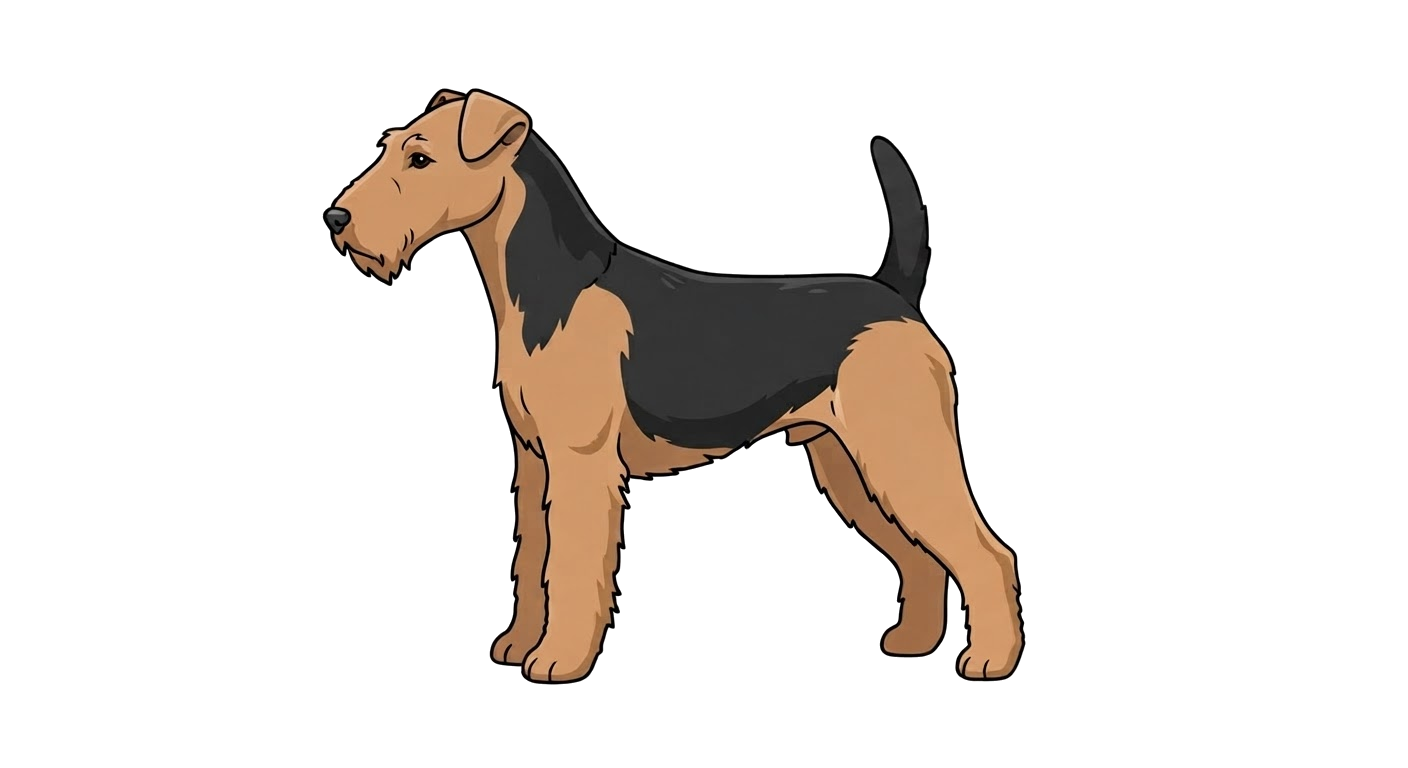
Black and tan
Standard colour
The classic and most common colouring.
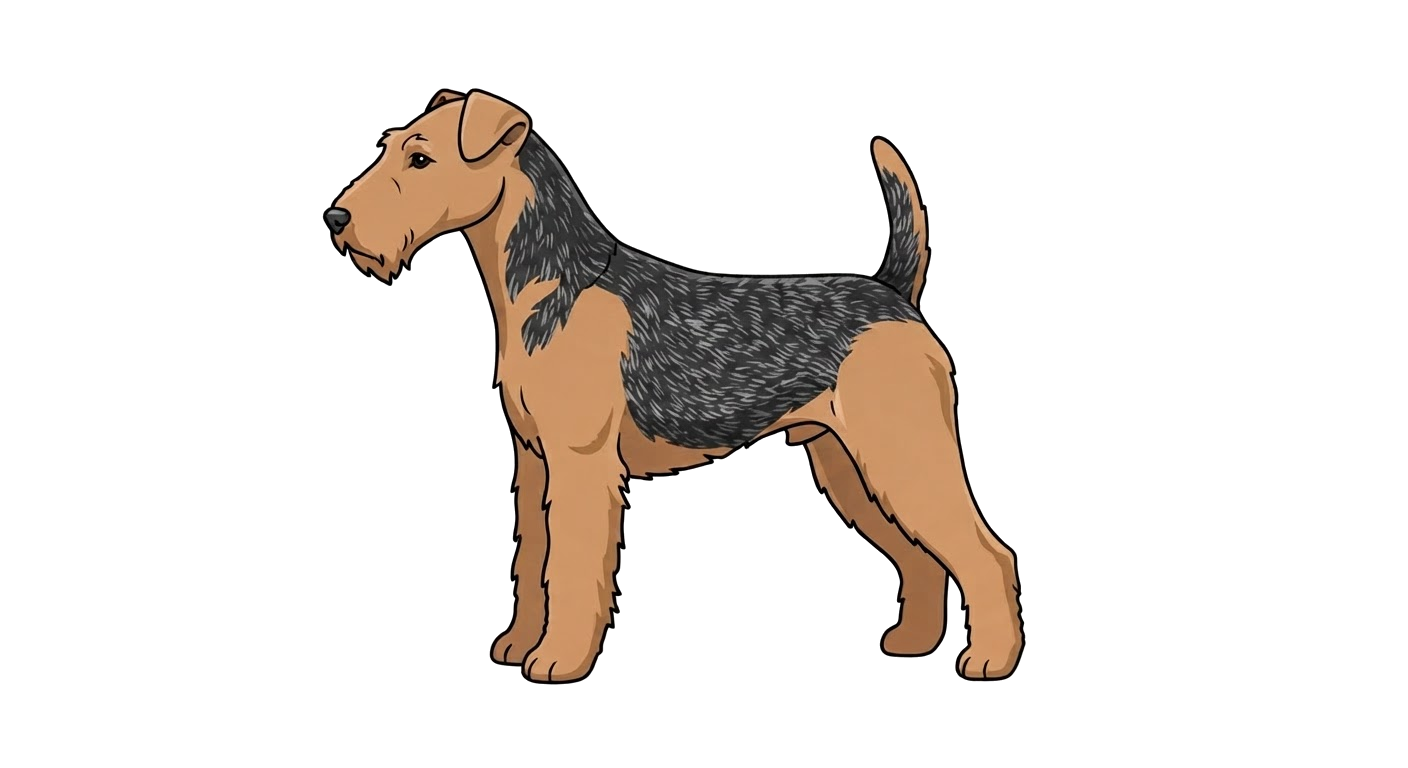
Black grizzle and tan
Standard colour
A grizzled variant also within the standard.
Timeline
History & development
19th century
Old rough-coated terriers
The Welsh Terrier descends from black-and-tan working terriers common across Wales and the border counties.
1885
Kennel Club recognition
The breed was recognised as distinct from similar terriers including the Lakeland.
1888
Arrival in the United States
The first Welsh Terriers were exported to America.
1901
AKC recognition
The American Kennel Club recognised the breed in its Terrier Group.
20th century
Shift to companion role
As formal fox hunting with terriers declined, the breed increasingly found homes as a family companion and show dog.
1950s onward
The breed today
Kennel club registrations settled into a steady pattern and the Welsh Terrier moved from a working specialist to a family companion, with breed clubs in the UK and abroad now focused on health testing and keeping true type alive.
Reference
Breed standard summary
- body
- Compact, level topline, well-sprung ribs.
- coat
- Wiry, dense and hard, black and tan.
- ears
- V-shaped, small, folded forward close to the cheek.
- eyes
- Small, dark, deep-set.
- gait
- Free, straight movement with good drive.
- head
- Flat skull, moderate stop, strong jaw.
- size
- Medium, compact and never coarse or leggy.
- tail
- Customarily docked where legal, set high and carried gaily.
- colour
- Black and tan, Black grizzle and tan. Colours outside this list are seen but are not accepted by the kennel clubs.
- temperament
- Typical of the breed: strongest in energy, trainability, sociability. Nervousness or aggression are serious faults in the show ring and in the home.
- general appearance
- Sturdy, compact, game-looking terrier of workmanlike build.
Health
What to screen for
Green means little to worry about, amber means ask the breeder for test results, red means manage it actively.
Hip dysplasia
Low concern
Uncommon but ask for hip scores if the breeder tests.
Glaucoma
Screen for it
Ask about eye testing history in the line before buying a puppy.
Lens luxation
Watch closely
A DNA test exists; ask the breeder for clear or carrier results.
General information only — always speak to your vet about your own dog.
From real owners
Dogs like this
Welsh Terriers added by PawPoint members through their pet passports. Share yours to appear here.
Loading the wall…
Made for the Welsh Terrier
The book, plus prints, hoodies and mugs using our own Welsh Terrier illustration — and one everyday accessory that suits any dog.

The book
Pawpoint: The Complete Dog Breed Book
Every officially recognised breed plus the unofficial ones nobody else documents. 400+ pages, hardback, printed and shipped from the UK.
Own stock — shipped by us
Framed poster
Welsh Terrier Framed Poster
Museum-weight print of our Welsh Terrier illustration, framed or unframed.
Printed to order
Hoodie
Welsh Terrier Hoodie
Heavyweight hoodie carrying the Welsh Terrier illustration on the chest.
Printed to order
Mug
Welsh Terrier Mug
Ceramic mug with the Welsh Terrier illustration wrapped around it.
Printed to order

Accessory
Treat Pouch
Magnetic-close belt pouch for training sessions.
Fits any dog

Pawpoint on YouTube
Watch the full Welsh Terrier video
Breed deep-dives, history and honest ownership talk. New film every week.
Watch now