Westphalian Dachsbracke
vest-FAY-lee-uhn DAHKS-brah-kuh
Germany· Westphalia, Germany
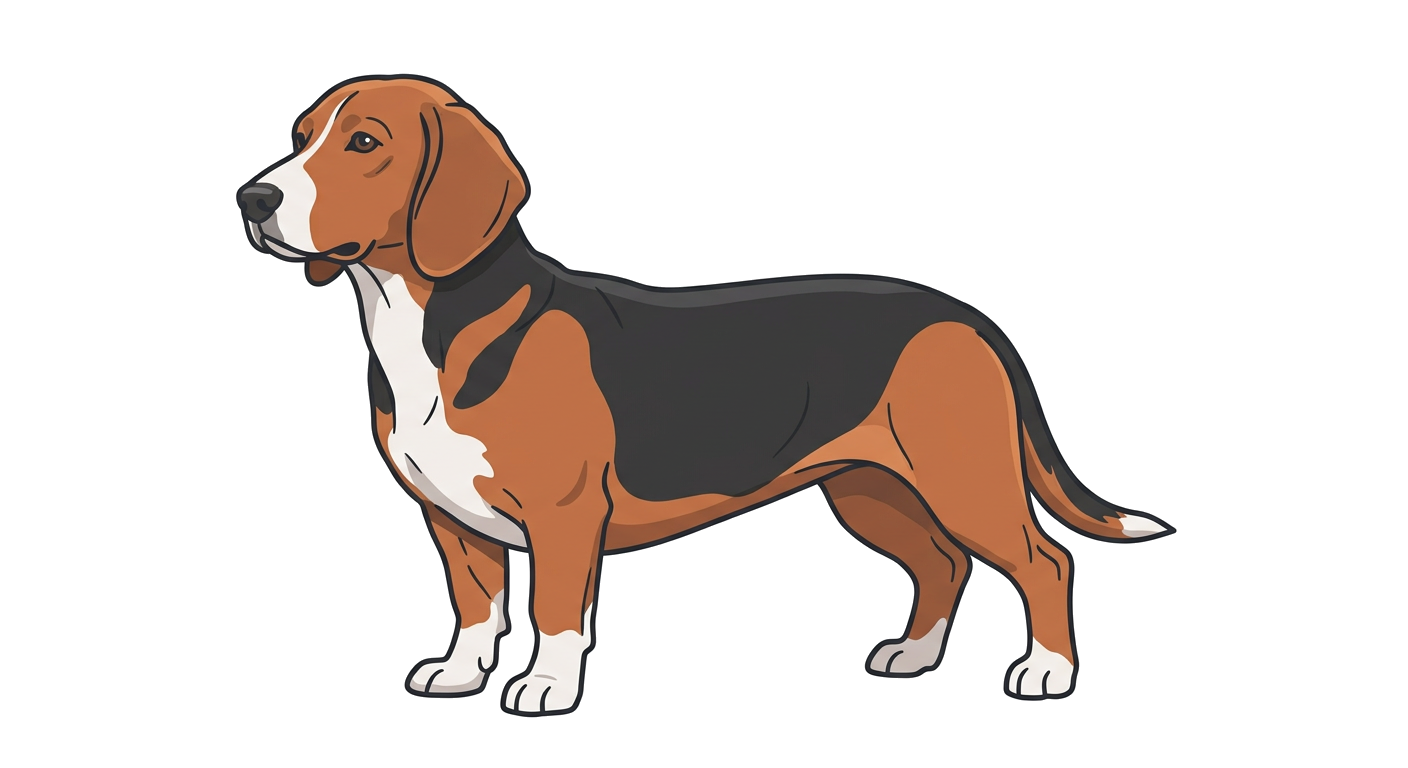
The Westphalian Dachsbracke (Westfälische Dachsbracke) is a small, short-legged scenthound indigenous to the Westphalia region of northwestern Germany. Formed as a compact, low-slung variant of traditional German running hounds, the breed was selectively bred to track hare, fox, and wild boar through dense woodland and thick undergrowth where taller hounds faced physical disadvantages. Its low stature allows it to work at a moderate, methodical pace, driving game steadily toward waiting guns without causing quarry to bolt in panic.
At a glance
Quick facts
Size
Small
Exercise needs
High
Home size suited to
Houses preferred over small flats
Grooming frequency
Low
Coat length
Short to medium
Sheds
Moderate
Lifespan
11–14 years
Town or country
Rural or semi-rural
Garden size needed
Medium to large, securely fenced
Where it comes from
Origins of the Westphalian Dachsbracke
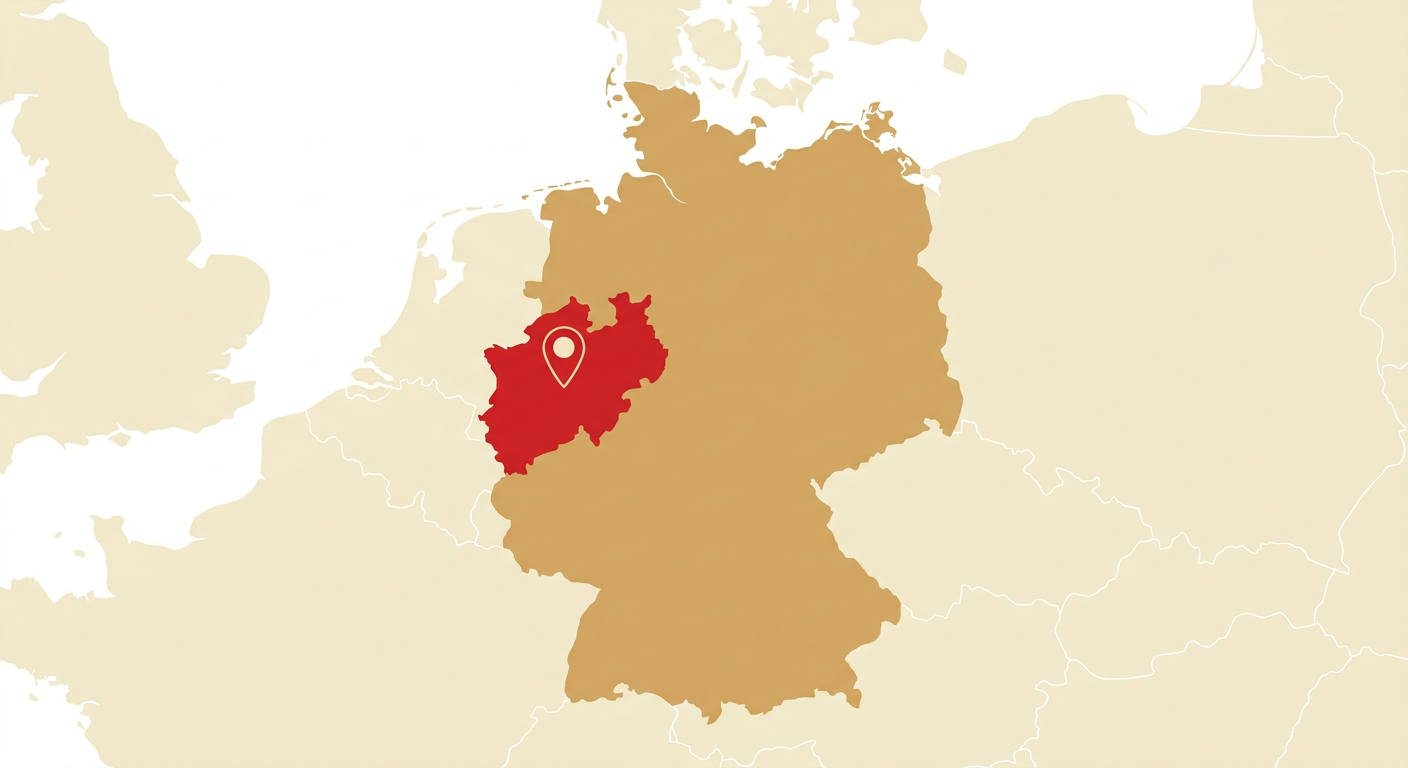
Developed in the forested hills of Westphalia, Germany, as a low-slung, persistent scenthound.
- Region
- Westphalia, Germany
- Climate it was bred for
- Temperate maritime/continental
- Original job
- Tracking and driving small-to-medium game through dense forest and rough terrain
The long read
About the breed
Morphologically, the breed represents a scaled-down counterpart to the taller Deutsche Bracke, likely developed through historical crosses with Dachshunds or through the selective fixation of chondrodysplasia within local hound stock. During the early twentieth century, specimens were exported to Sweden, where they formed the direct ancestral foundation of the Swedish Drever—a closely related breed that stands roughly two centimetres taller. Despite its foundational role in Scandinavian hound breeding, the Westphalian Dachsbracke has remained relatively scarce and largely confined to continental Europe.
In character, the Westphalian Dachsbracke is an earnest, tenacious working dog with a high prey drive and a melodious hunting voice (*Spurlaut*). In the domestic environment, it typically displays an affectionate, steady temperament with its human family, though its independent tracking instinct and instinctual stubbornness require consistent, patient handling. The breed remains predominantly in the hands of active hunters and foresters, with comparatively few kept strictly as companion animals.
Living with one
Temperament & needs
Our own ratings, based on the breed standard and how these dogs behave in ordinary homes.
Energy
4/5
Settles well once exercised.
Barking
4/5
Quick to sound off.
Grooming
1/5
Wash-and-go coat.
Sociability
3/5
Steady with people it knows.
Independence
4/5
Independent thinker; tolerates being left to it.
Trainability
3/5
Capable, with consistent fair handling.
Illustrated breed standard
The points of the breed
Hover or tap a numbered point to read what the standard asks for.
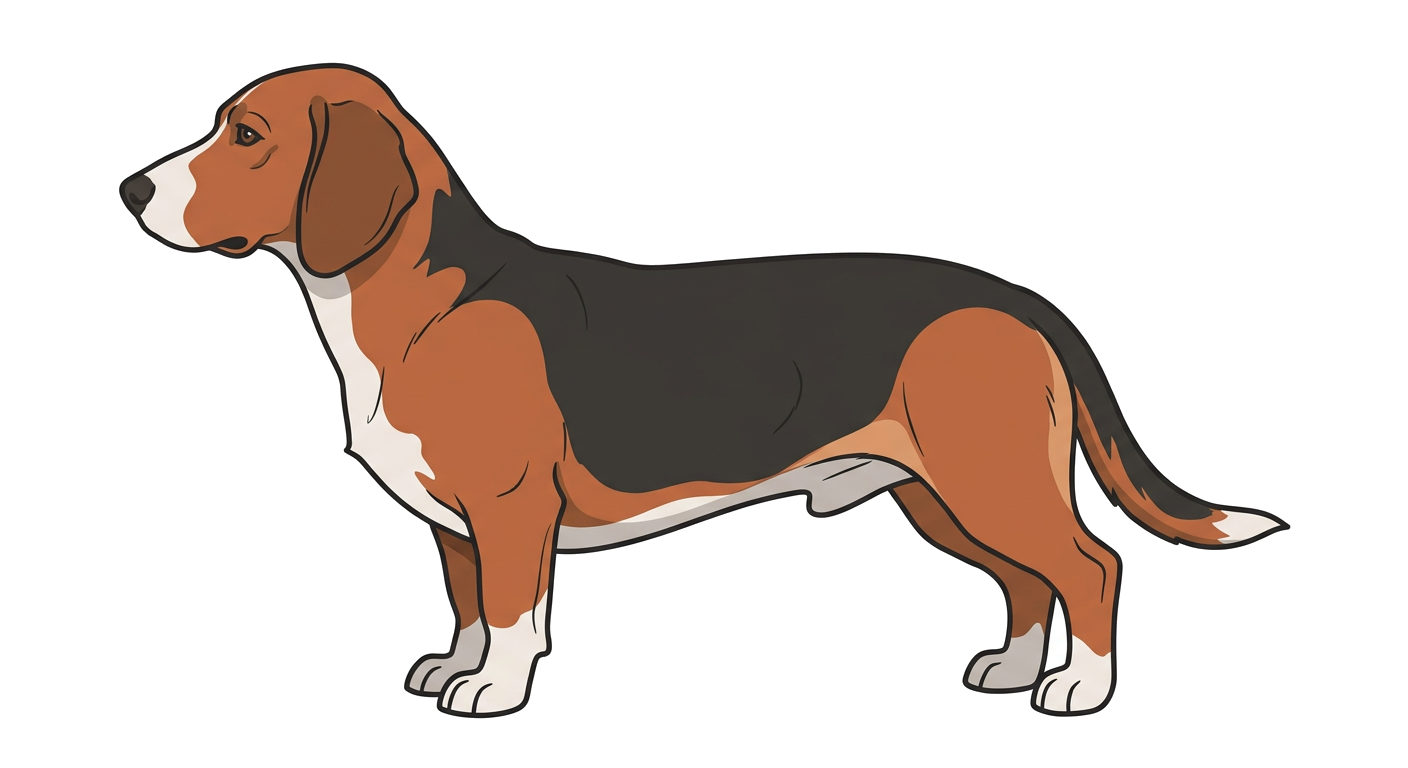
Point 1
Head
Narrow and elongated when viewed from above and from the side, with a slight, gradual stop and an occiput that is barely pronounced.
Colours & patterns
Recognised coats
Which coats the standard accepts — and which are simply popular.
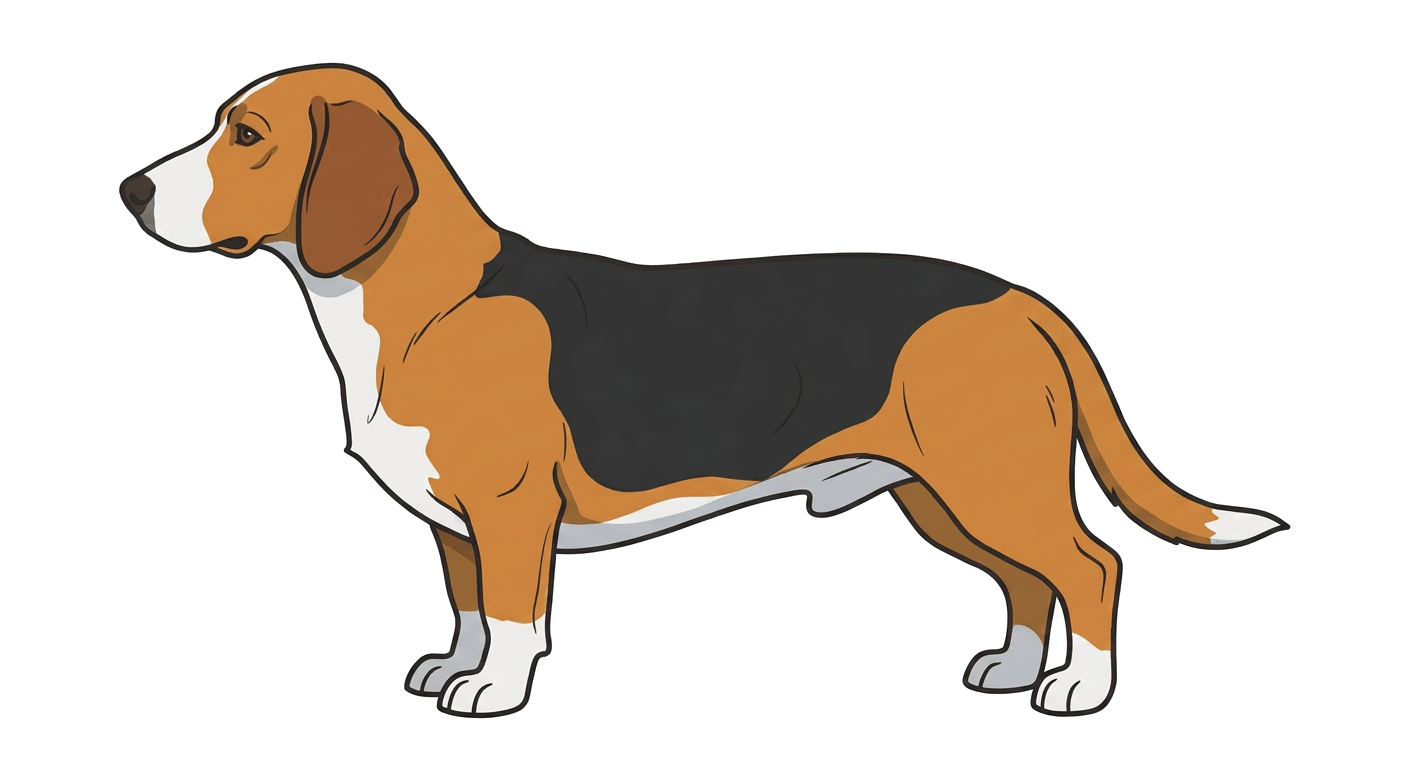
Tricolour (Red/Yellow, Black Saddle & White)
Standard colour
The classic Bracken pattern featuring a red or yellow ground, black mantle or saddle, and white markings.
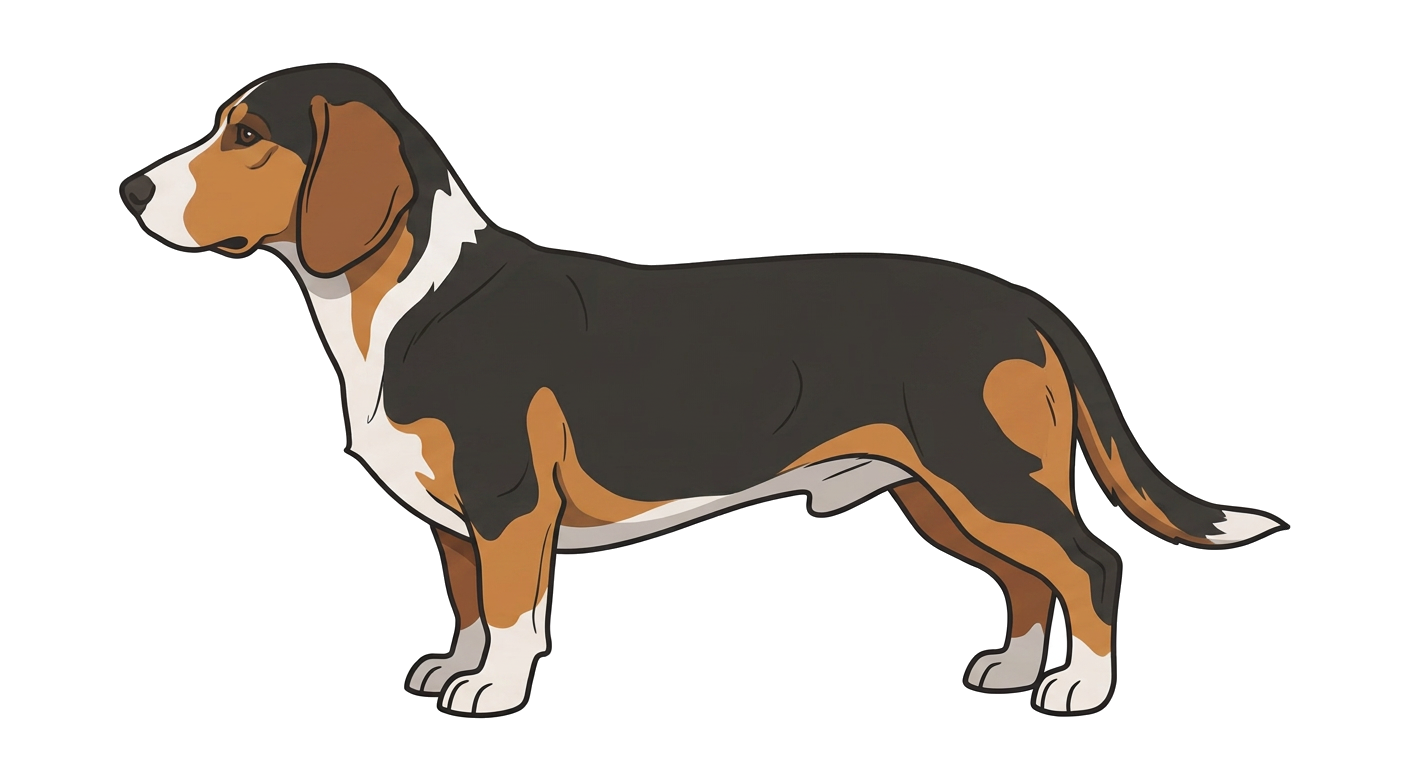
Tricolour (Dark Mantle)
Standard colour
Extensive black mantle covering the back and flanks with rich tan points and typical white Bracke markings.
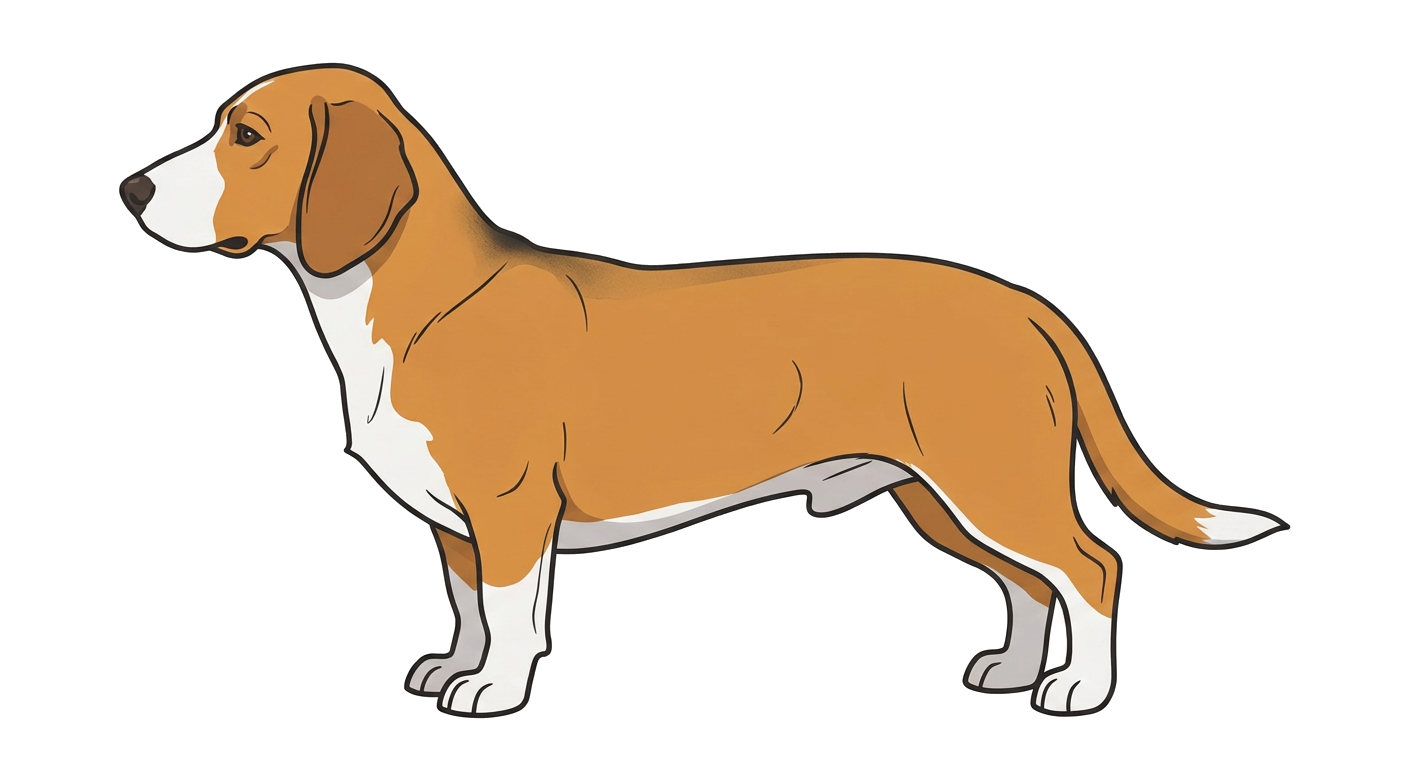
Red-Yellow & White
Standard colour
Red or fawn ground with standard white markings on face, chest, limbs, and tail tip, with minimal black shading.
Timeline
History & development
c. 1880s
Breed emergence
Hunters in Westphalia deliberately establish a short-legged hunting hound by crossing local Bracken with Dachshund-type dogs to work dense brush.
1896
First breed club
The Deutscher Dachsbracken-Klub is formed in Germany, establishing early breeding standards and studbook records for local short-legged hounds.
1910
Export to Sweden
Specimens are imported to Sweden to develop local tracking strains, eventually giving rise to the closely related Drever.
1954
FCI recognition
The Fédération Cynologique Internationale formally recognises the Westfälische Dachsbracke under standard number 100.
Reference
Breed standard summary
- body
- Firm and elongated topline with a slightly arched loin, moderately deep chest extending down to the elbows, and a slightly tucked-up belly.
- coat
- Very dense, coarse, and harsh lying close to the body; short on the head, ears, and lower legs, but longer along the back, neck, and the underside of the tail.
- ears
- Medium length, broad, flat, set on high and hanging close to the head with rounded tips.
- eyes
- Medium-sized, oval-shaped, dark in colour with close-fitting lids, conveying an attentive and friendly expression.
- gait
- Fluid, ground-covering, and balanced, driven by strong hindquarters with clean forward reach.
- head
- Narrow and elongated when viewed from above and from the side, with a slight, gradual stop and an occiput that is barely pronounced.
- size
- Height at the withers ranges from 30 to 38 cm (approximately 12 to 15 inches).
- tail
- Set on high, strong at the root, carried straight or saber-fashion, and densely covered with coarse hair forming a slight brush without a feather.
- colour
- Red to yellow with a black saddle or mantle, accompanied by typical white Bracke markings: a white blaze, white muzzle, neck ring, chest, legs, and tail tip.
- muzzle
- Strong and straight-bridged, of nearly equal length to the skull, tapering slightly to a dark-pigmented nose with wide nostrils.
- temperament
- Keen, passioned, and persistent when hunting, but gentle, loyal, and balanced within the home.
- general appearance
- A small, low-legged, moderately long scenthound of sturdy, muscular build, conveying strength, endurance, and agile working capability without exaggerated heaviness.
Health
What to screen for
Green means little to worry about, amber means ask the breeder for test results, red means manage it actively.
Intervertebral Disc Disease (IVDD)
Screen for it
Elongated spinal structure confers a degree of vulnerability to spinal disc degeneration and herniation.
Otitis Externa
Watch closely
Pendent ear flaps trap moisture and debris from field tracking, necessitating regular hygiene checks.
Field and Musculoskeletal Trauma
Watch closely
Working through thick brush exposes hounds to minor lacerations, corneal abrasions, and ligament strains.
General information only — always speak to your vet about your own dog.
From real owners
Dogs like this
Westphalian Dachsbrackes added by PawPoint members through their pet passports. Share yours to appear here.
Loading the wall…
Made for the Westphalian Dachsbracke
The book, plus prints, hoodies and mugs using our own Westphalian Dachsbracke illustration — and one everyday accessory that suits any dog.
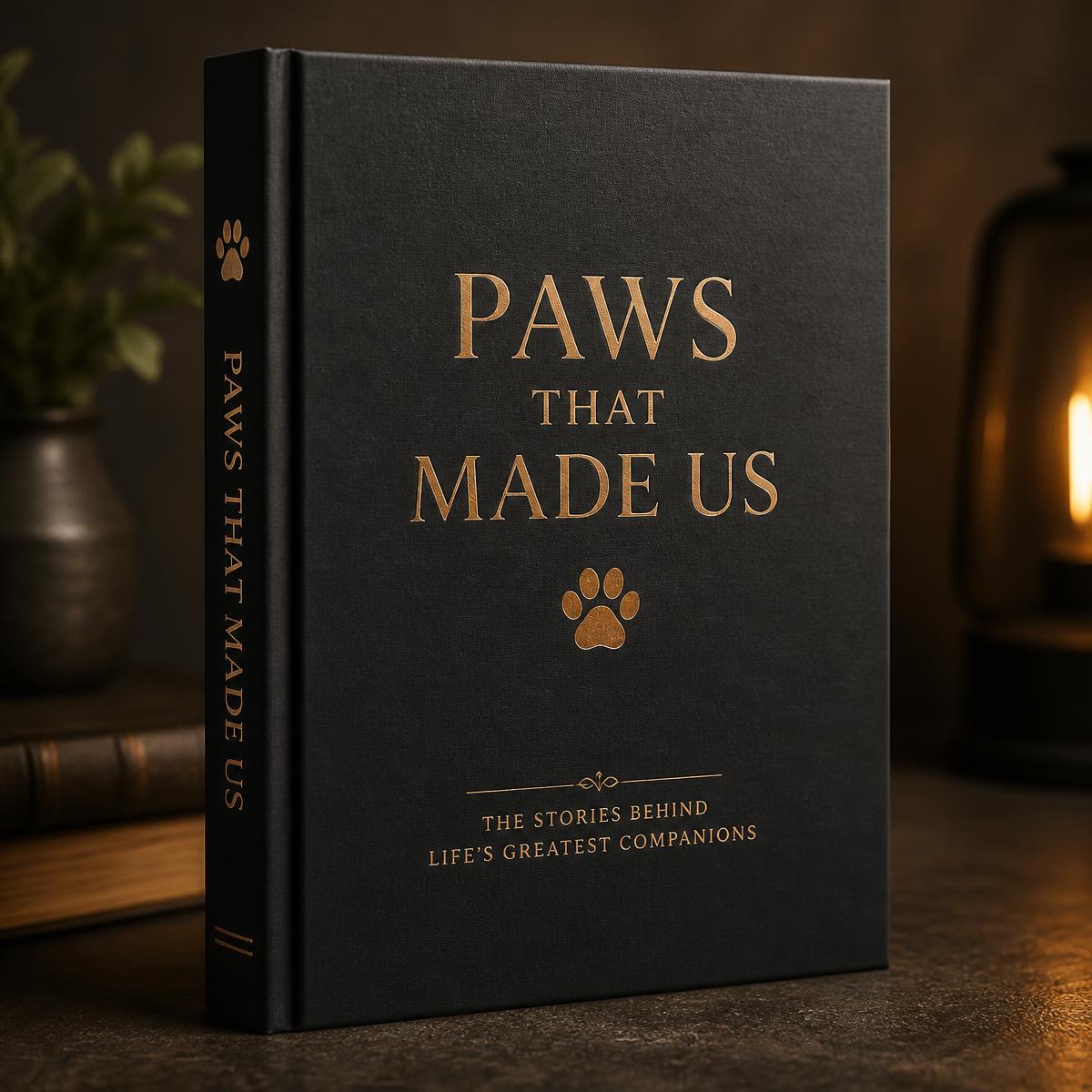
The book
Pawpoint: The Complete Dog Breed Book
Every officially recognised breed plus the unofficial ones nobody else documents. 400+ pages, hardback, printed and shipped from the UK.
Own stock — shipped by us
Framed poster
Westphalian Dachsbracke Framed Poster
Museum-weight print of our Westphalian Dachsbracke illustration, framed or unframed.
Printed to order
Hoodie
Westphalian Dachsbracke Hoodie
Heavyweight hoodie carrying the Westphalian Dachsbracke illustration on the chest.
Printed to order
Mug
Westphalian Dachsbracke Mug
Ceramic mug with the Westphalian Dachsbracke illustration wrapped around it.
Printed to order
Accessory
Slicker & Deshedding Brush
Self-cleaning slicker head for coats of every length.
Fits any dog
Pawpoint on YouTube
Watch the full Westphalian Dachsbracke video
Breed deep-dives, history and honest ownership talk. New film every week.
Watch now