
Whippet
WHIP-it
United Kingdom· Lancashire and Yorkshire
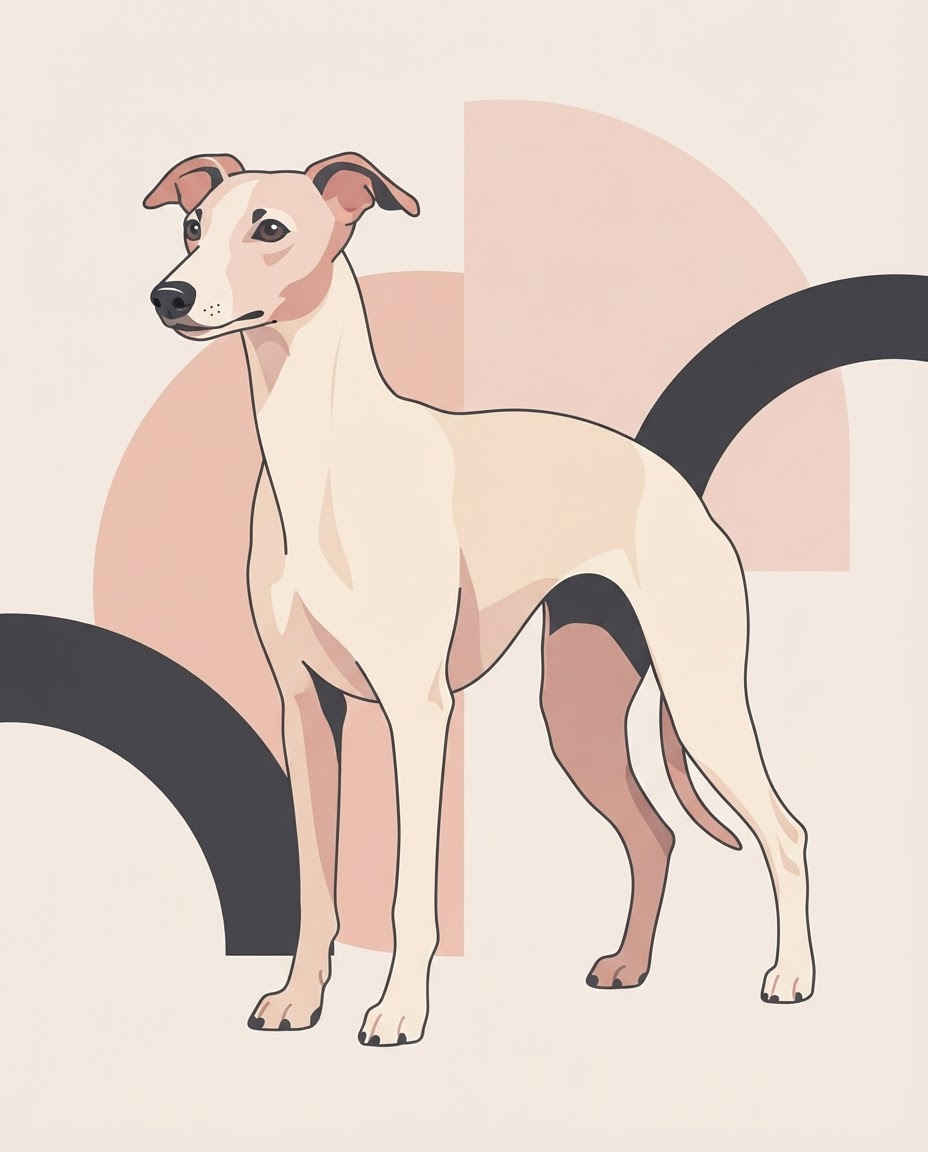
The Whippet is a slender, athletic sighthound from the industrial north of England, bred to chase rabbits and race on the streets and in back gardens of nineteenth-century mill towns.
At a glance
Quick facts
Size
Medium
Exercise needs
30-60 minutes a day plus off-lead sprints
Home size suited to
Small to medium home
Grooming frequency
Weekly brush
Coat length
Short
Sheds
Yes
Lifespan
12-15 years
Town or country
Happiest in the country
Garden size needed
Small to medium
Where it comes from
Origins of the Whippet
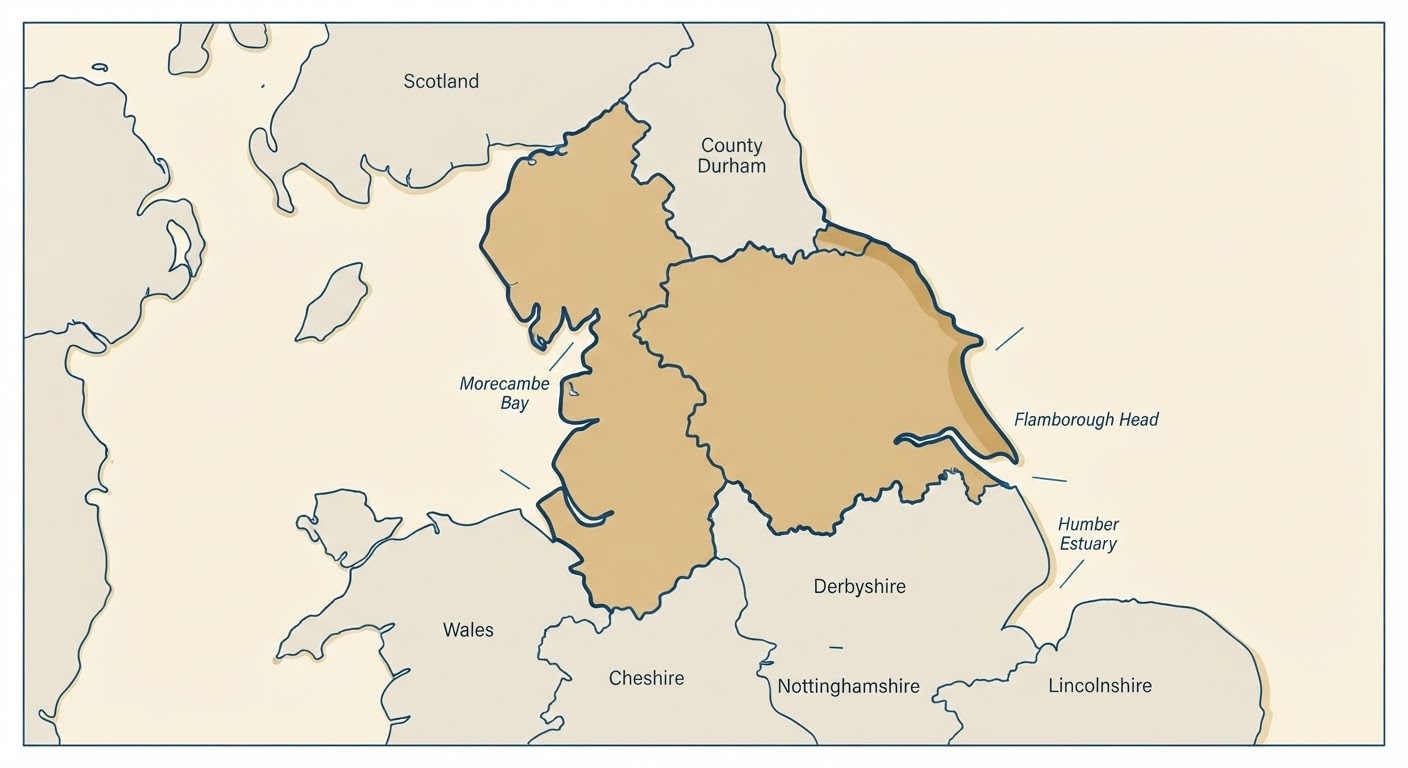
Developed among mill and mining communities of Lancashire and Yorkshire as an affordable sighthound for rabbit coursing and street racing. Its small size suited life in a terraced house between meets.
- Region
- Lancashire and Yorkshire
- Climate it was bred for
- Damp, industrial northern England
- Original job
- Rabbit coursing and informal racing
The long read
About the breed
Its origins lie among the working communities of Lancashire and Yorkshire, where miners and mill workers wanted a small, affordable sighthound for informal rabbit coursing and impromptu racing, sports sometimes nicknamed the poor man's racehorse. It was likely bred from small greyhounds crossed with terriers, combining raw speed with a slightly sturdier constitution and a more manageable size than a full Greyhound, allowing it to live comfortably in a small terraced house between meets.
Living with a Whippet is a study in contrasts: it can reach speeds of around 35 miles an hour in short, explosive bursts, then spend the rest of the day curled up motionless on the sofa, often under a blanket, since its thin coat and low body fat mean it feels the cold keenly. It is gentle, quiet and generally excellent with children and other dogs, rarely barking without good reason, though its instinct to chase small, fast-moving animals is strong and needs managing around cats and livestock. It requires only a short daily coat brush but benefits from a coat or jumper in cold or wet weather. Off-lead exercise in a secure area to let it sprint is important for its wellbeing, alongside the long, lazy rest periods it clearly enjoys just as much.
Today the Whippet is popular both as a low-maintenance, calm house companion and as a competitive lure-coursing and racing dog, and it remains one of the more adaptable sighthounds, coping reasonably well with a normal family routine provided it gets a proper run.
Living with one
Temperament & needs
Our own ratings, based on the breed standard and how these dogs behave in ordinary homes.
Friendliness
4/5
How openly the Whippet greets people it does not know.
Trainability
3/5
Gentle and willing but has a strong independent chase instinct.
Energy
3/5
Explosive bursts of speed followed by long, contented rest.
Barking
1/5
Rarely barks without good reason.
Grooming
1/5
Short, fine coat needs minimal brushing but little warmth.
Suits a first-time owner
3/5
How forgiving the Whippet is for someone taking on their first dog.
Sociability
4/5
Generally excellent with people, children and other dogs.
Independence
3/5
Will pursue fast-moving animals regardless of recall training.
Illustrated breed standard
The points of the breed
Hover or tap a numbered point to read what the standard asks for.
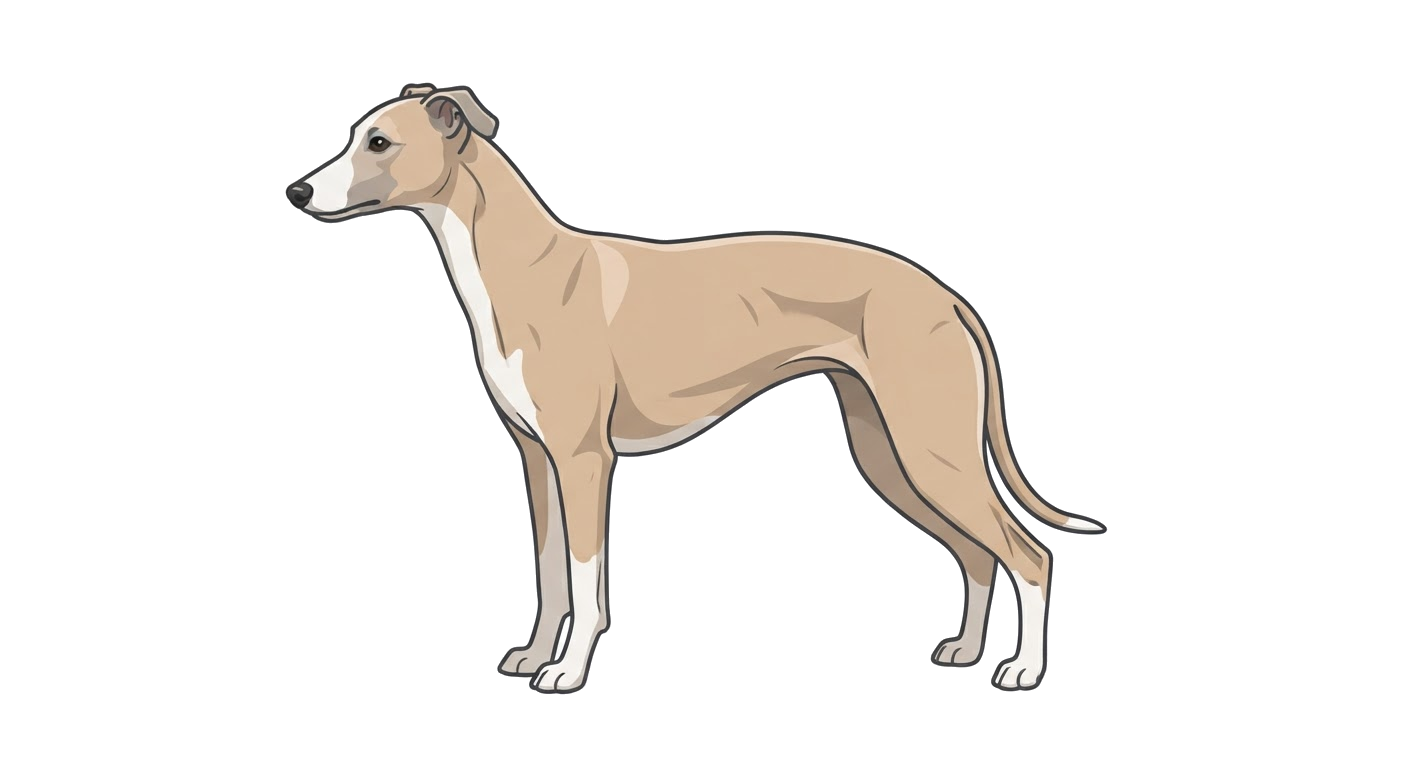
Point 1
Skull
The Whippet's skull is judged on balance rather than size — proportionate to the body, with a clean cheek and a stop typical of the breed. Coarseness or an over-refined head are both faulted.
Colours & patterns
Recognised coats
Which coats the standard accepts — and which are simply popular.
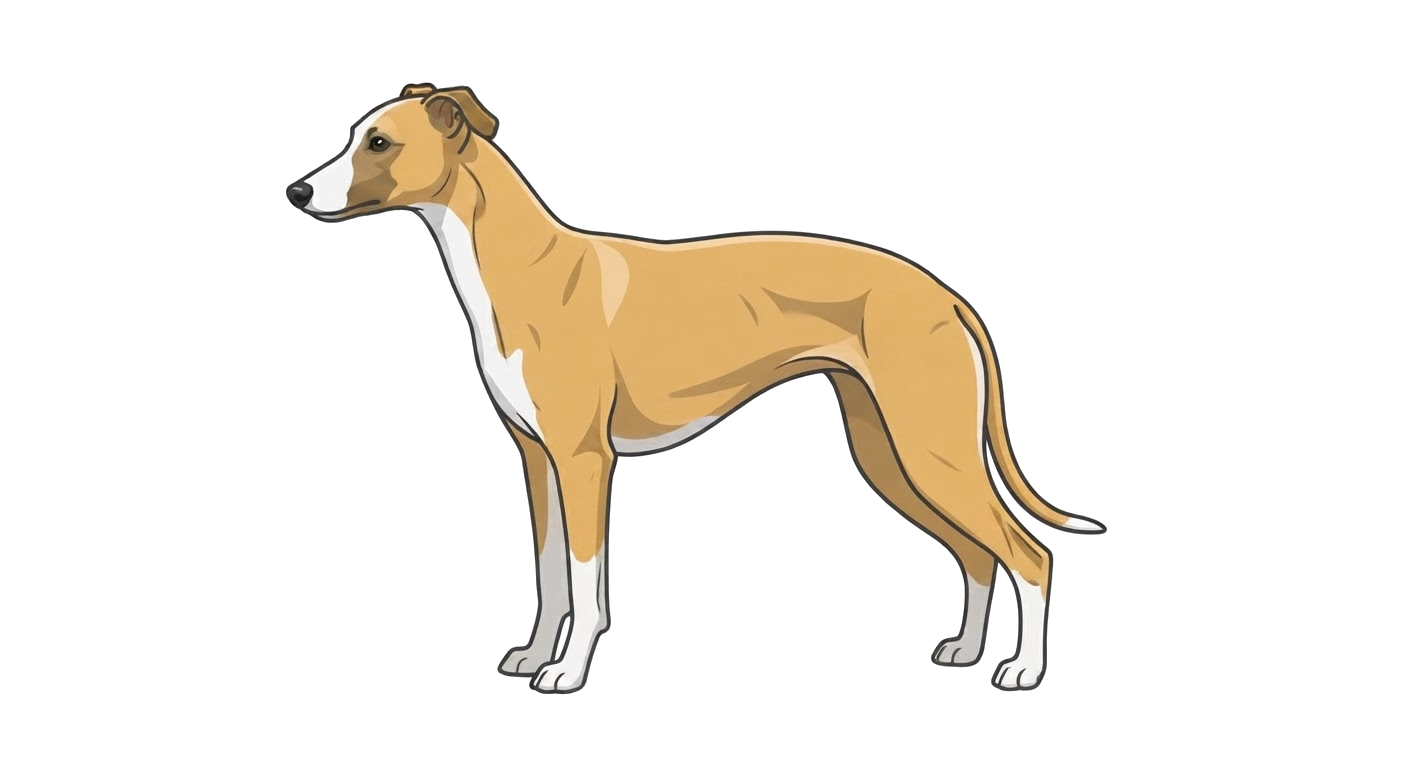
Fawn
Standard colour
One of the most common Whippet colours.
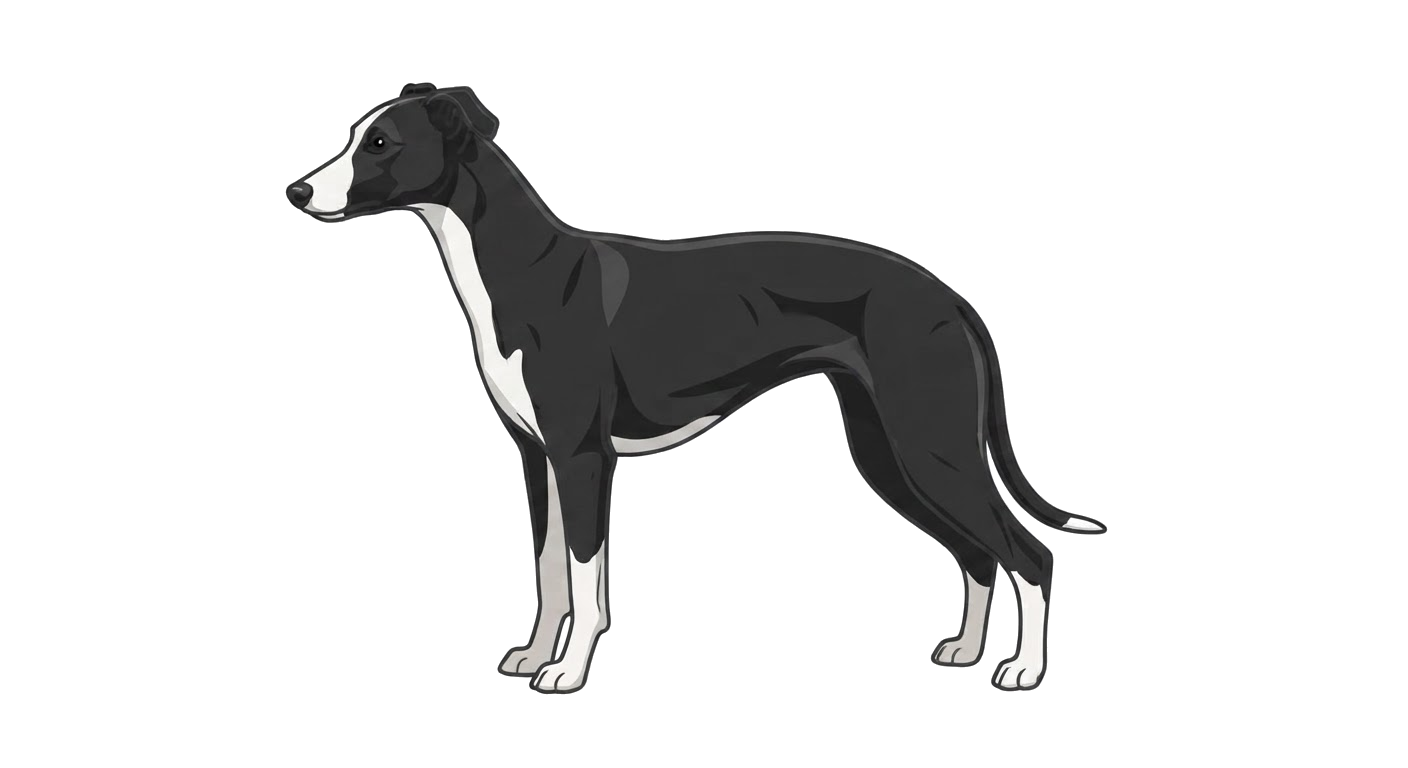
Black
Standard colour
Solid black, sometimes with white markings.
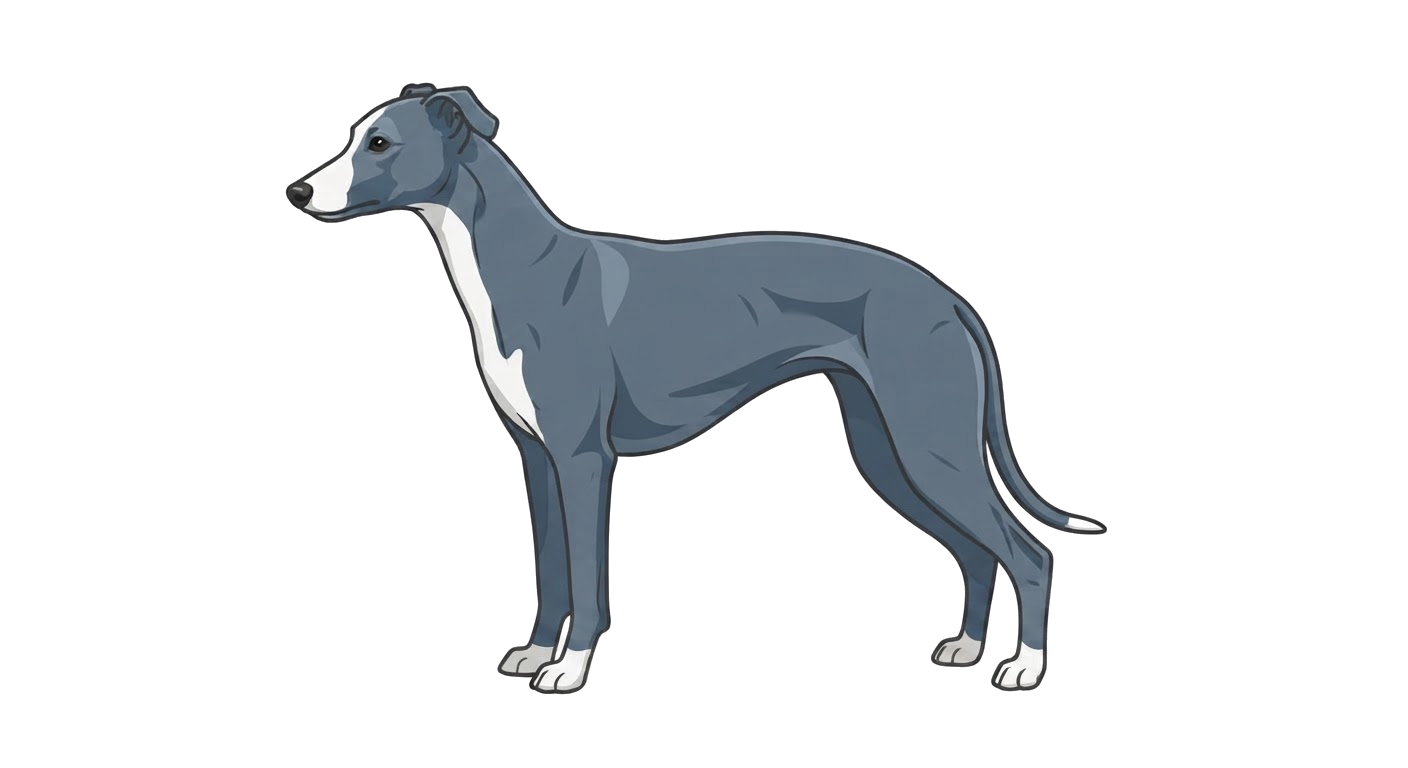
Blue
Standard colour
A diluted grey-blue shade.
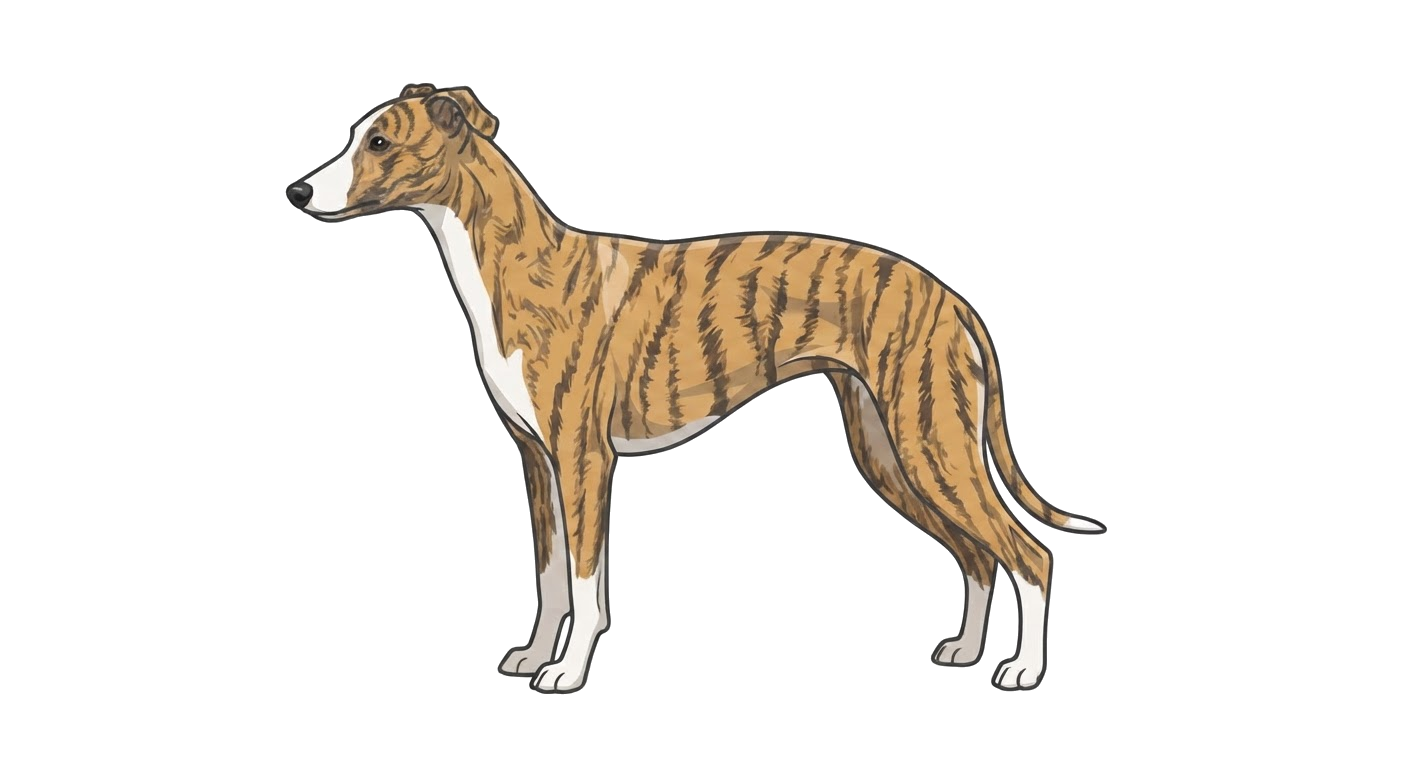
Brindle
Standard colour
Striped pattern over a base colour.
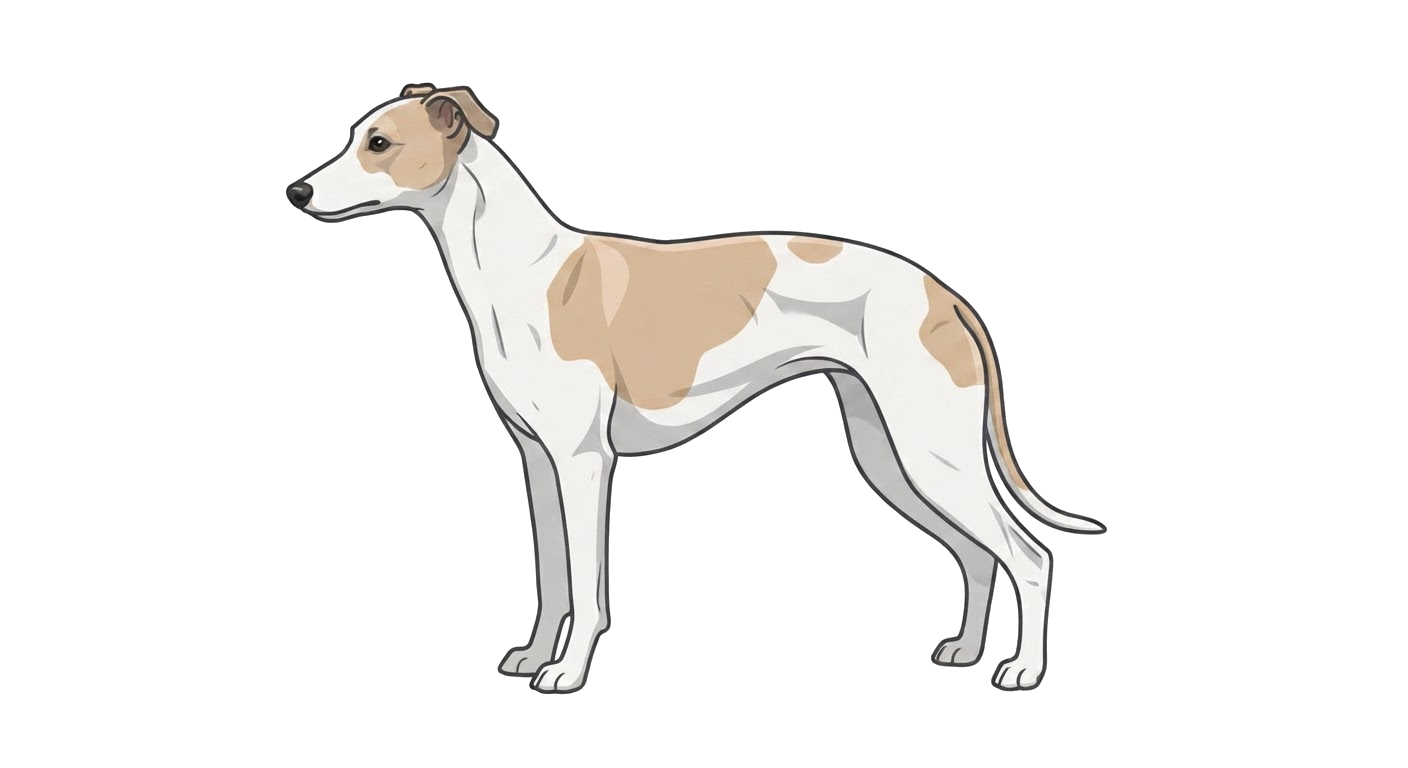
White and parti-colour
Standard colour
Any colour combined with white is accepted by the standard.
Timeline
History & development
1800s
Northern working-class origins
Miners and mill workers in Lancashire and Yorkshire bred small sighthounds for rabbit coursing and informal racing.
1891
Kennel Club recognition
The Whippet gained formal recognition in Britain.
1888
Arrival in the United States
The breed was imported to America and gained early popularity there.
1930s
Rise as a show and companion breed
The Whippet's elegant build and calm nature won it a following well beyond its racing origins.
Present day
Lure coursing and companionship
The breed thrives both in organised lure coursing and as a low-maintenance family pet.
Reference
Breed standard summary
- body
- Deep chest, arched loin, well-tucked waist.
- coat
- Short, fine, close and firm in texture.
- ears
- Small, rose-shaped, fine textured.
- eyes
- Large, oval, dark, alert expression.
- gait
- Free, long-reaching, low and effortless.
- head
- Long and lean, flat skull, slight stop.
- size
- Medium, slender but muscular, never coarse.
- tail
- Long and tapering, carried low, slight upward curve at the tip.
- colour
- Fawn, Black, Blue, Brindle, White and parti-colour. Colours outside this list are seen but are not accepted by the kennel clubs.
- temperament
- Typical of the breed: strongest in sociability, energy, trainability. Nervousness or aggression are serious faults in the show ring and in the home.
- general appearance
- Elegant, streamlined, built for speed with graceful curves.
Health
What to screen for
Green means little to worry about, amber means ask the breeder for test results, red means manage it actively.
Heart murmurs
Watch closely
Ask for a veterinary cardiac check on both parents.
Eye conditions (PRA)
Screen for it
Request eye clearance certificates from the breeder.
Sensitivity to anaesthesia and cold
Low concern
Tell your vet the breed before any procedure, and use a coat in cold weather.
General information only — always speak to your vet about your own dog.
From real owners
Dogs like this
Whippets added by PawPoint members through their pet passports. Share yours to appear here.
Loading the wall…
Made for the Whippet
The book, plus prints, hoodies and mugs using our own Whippet illustration — and one everyday accessory that suits any dog.

The book
Pawpoint: The Complete Dog Breed Book
Every officially recognised breed plus the unofficial ones nobody else documents. 400+ pages, hardback, printed and shipped from the UK.
Own stock — shipped by us
Framed poster
Whippet Framed Poster
Museum-weight print of our Whippet illustration, framed or unframed.
Printed to order
Hoodie
Whippet Hoodie
Heavyweight hoodie carrying the Whippet illustration on the chest.
Printed to order
Mug
Whippet Mug
Ceramic mug with the Whippet illustration wrapped around it.
Printed to order

Accessory
Stainless Dog Bowl
Weighted, non-slip base. Dishwasher safe.
Fits any dog

Pawpoint on YouTube
Watch the full Whippet video
Breed deep-dives, history and honest ownership talk. New film every week.
Watch now