
Wirehaired Vizsla
VEEZH-lah
Hungary· Hungarian plains
The Wirehaired Vizsla is a rugged, wire-coated Hungarian pointer developed to work harder terrain and colder conditions than the smooth-coated Vizsla could comfortably manage.
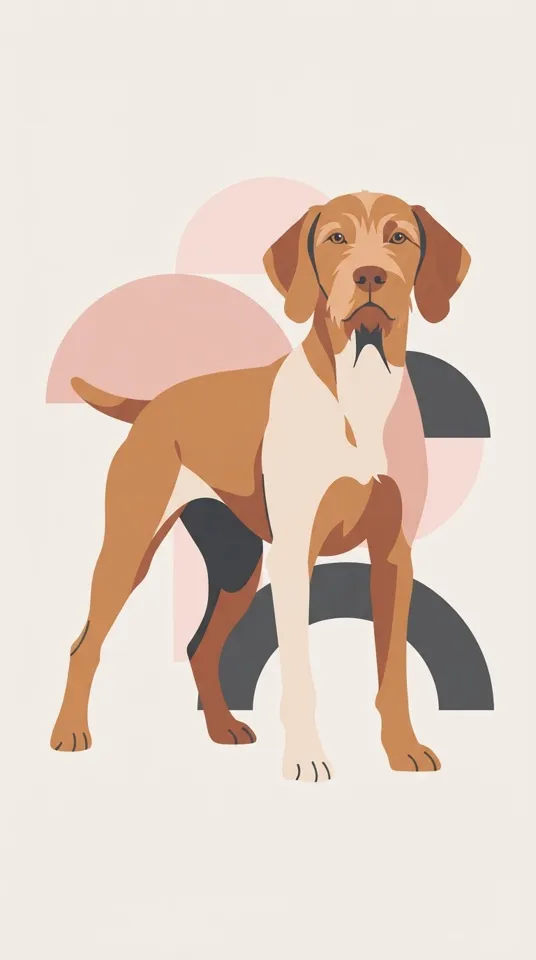
At a glance
Quick facts
- Size
- Large
- Exercise needs
- 90 minutes or more a day
- Home size suited to
- Medium to large home
- Grooming frequency
- Weekly brush, hand-strip a few times a year
- Coat length
- Wiry
- Sheds
- Yes, heavily when moulting
- Lifespan
- 12-14 years
- Town or country
- Either, with enough exercise
- Garden size needed
- Medium or larger
Where it comes from
Origins of the Wirehaired Vizsla
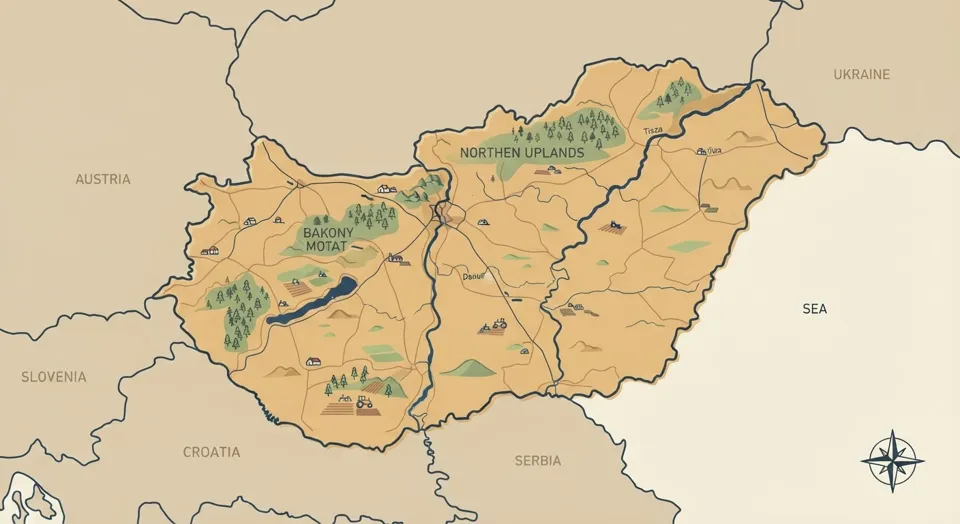
Developed on the Hungarian plains by crossing smooth Vizslas with German Wirehaired Pointers to add coat protection for icy water and thick cover. Bred to keep the Vizsla's close bond with its handler while coping with harsher conditions.
- Region
- Hungarian plains
- Climate it was bred for
- Cold winters, hot summers, open plains and wetland
- Original job
- Pointing and retrieving game in harsh weather
The long read
About the breed
Hungarian breeders in the 1930s, led by Vasas Jozsef, crossed smooth Vizslas with German Wirehaired Pointers to create a dog with the same pointing and retrieving ability but a protective, weather-resistant coat suited to hunting through icy water, thick cover and harsh winters on the Hungarian plains. The result kept the Vizsla's characteristic close bond with its handler and its versatile hunting skills while adding coat protection the original breed lacked.
Living with a Wirehaired Vizsla means committing to a genuinely active lifestyle; this is a dog bred for a full day of pointing, flushing and retrieving, and it needs serious daily exercise plus mental stimulation to avoid becoming anxious or destructive. It is famously affectionate, often described as a velcro dog for its habit of staying physically close to its owner at all times, and it tends to struggle with being left alone for long periods. It is intelligent and trains well with positive, consistent methods, though its sensitivity means harsh handling backfires quickly. The wiry coat, denser than the smooth Vizsla's, needs a weekly brush and occasional hand-stripping to keep its texture.
The Wirehaired Vizsla remains considerably rarer than its smooth-coated relative, both in Hungary and internationally, appealing to hunters and active families who want the classic Vizsla temperament with extra weatherproofing for harder, colder working conditions.
Living with one
Temperament & needs
Our own ratings, based on the breed standard and how these dogs behave in ordinary homes.
Friendliness
5/5
How openly the Wirehaired Vizsla greets people it does not know.
Trainability
4/5
Intelligent and responsive to gentle, consistent handling.
Energy
5/5
Bred for a full working day, needs serious daily exercise.
Barking
3/5
Vocal when anxious or under-exercised.
Grooming
3/5
Wiry coat needs weekly brushing and occasional stripping.
Suits a first-time owner
3/5
How forgiving the Wirehaired Vizsla is for someone taking on their first dog.
Sociability
5/5
Extremely affectionate, prone to separation anxiety if left alone often.
Independence
2/5
Wants to be physically close to its owner at all times.
Illustrated breed standard
The points of the breed
Hover or tap a numbered point to read what the standard asks for.
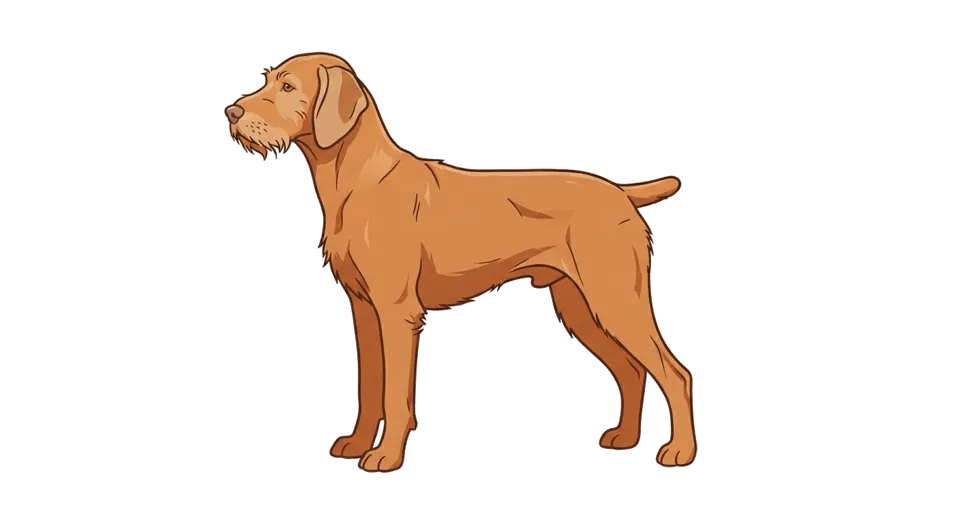
Point 1
Skull
The Wirehaired Vizsla's skull is judged on balance rather than size — proportionate to the body, with a clean cheek and a stop typical of the breed. Coarseness or an over-refined head are both faulted.
Colours & patterns
Recognised coats
Which coats the standard accepts — and which are simply popular.
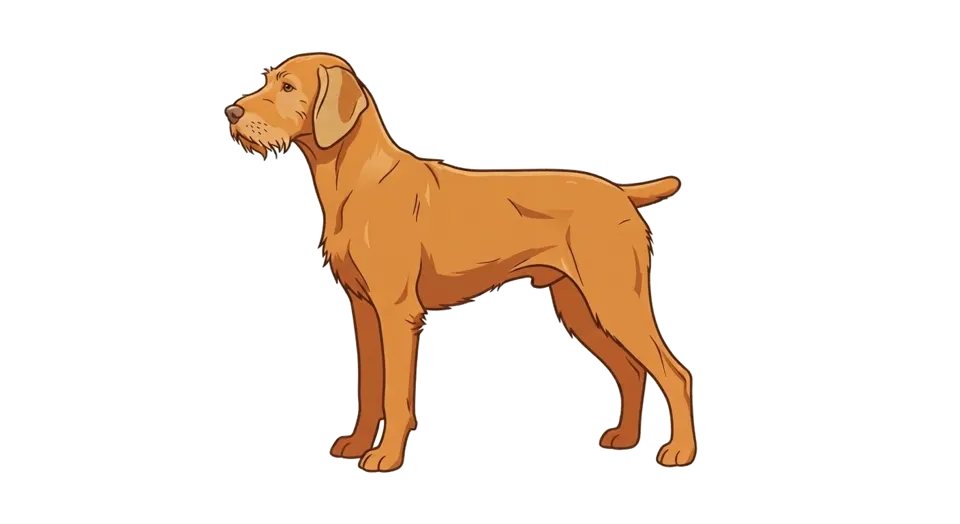
Golden rust
Standard colour
The classic and only colour permitted by the breed standard.
Timeline
History & development
1930s
Development in Hungary
Vasas Jozsef and other breeders crossed smooth Vizslas with German Wirehaired Pointers to create a weatherproof working dog.
1966
Hungarian standard established
The Wirehaired Vizsla was recognised as distinct from the smooth Vizsla in Hungary.
1978
FCI recognition
The Federation Cynologique Internationale formally recognised the breed.
1990s
Arrival in the UK and US
Small numbers of Wirehaired Vizslas were imported to Britain and America, remaining relatively rare.
2014
AKC recognition
The American Kennel Club recognised the Wirehaired Vizsla as a breed distinct from the smooth Vizsla.
Reference
Breed standard summary
- body
- Well-proportioned, deep chest, strong back.
- coat
- Wiry, dense, close-fitting, golden rust in colour.
- ears
- Thin, pendant, set moderately low.
- eyes
- Medium, slightly oval, matching coat colour.
- gait
- Ground-covering, elegant trot.
- head
- Noble, lean, moderate stop.
- size
- Large, robust and well-muscled.
- tail
- Traditionally docked where legal, carried horizontally.
- colour
- Golden rust. Colours outside this list are seen but are not accepted by the kennel clubs.
- temperament
- Typical of the breed: strongest in energy, sociability, trainability. Nervousness or aggression are serious faults in the show ring and in the home.
- general appearance
- Robust, medium to large, well-muscled with a distinctive wiry coat.
Health
What to screen for
Green means little to worry about, amber means ask the breeder for test results, red means manage it actively.
Hip dysplasia
Screen for it
Ask for BVA/KC hip scores on both parents.
Epilepsy
Watch closely
Ask the breeder whether seizures have appeared in the line.
Hypothyroidism
Screen for it
Request thyroid testing results from the breeding pair.
Progressive retinal atrophy
Screen for it
Request eye clearance certificates before buying.
General information only — always speak to your vet about your own dog.
From real owners
Wirehaired Vizslas in the PAWPOINT Pack
Wirehaired Vizslas added by PawPoint members through their pet passports. Share yours to appear here.
Loading the wall…
Made for the Wirehaired Vizsla
The book, plus hoodies, tees and mugs featuring the Wirehaired Vizsla.