Yorkshire Terrier
YORK-shuh TER-ee-uhr
United Kingdom· Yorkshire
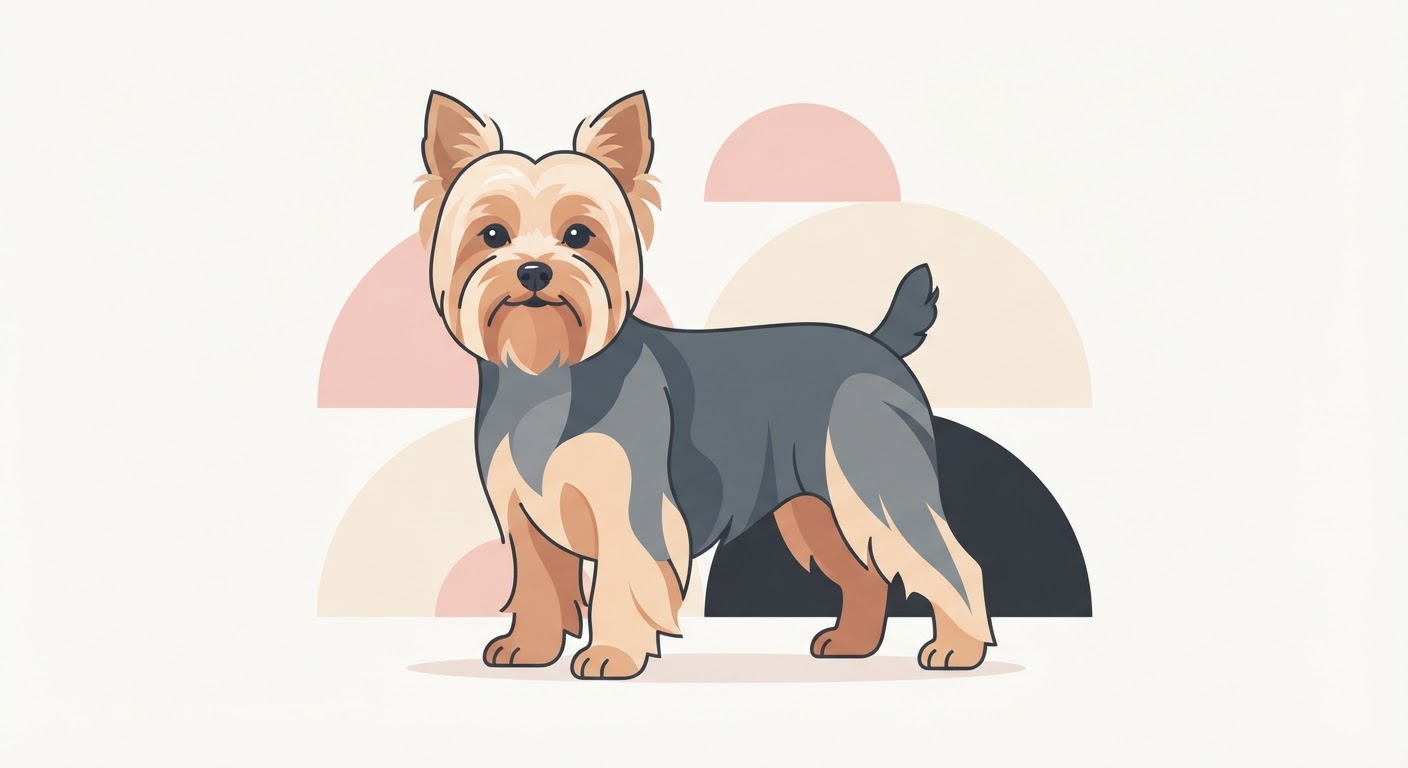
The Yorkshire Terrier is a tiny, silky-coated toy breed from the industrial mills of northern England, originally bred as a working ratter in cramped, vermin-plagued factory conditions.
At a glance
Quick facts
Size
Toy
Exercise needs
30 minutes a day
Home size suited to
Flat or any size home
Grooming frequency
Daily brushing
Coat length
Long
Sheds
Yes
Lifespan
13-16 years
Town or country
Either, happy in town
Garden size needed
None needed
Where it comes from
Origins of the Yorkshire Terrier
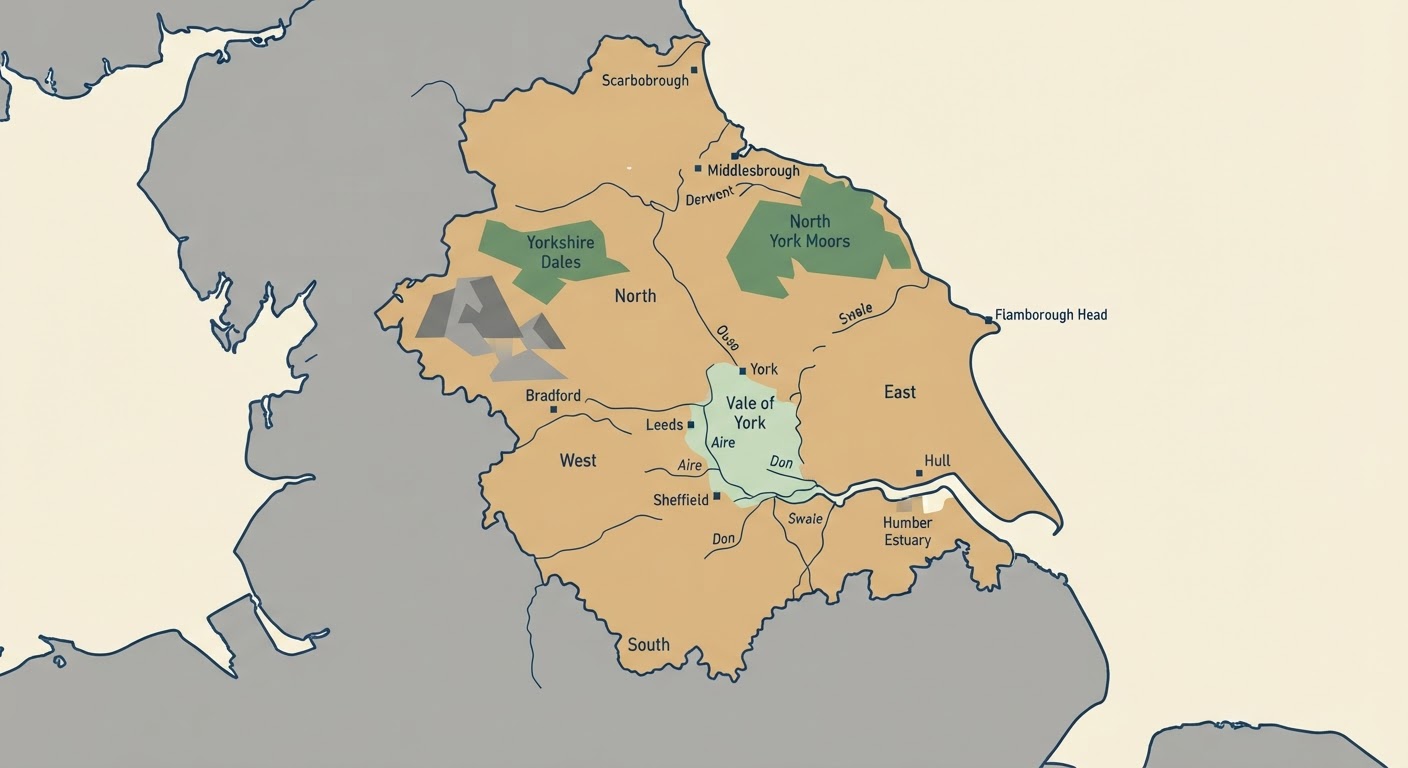
Developed by Scottish mill workers who migrated to Yorkshire, crossing small terriers to create a dog able to chase rats through tight machinery. Working-class origins belie the breed's later reputation as a fashionable lapdog.
- Region
- Yorkshire
- Climate it was bred for
- Damp, industrial northern England
- Original job
- Ratting in textile mills and mines
The long read
About the breed
Nineteenth-century Scottish workers migrating to Yorkshire for mill work brought small terriers with them, and these were crossed with local breeds including the Skye and Clydesdale Terriers to produce a small, tenacious dog able to chase rats through tight machinery and narrow gaps that larger terriers could not manage. Despite its now-glamorous show coat and reputation as a fashionable lapdog, the Yorkshire Terrier's origins are firmly working-class, bred by mill hands and miners rather than aristocrats.
Living with a Yorkshire Terrier means having a dog with a personality considerably larger than its body. It is bold, alert and often unaware of its own small size, willing to stand its ground against much bigger dogs, a trait that needs sensible management to avoid injury. It is affectionate and forms close bonds with its owner, sometimes becoming possessive, and it benefits from early socialisation to prevent excessive suspicion of strangers or other dogs. The long, silky coat in full show length needs daily brushing and is prone to matting, though many pet owners keep it in a shorter, more practical puppy clip that needs far less maintenance. Its small size makes it prone to dental crowding, so dental care needs particular attention throughout its life.
Today the Yorkshire Terrier is one of the most popular toy breeds worldwide, valued for its portable size and devoted nature, though its fragility as a very small dog means it is generally better suited to households with older children than very young ones.
Living with one
Temperament & needs
Our own ratings, based on the breed standard and how these dogs behave in ordinary homes.
Friendliness
3/5
How openly the Yorkshire Terrier greets people it does not know.
Trainability
3/5
Bright but can be stubborn; benefits from consistent, positive training.
Energy
3/5
Lively and alert, enjoys short walks and indoor play.
Barking
4/5
Alert and vocal, quick to announce visitors or noises.
Grooming
4/5
Long silky coat needs daily brushing, or regular clipping if kept short.
Suits a first-time owner
3/5
How forgiving the Yorkshire Terrier is for someone taking on their first dog.
Sociability
3/5
Devoted to its owner, can be wary of strangers and other dogs without socialisation.
Independence
2/5
Prefers to be close to its owner rather than off exploring alone.
Illustrated breed standard
The points of the breed
Hover or tap a numbered point to read what the standard asks for.
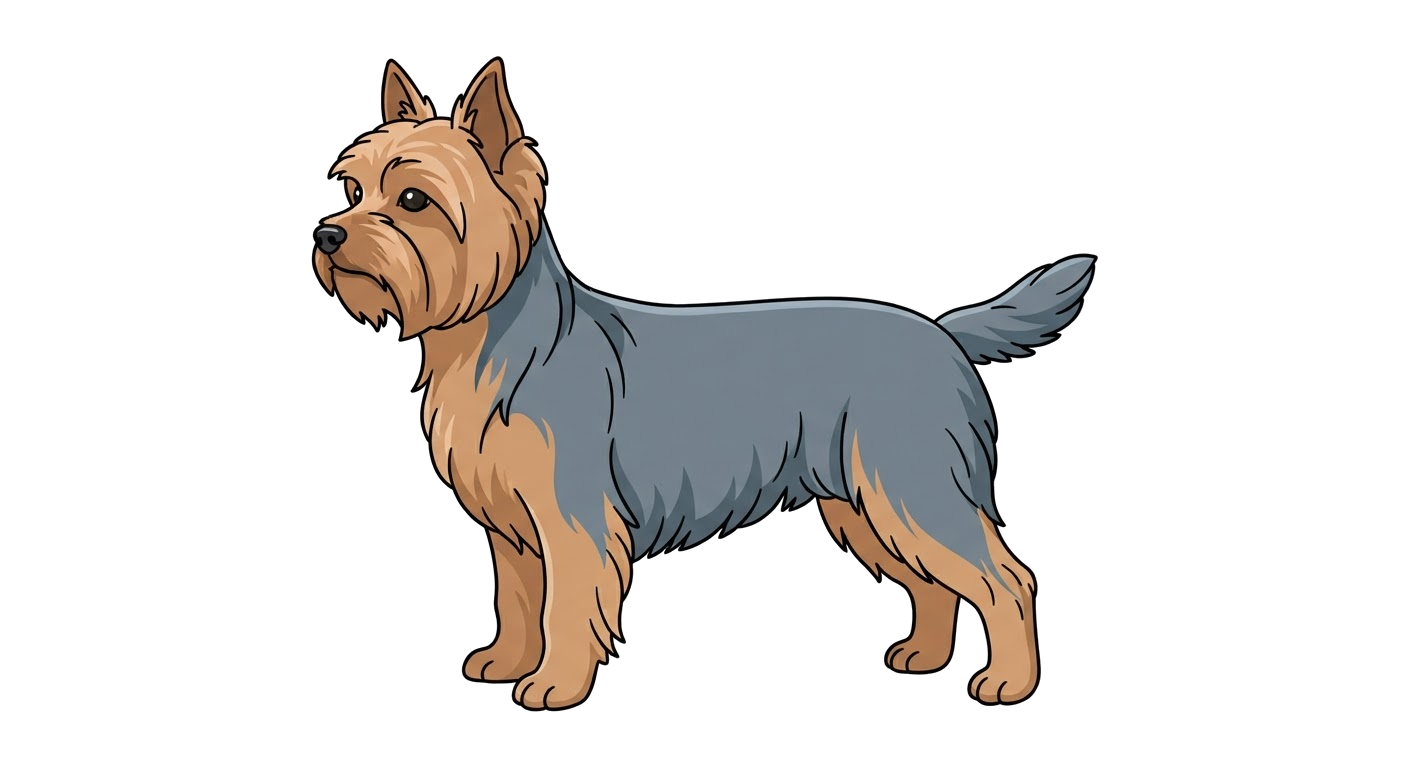
Point 1
Skull
The Yorkshire Terrier's skull is judged on balance rather than size — proportionate to the body, with a clean cheek and a stop typical of the breed. Coarseness or an over-refined head are both faulted.
Colours & patterns
Recognised coats
Which coats the standard accepts — and which are simply popular.
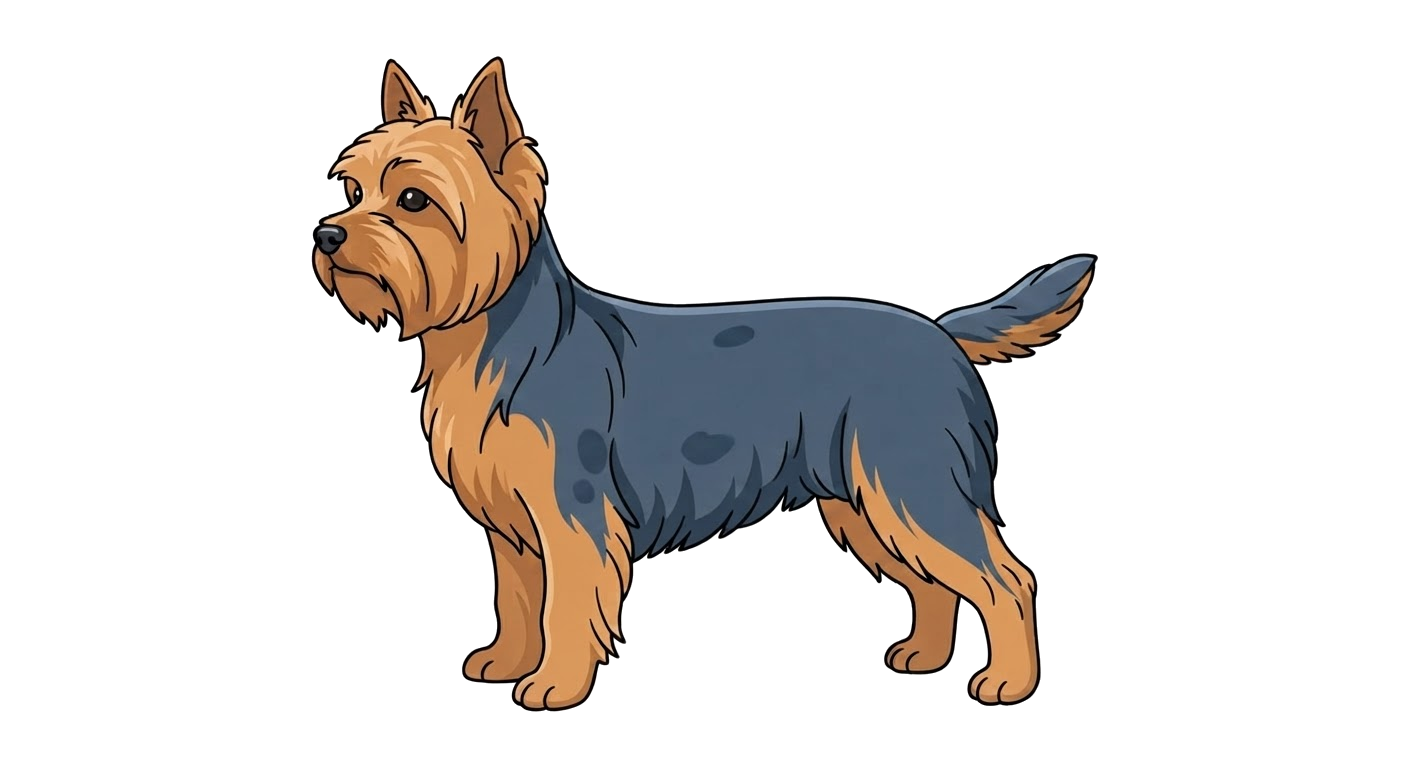
Blue and tan
Standard colour
The classic adult colouring, steel blue body with tan points.
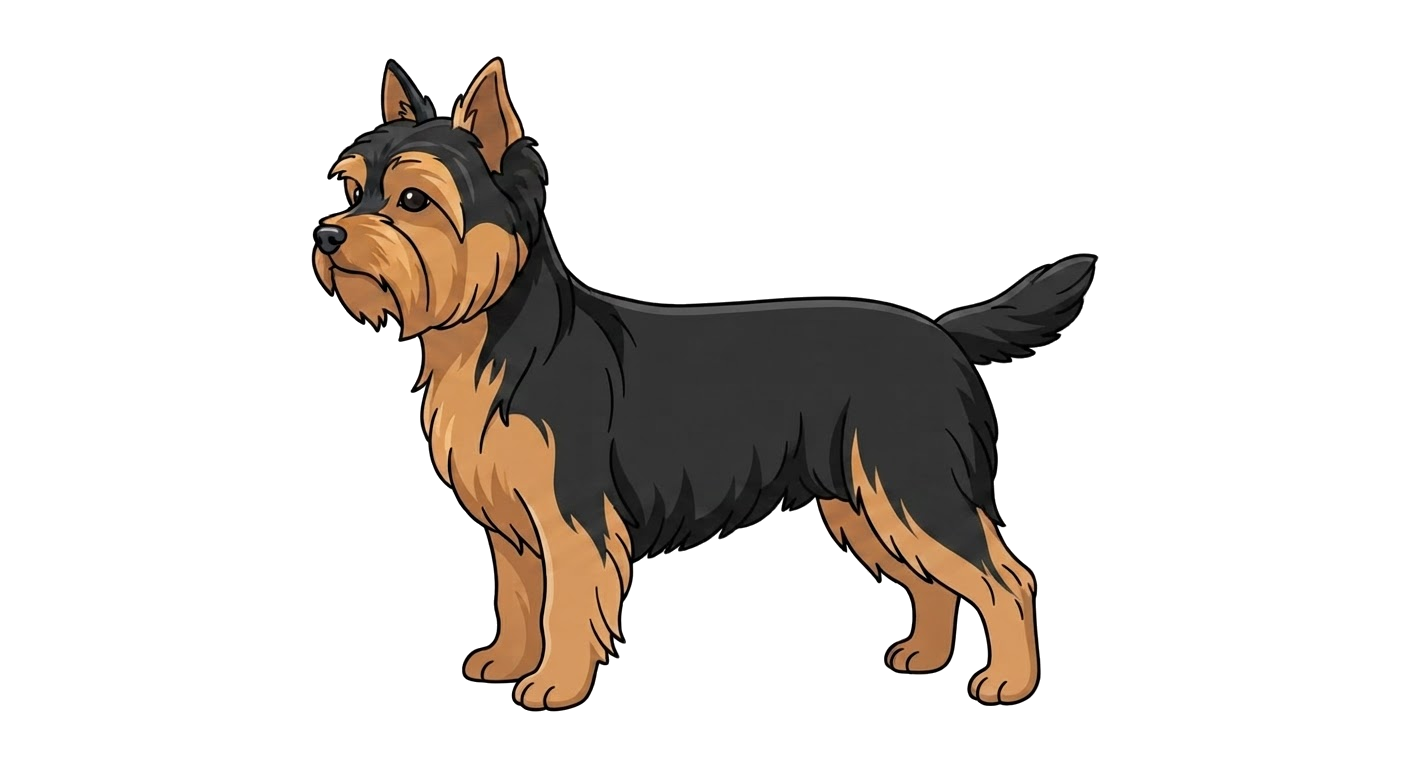
Black and tan (puppy coat)
Standard colour
Puppies are born black and tan, maturing to blue and tan.
Outside the standard
Other colours
Dilute coats you will see advertised. They are the same breed, but no kennel club accepts them.
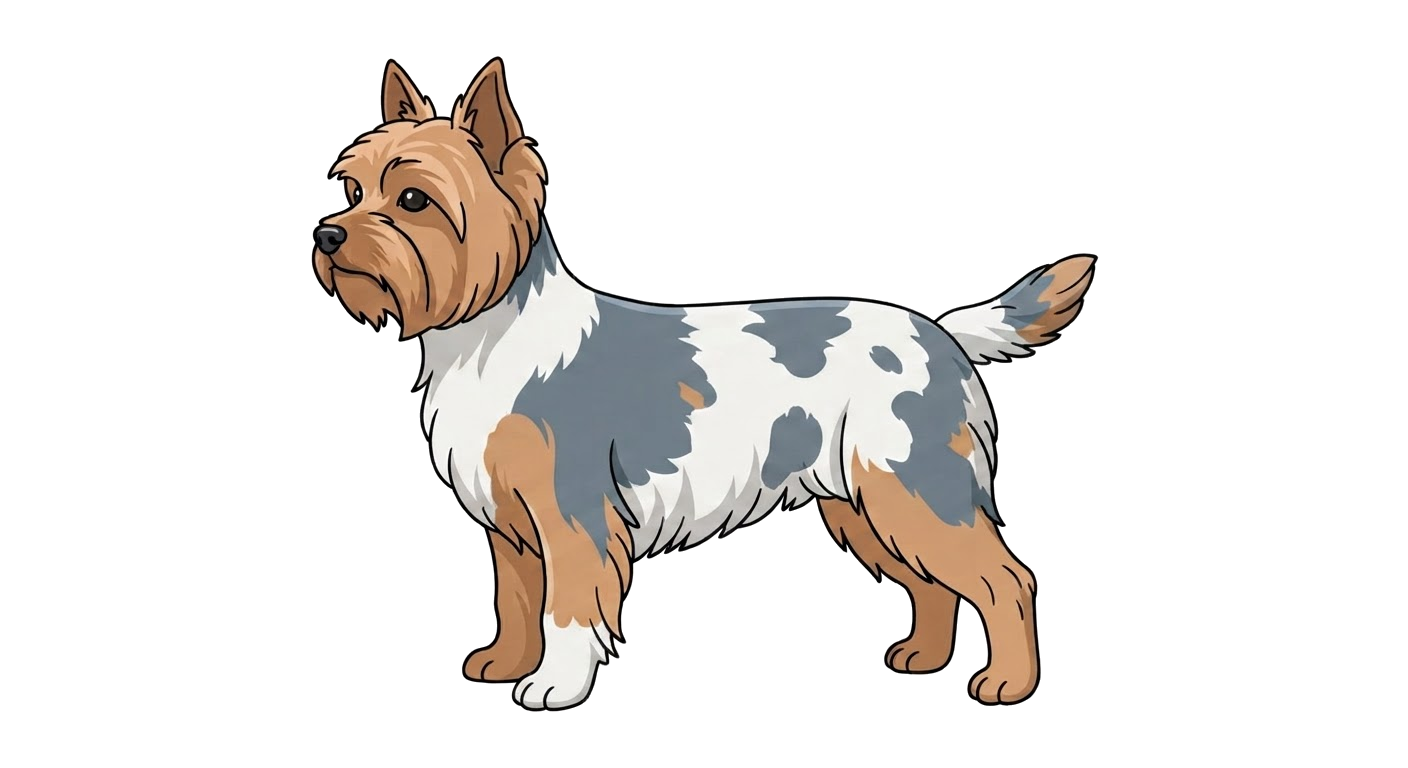
Parti-colour
Not in the standard
A white-marked variant not accepted by most breed standards but sometimes marketed as rare.
Timeline
History & development
1850s
Mill town origins
Scottish workers in Yorkshire crossed small terriers to create an effective ratting dog for mills and mines.
1861
Huddersfield Ben
A dog named Huddersfield Ben became highly influential in fixing the breed's type through show and stud success.
1886
Kennel Club recognition
The Yorkshire Terrier was formally recognised in Britain.
1872
Arrival in the United States
The breed was first exhibited in America, gaining early popularity among fashionable households.
1885
AKC recognition
The American Kennel Club recognised the Yorkshire Terrier in its Toy Group.
1950s onward
The breed today
Kennel club registrations settled into a steady pattern and the Yorkshire Terrier moved from a working specialist to a family companion, with breed clubs in the UK and abroad now focused on health testing and keeping true type alive.
Reference
Breed standard summary
- body
- Compact, level back, well proportioned.
- coat
- Long, glossy, silky and perfectly straight, steel blue and tan.
- ears
- Small, V-shaped, carried erect.
- eyes
- Medium, dark, sparkling with a sharp expression.
- gait
- Free, straight, showing good drive.
- head
- Small, flat skull, not too prominent or round.
- size
- Toy, dainty but sturdy for its size.
- tail
- Traditionally docked where legal, carried slightly higher than the back.
- colour
- Blue and tan, Black and tan (puppy coat). Colours outside this list are seen but are not accepted by the kennel clubs.
- temperament
- Typical of the breed: strongest in barking, grooming, energy. Nervousness or aggression are serious faults in the show ring and in the home.
- general appearance
- Small, compact, with a long, straight, silky coat and confident carriage.
Health
What to screen for
Green means little to worry about, amber means ask the breeder for test results, red means manage it actively.
Patellar luxation
Screen for it
Ask for a veterinary knee check on both parents.
Tracheal collapse
Screen for it
Use a harness rather than a collar to reduce pressure on the throat.
Dental disease
Low concern
Small jaws lead to crowded teeth; regular dental checks and cleaning are important.
Portosystemic shunt
Watch closely
A known liver condition in the breed; ask the breeder if they screen for it.
General information only — always speak to your vet about your own dog.
From real owners
Dogs like this
Yorkshire Terriers added by PawPoint members through their pet passports. Share yours to appear here.
Loading the wall…
Made for the Yorkshire Terrier
The book, plus prints, hoodies and mugs using our own Yorkshire Terrier illustration — and one everyday accessory that suits any dog.
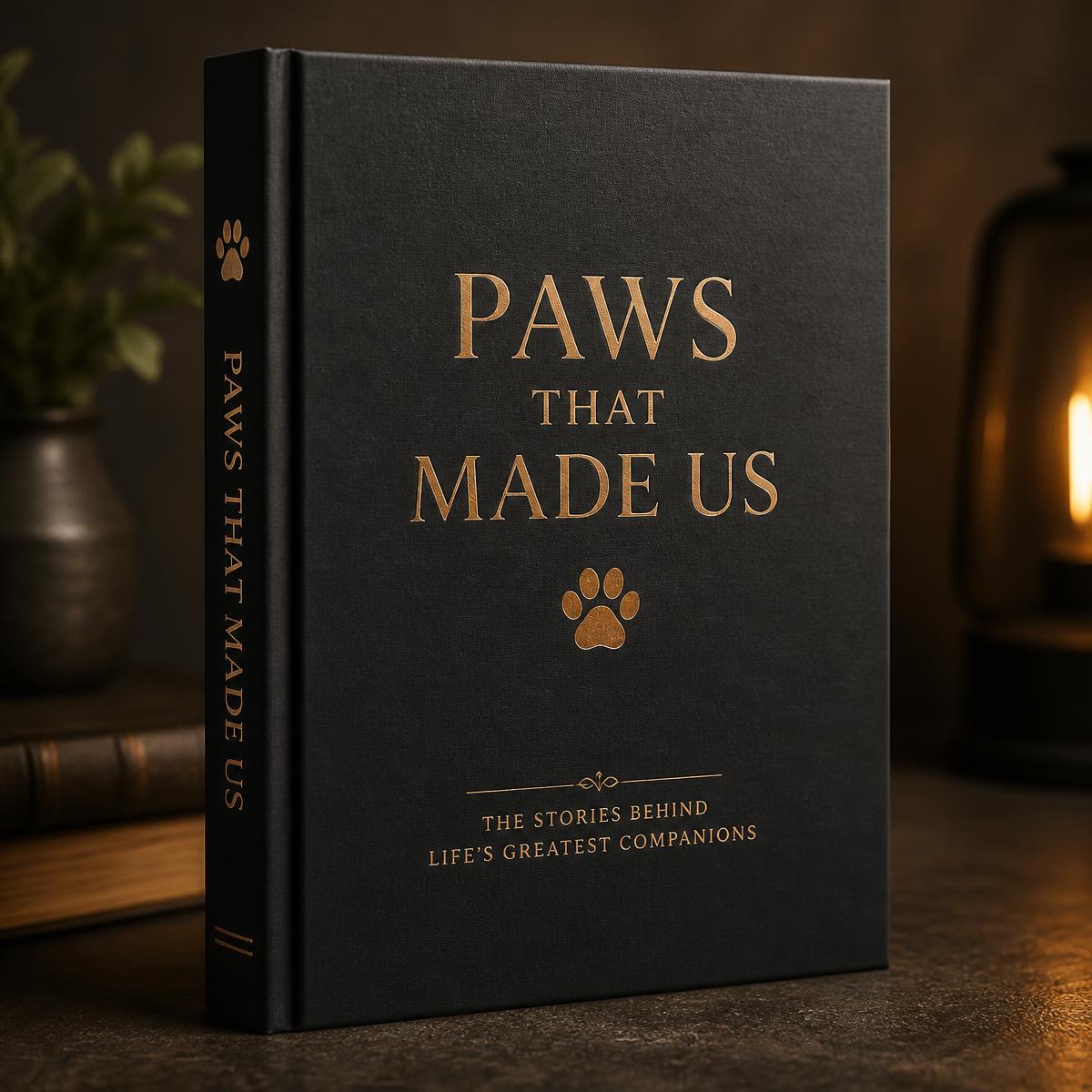
The book
Pawpoint: The Complete Dog Breed Book
Every officially recognised breed plus the unofficial ones nobody else documents. 400+ pages, hardback, printed and shipped from the UK.
Own stock — shipped by us
Framed poster
Yorkshire Terrier Framed Poster
Museum-weight print of our Yorkshire Terrier illustration, framed or unframed.
Printed to order
Hoodie
Yorkshire Terrier Hoodie
Heavyweight hoodie carrying the Yorkshire Terrier illustration on the chest.
Printed to order
Mug
Yorkshire Terrier Mug
Ceramic mug with the Yorkshire Terrier illustration wrapped around it.
Printed to order
Accessory
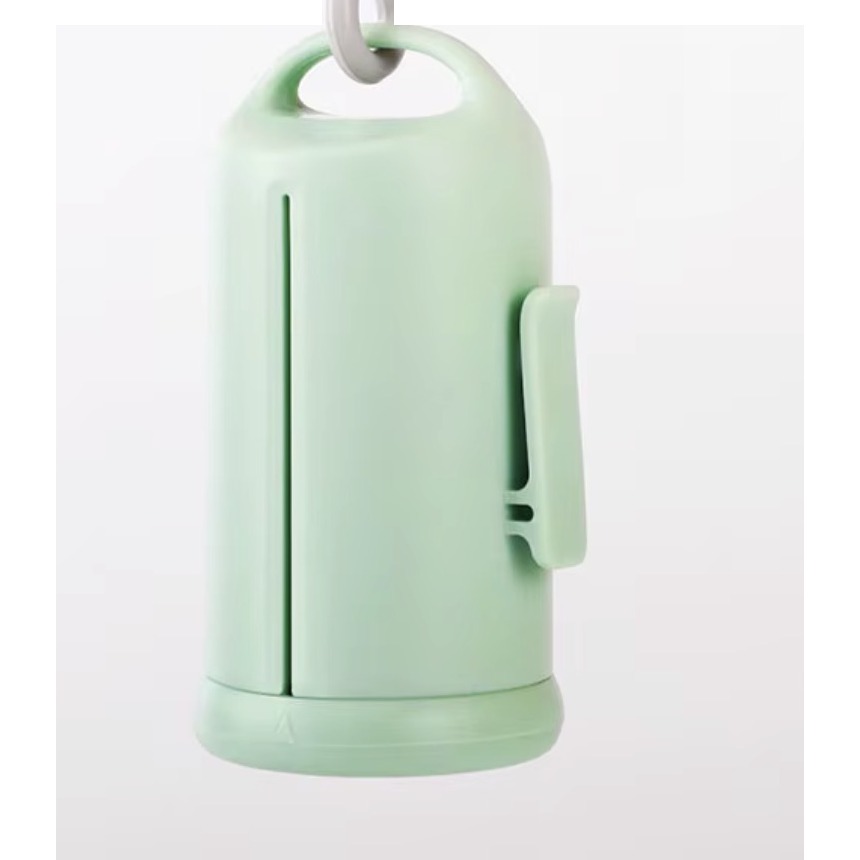
Waste Bag Dispenser
Clips to the lead, holds one standard roll.
Fits any dog
Pawpoint on YouTube
Watch the full Yorkshire Terrier video
Breed deep-dives, history and honest ownership talk. New film every week.
Watch now