
Langqing Quan
lahng-ching chwen
China· Northern China, particularly Hebei and Shandong
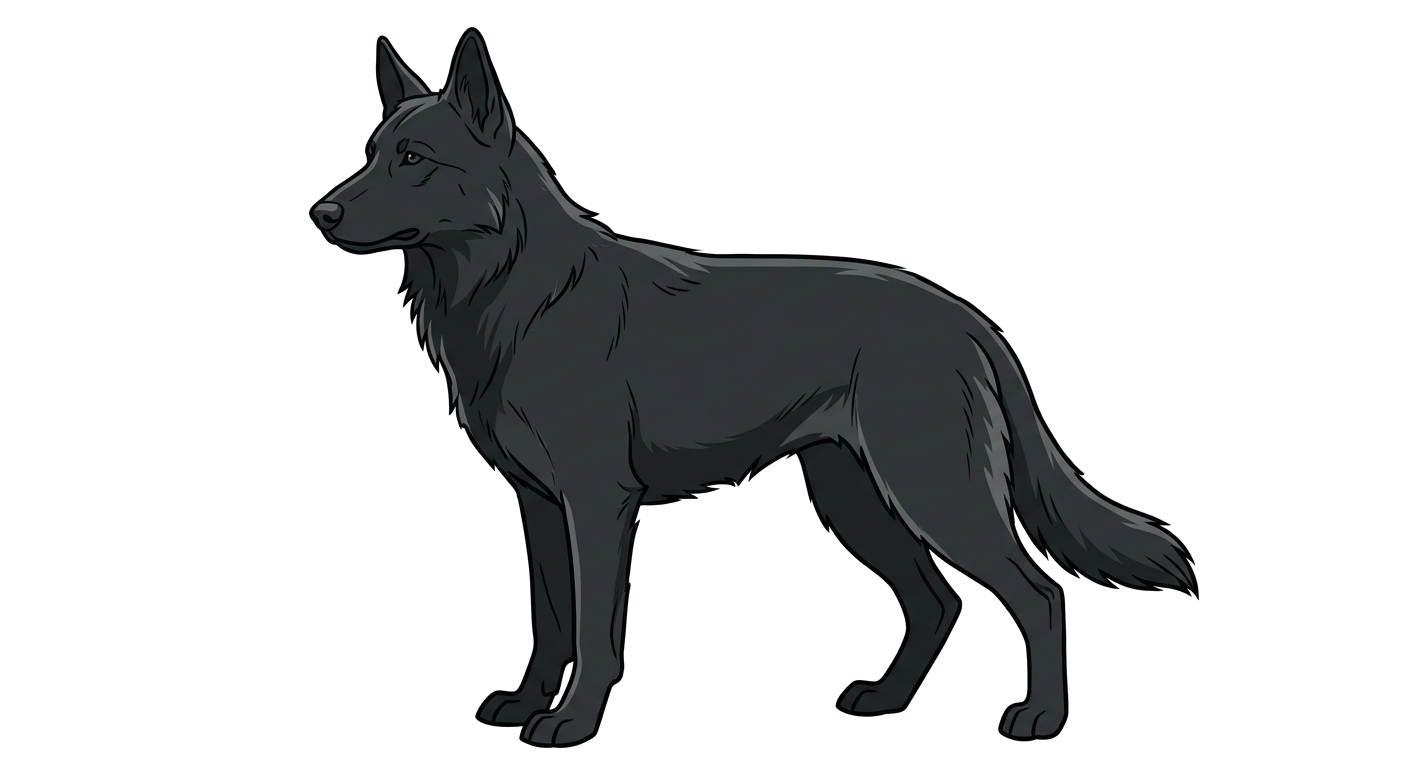
Langqing Quan is an unofficial Chinese landrace or developing type from Northern China, particularly Hebei and Shandong. It is not recognised by the AKC, The Kennel Club or FCI.
At a glance
Quick facts
Size
Large
Exercise needs
At least 90 minutes daily, including purposeful mental work
Home size suited to
A well-managed home with secure space
Grooming frequency
Weekly brush and routine nail, ear and dental care
Coat length
Medium
Sheds
Yes
Lifespan
10–13 years
Town or country
Country or quieter edge-of-town setting preferred
Garden size needed
Securely fenced space strongly preferred
Where it comes from
Origins of the Langqing Quan
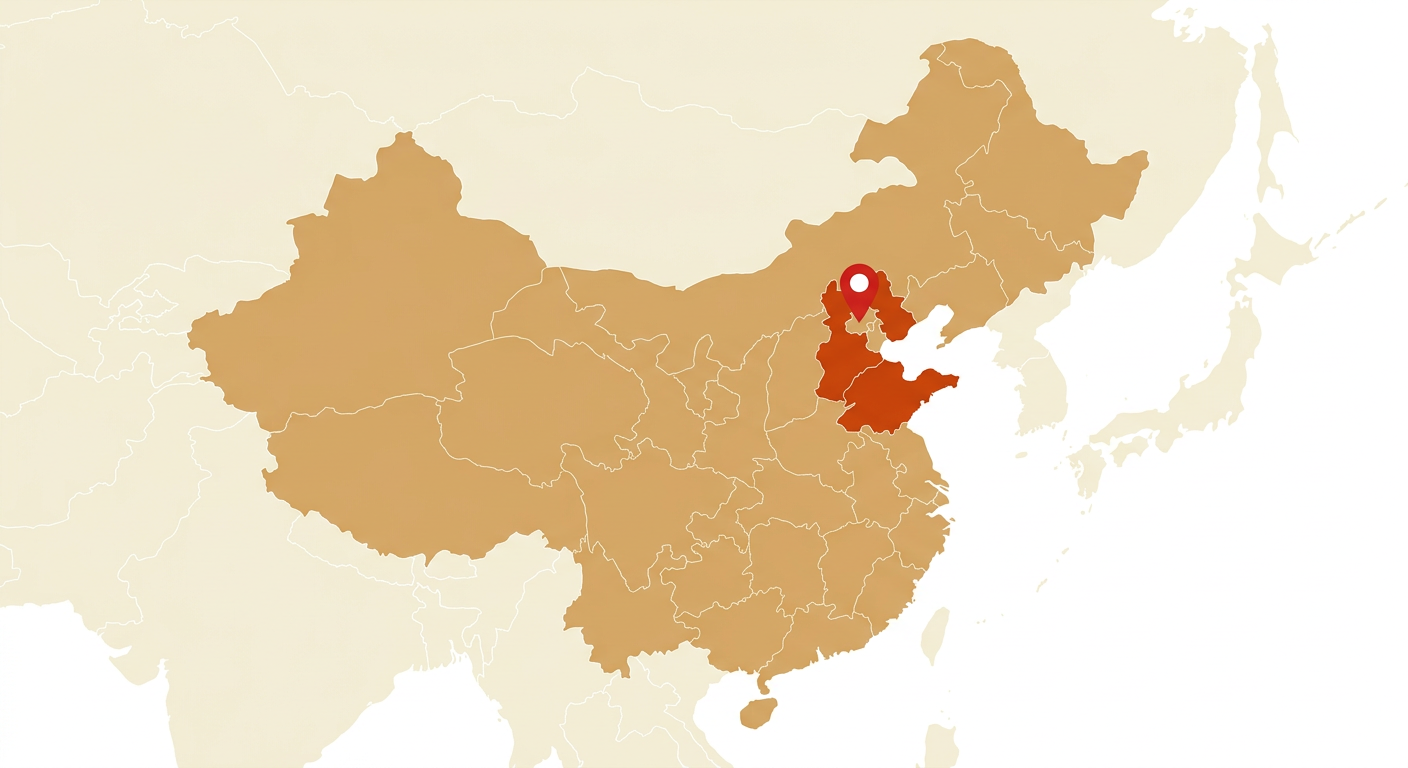
This rare regional type was shaped in Northern China, particularly Hebei and Shandong for estate guarding, security work and versatile service.
- Region
- Northern China, particularly Hebei and Shandong
- Climate it was bred for
- Cold, dry winters and hot summers
- Original job
- Estate guarding, security work and versatile service
The long read
About the breed
Langqing Quan literally means wolf-blue dog and is used for a modern northern Chinese working type. Accounts commonly connect its development with local dogs and European shepherd breeds, but consistent documentary pedigrees and a single international standard are lacking. It should not be presented as a kennel-club-recognised wolfdog breed.
It is large, long-legged and wolf-like, with a wedge head, strong muzzle, upright ears, level back and a long bushy tail carried low. Because published population, temperament and health data are sparse, prospective owners should treat precise measurements and ratings as editorial guidance rather than a universal breed standard. Seek dogs with verifiable ancestry, stable behaviour and documented veterinary screening.
Related breeds
Explore connected types
Similar regional histories do not make these names interchangeable.
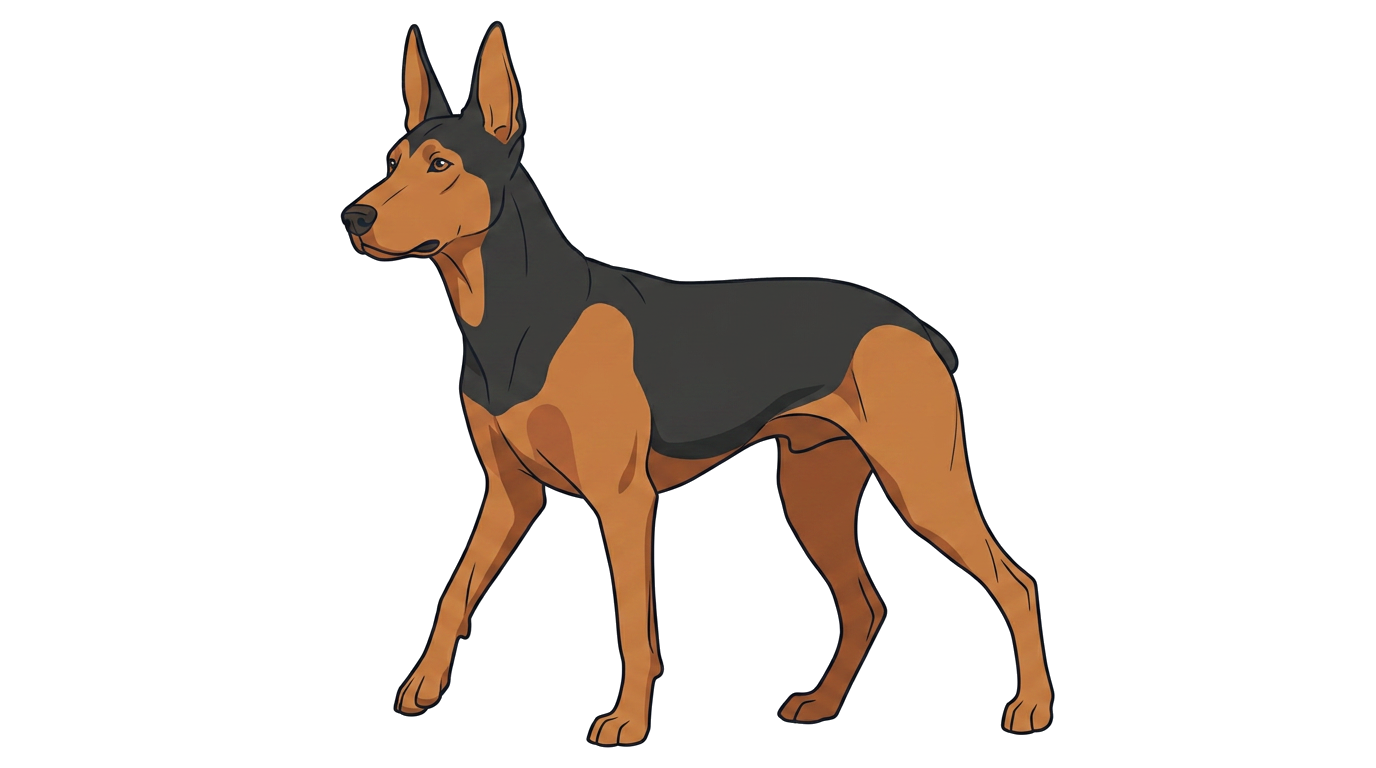 Laizhou Hong
Another modern Chinese working type with a distinct red-marked appearance.
Living with one
Temperament & needs
Our own ratings, based on the breed standard and how these dogs behave in ordinary homes.
Friendliness
2/5
Editorial estimate based on the reported working type; individuals and lines can vary widely.
Trainability
4/5
Editorial estimate based on the reported working type; individuals and lines can vary widely.
Energy
5/5
Editorial estimate based on the reported working type; individuals and lines can vary widely.
Barking
4/5
Editorial estimate based on the reported working type; individuals and lines can vary widely.
Grooming
2/5
Editorial estimate based on the reported working type; individuals and lines can vary widely.
Suits a first-time owner
1/5
Editorial estimate based on the reported working type; individuals and lines can vary widely.
Sociability
2/5
Editorial estimate based on the reported working type; individuals and lines can vary widely.
Independence
4/5
Editorial estimate based on the reported working type; individuals and lines can vary widely.
Illustrated breed standard
The points of the breed
Hover or tap a numbered point to read what the standard asks for.
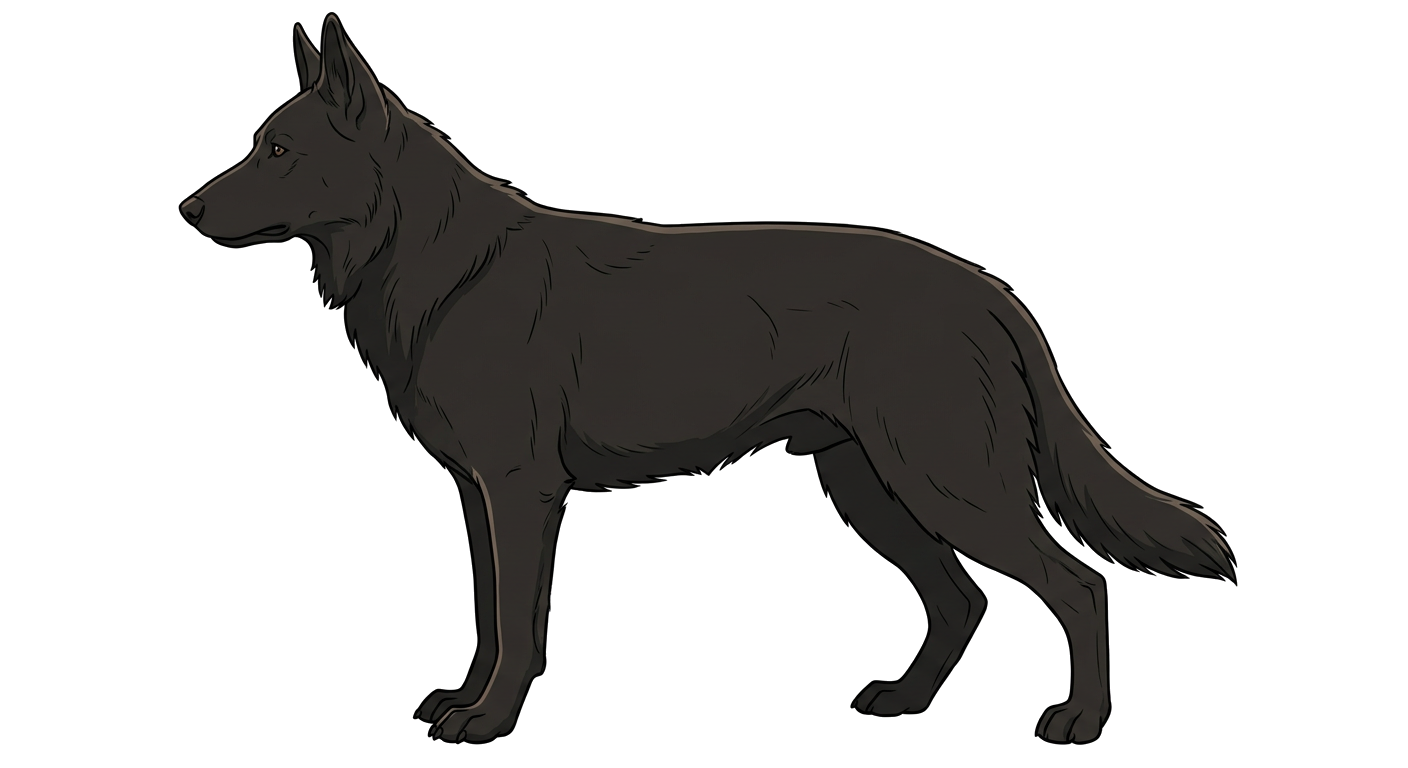
Point 1
Head
The Langqing Quan's head should remain balanced and characteristic of its working type.
Colours & patterns
Recognised coats
Which coats the standard accepts — and which are simply popular.
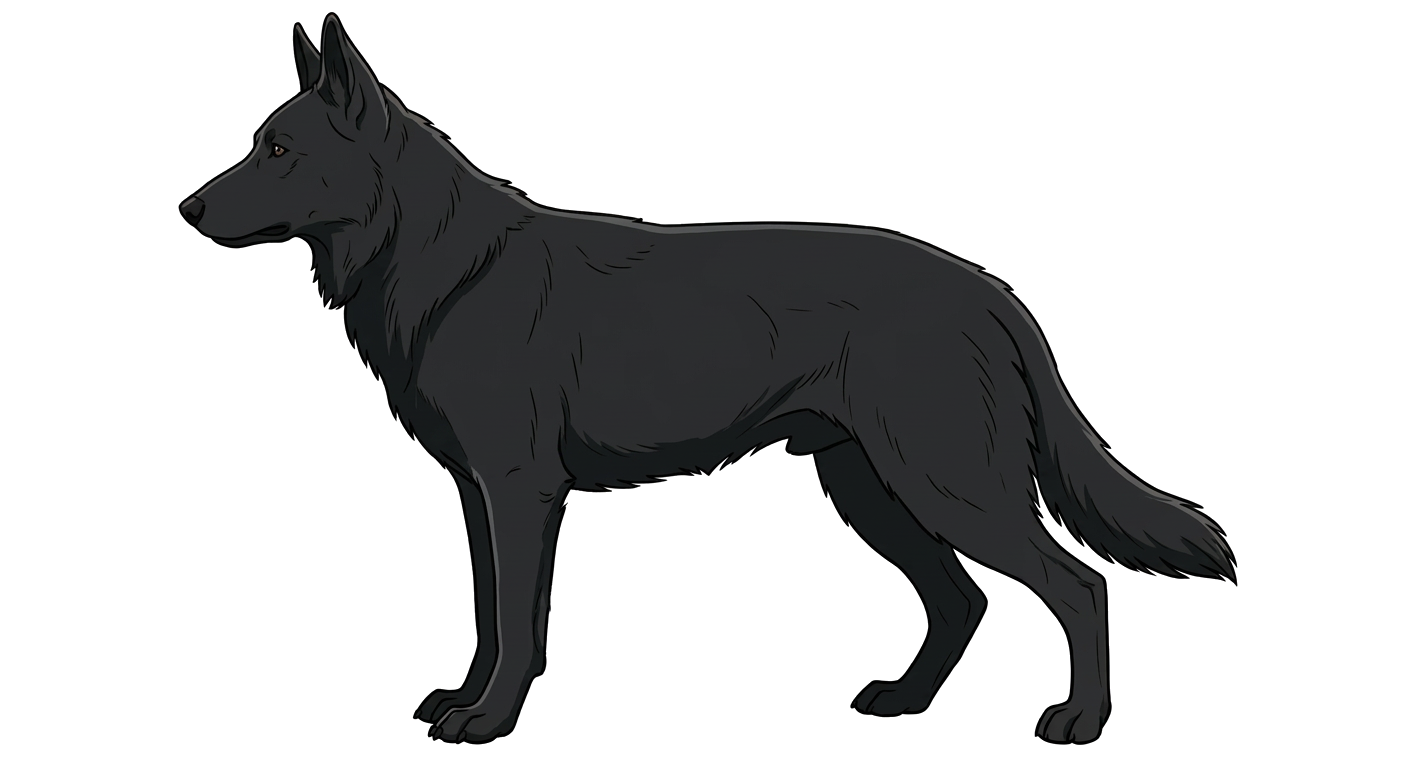
Black
Standard colour
A documented black presentation in this landrace.
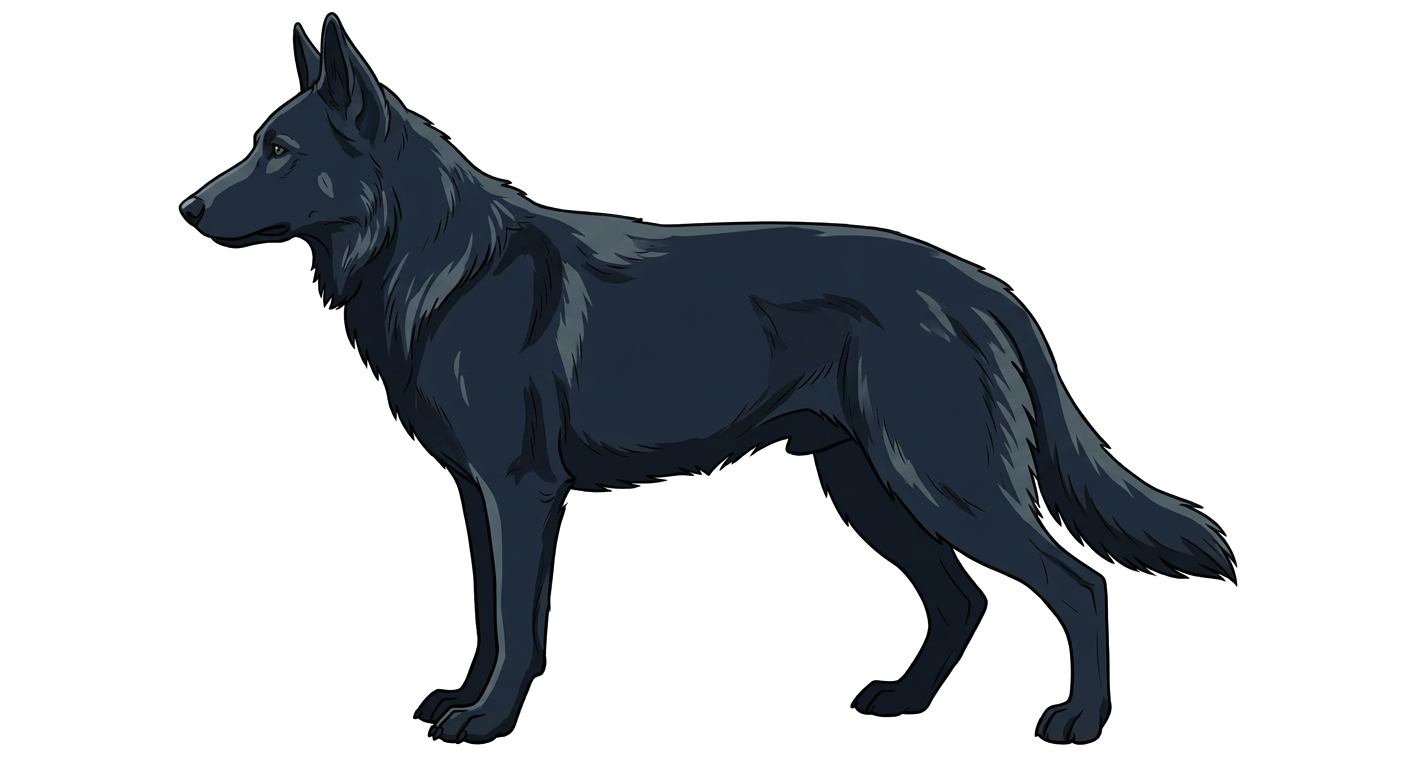
Blue Black
Standard colour
A documented blue black presentation in this landrace.
Timeline
History & development
Traditional
Working roots in Northern China, particularly Hebei and Shandong
Local dogs were selected for estate guarding, security work and versatile service rather than exhibition uniformity.
20th century
A named regional type
Enthusiasts began documenting and promoting a more consistent identity, although records remain fragmented.
Today
Rare and unofficial
The type remains outside AKC, KC and FCI recognition, with limited population and health data.
Reference
Breed standard summary
- body
- Athletic and balanced, with adequate chest depth and a firm back.
- coat
- Dense, straight black double coat
- ears
- Carried in the manner associated with the regional type.
- eyes
- Clear, alert and well set.
- gait
- Free, balanced and economical, suited to sustained work.
- head
- Balanced with the body and free from exaggeration.
- size
- Height 60–75 cm; weight 35–50 kg.
- tail
- Natural, well set and carried without exaggeration.
- colour
- Black, Blue Black
- muzzle
- Strong and functional, with sound jaws and a complete bite.
- temperament
- Alert, loyal and purposeful; steadiness and manageability are essential.
- general appearance
- A functional large working dog: large, long-legged and wolf-like, with a wedge head, strong muzzle, upright ears, level back and a long bushy tail carried low.
Health
What to screen for
Green means little to worry about, amber means ask the breeder for test results, red means manage it actively.
Hip and elbow dysplasia
Screen for it
Large working dogs should have independently scored hips and elbows before breeding.
Degenerative myelopathy
Watch closely
Discuss DNA screening and remember that a genetic result predicts risk, not a diagnosis.
Gastric dilatation-volvulus
Screen for it
Know the signs of bloat and discuss preventative gastropexy with a vet.
Temperament stability
Screen for it
Breeding stock should be assessed for confident, controllable behaviour as carefully as physical health.
General information only — always speak to your vet about your own dog.
From real owners
Dogs like this
Langqing Quans added by PawPoint members through their pet passports. Share yours to appear here.
Loading the wall…
Made for the Langqing Quan
The book, plus prints, hoodies and mugs using our own Langqing Quan illustration — and one everyday accessory that suits any dog.
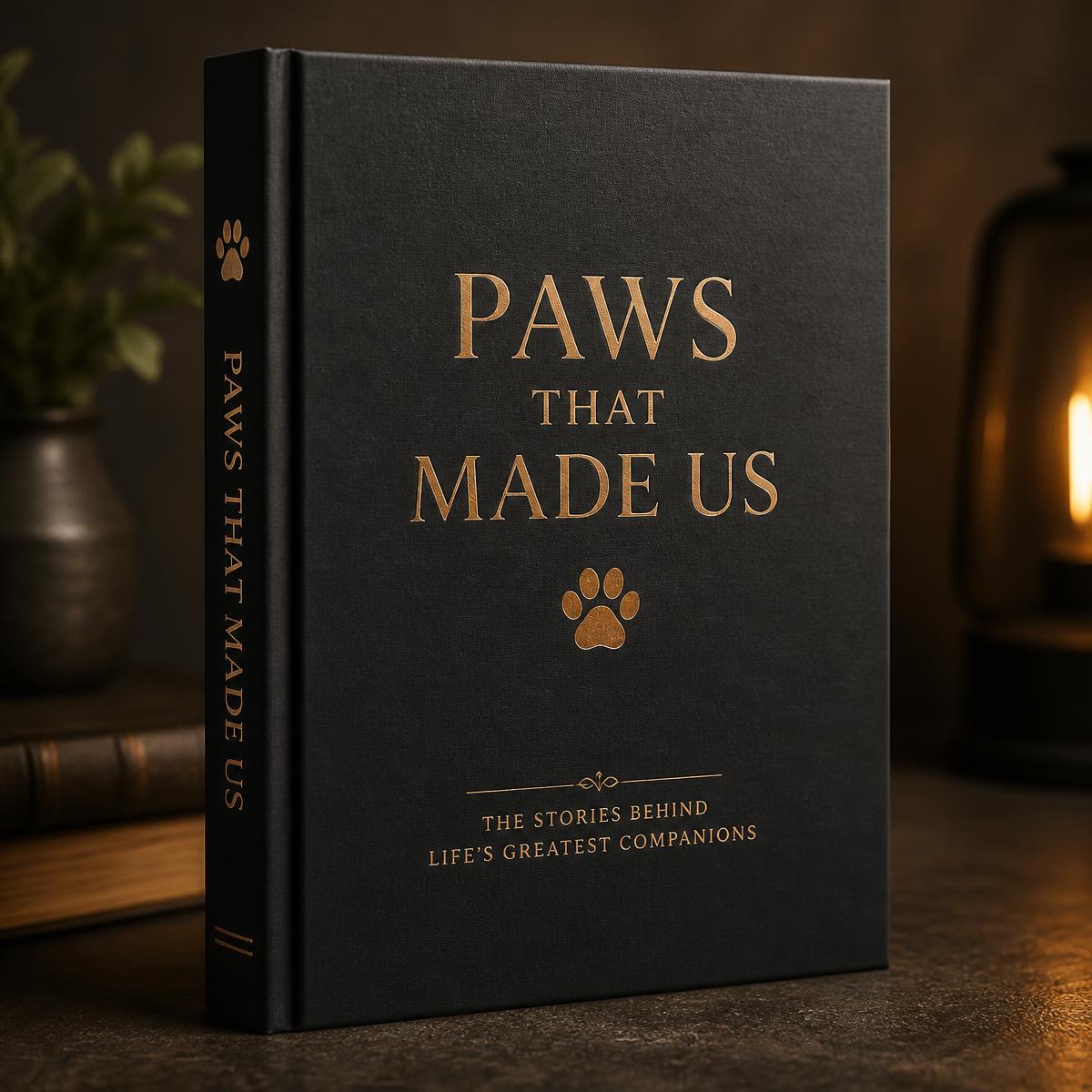
The book
Pawpoint: The Complete Dog Breed Book
Every officially recognised breed plus the unofficial ones nobody else documents. 400+ pages, hardback, printed and shipped from the UK.
Own stock — shipped by us
Framed poster
Langqing Quan Framed Poster
Museum-weight print of our Langqing Quan illustration, framed or unframed.
Printed to order
Hoodie
Langqing Quan Hoodie
Heavyweight hoodie carrying the Langqing Quan illustration on the chest.
Printed to order
Mug
Langqing Quan Mug
Ceramic mug with the Langqing Quan illustration wrapped around it.
Printed to order
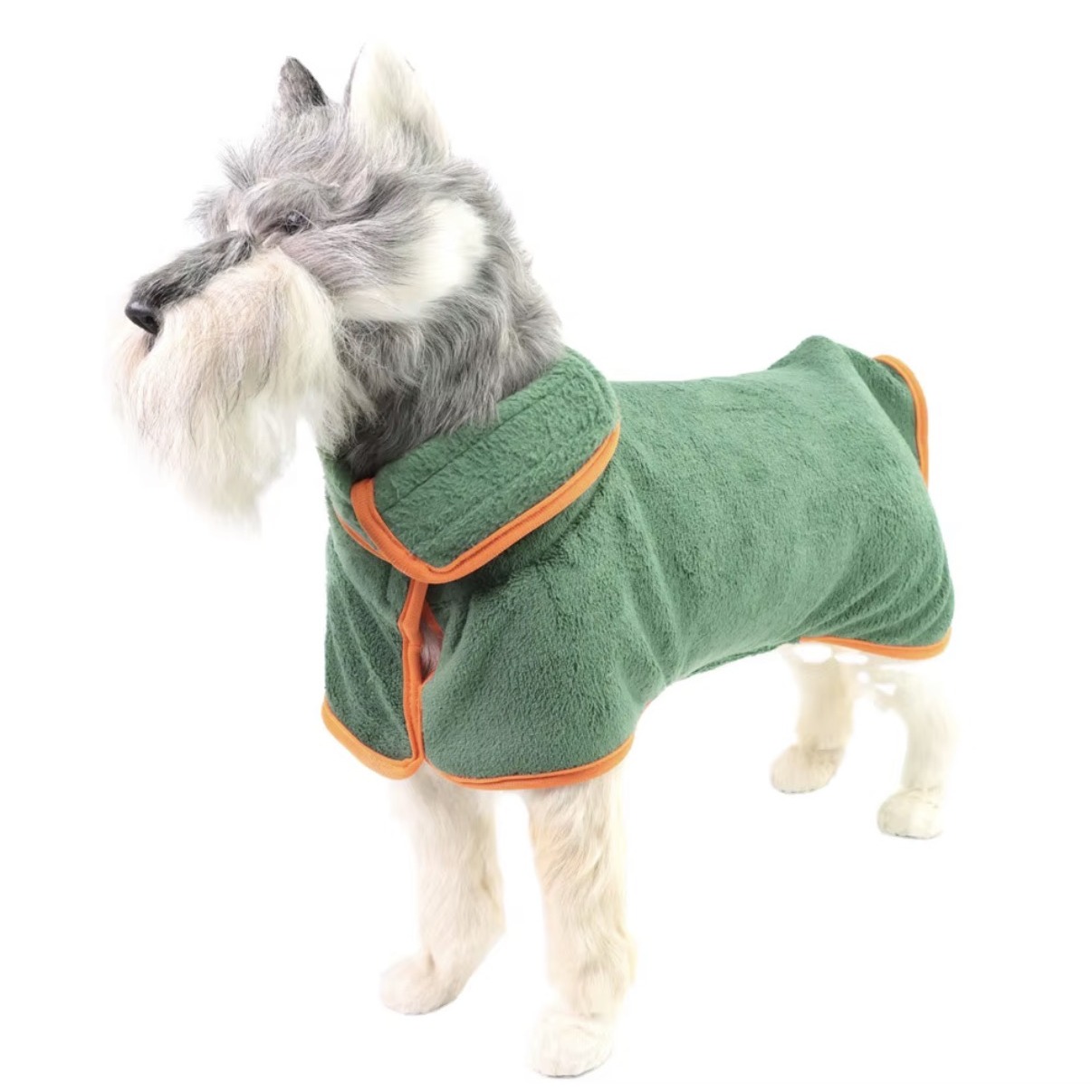
Accessory
Drying Towel Robe
Microfibre robe that soaks up a wet-walk shake.
Fits any dog
Pawpoint on YouTube
Watch the full Langqing Quan video
Breed deep-dives, history and honest ownership talk. New film every week.
Watch now